Best Quiet Treadmills 2026: 5 Picks for Home Running
A Quiet Treadmill Still Makes Noise
No home treadmill is silent. You will hear the belt, motor, incline system and each footstrike. The question is whether those sounds stay smooth and controlled, or turn into belt slap, rattling and vibration that travels through the floor.
This guide compares five folding treadmills that can handle real running. We checked current manufacturer specifications and published hands-on reviews, for the deck sizes, displays, speed ranges, subscriptions and warranties.
Affiliate disclosure: This article contains affiliate links. If you buy through one of our links, we may earn a commission at no extra cost to you.
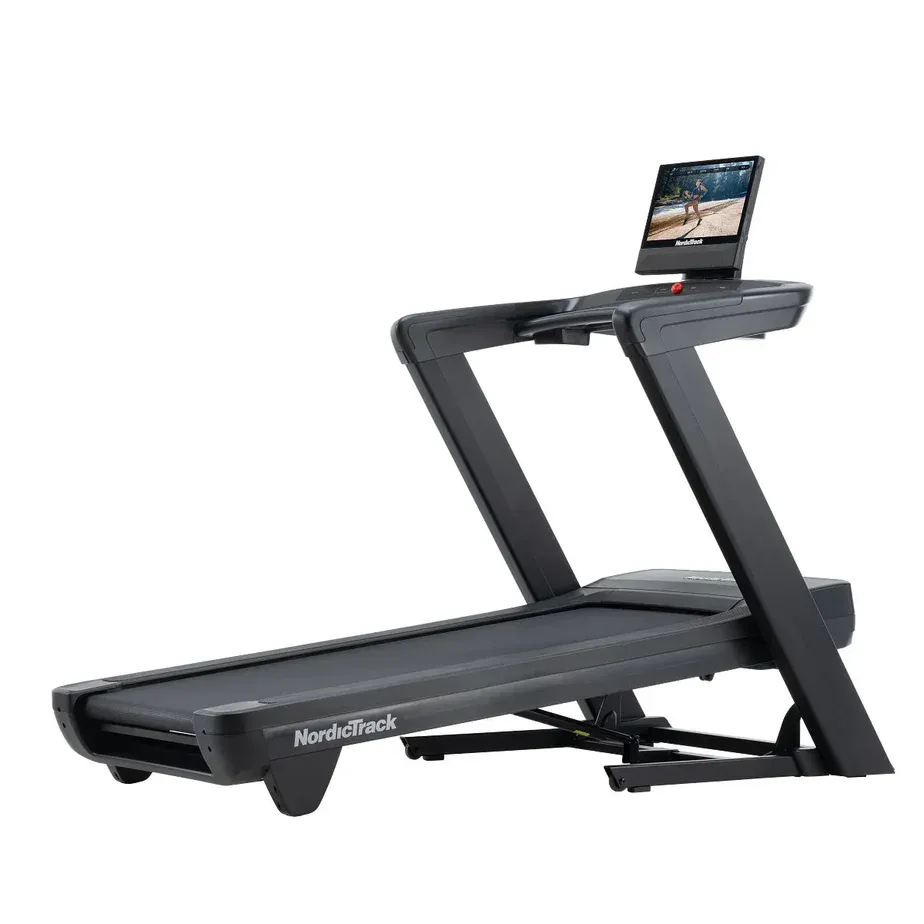
Best overall
NordicTrack Commercial 1750
A roomy 22 × 60-inch deck, soft cushioning, quiet published belt-only testing and a 16-inch screen make it the strongest all-round pick for runners who want guided workouts.
Premium price · iFIT adds ongoing cost · Folding frame
Jump to:
What affects noise Reduce noise at home Top five picks Comparison FAQ Quick answer
Last fact-checked: September 2026
Jump to your pick
- Best overall: NordicTrack Commercial 1750
- Best without a treadmill membership: Sole F80
- Best value for intervals: Horizon 7.0 AT
- Best simple folding model: Sole F63
- Best compact full-length deck: Echelon Stride 6s
What Actually Makes a Treadmill Quieter?
Motor and drive system
The motor creates the steady background sound, but horsepower alone is not a noise rating. Build quality, motor control, cooling and how quickly the machine changes speed all matter. A smooth motor at an easy pace may still become much louder during a fast interval.
Deck, frame and footstrike
A cushioned deck can soften impact, while a stable frame is less likely to shake or rattle. Your pace, body weight, running form and shoes also change the sound. This is why a belt-only decibel result cannot tell you exactly what a downstairs neighbour will hear.
Belt, rollers and setup
Larger rollers and a properly tensioned belt may help a treadmill run smoothly, but no roller size guarantees quiet operation. Correct levelling matters too. A machine that rocks on an uneven floor can create more noise than the motor.
How to read decibel tests
Noise readings only make sense with the test conditions. Room size, flooring, meter distance, speed and whether a person is on the belt can all change the number. The measurements in this guide come from different reviewers, so treat them as useful clues, not a laboratory ranking across every model.
How to Reduce Treadmill Noise at Home
Start with the floor: A dense treadmill mat may reduce vibration and protect the flooring, but it cannot guarantee that neighbours will not hear you. Check the mat and treadmill instructions before installation.
- Check the building rules. If you rent or live in a condo, review your lease, bylaws and quiet hours before buying.
- Choose the lowest practical level. A basement or ground floor usually sends less impact noise to rooms below.
- Leave space around the machine. Follow the manufacturer’s required safety clearances and keep the treadmill from touching a wall.
- Level it carefully. Adjust the feet so the frame does not rock.
- Follow the exact maintenance manual. Some belts need lubricant and others are pre-lubricated or designed differently. Do not add silicone or follow a generic schedule unless the manufacturer instructs you to.
- Stop unusual sounds early. Grinding, scraping, burning smells or a belt that drifts to one side call for troubleshooting before the next run.
Once the treadmill is set up, use the treadmill pace calculator to convert between speed and pace. Keep easy days controlled with the 80/20 running rule, especially when indoor running makes it tempting to push every session.
How we chose these treadmills: We compared current manufacturer specifications with published hands-on reviews. We favoured full-length running decks, stable folding frames, useful warranties and reviewers who explained how they measured sound. Availability, prices, app access and warranties can change, so confirm them with the seller before ordering.
Top five reviews
The 5 Best Quiet Treadmills in 2026
#1
Best overall
NordicTrack Commercial 1750
- Deck: 22 × 60 in
- Speed: Up to 12 mph
- Grade: -3% to 12%
- Display: 16-in touchscreen
- Capacity: 400 lb
- Price band: $$$$
The Commercial 1750 is the best fit here for runners who want a spacious deck, softer cushioning and guided workouts. NordicTrack lists a 22 × 60-inch belt, a top speed of 12 mph, decline to -3%, incline to 12% and a 400-pound user capacity.
Its quiet reputation has some useful evidence behind it. TreadmillReviews measured 50.8 dB at 3 mph with the belt moving and nobody on it. The reviewer also praised the soft deck and quiet incline movement. That is encouraging, but a runner’s footstrike and your room will raise or change the sound.
The 16-inch pivoting screen is built around iFIT. The full workout library and connected features require a paid membership, and entertainment availability can depend on the current iFIT plan and region. The 1750 also folds, but it is still a large, heavy treadmill. Measure the delivery route and both the open and folded footprint.
What works
- Soft cushioning can help control footstrike noise
- Wide, full-length running surface
- Decline and incline range
- Published belt-only noise test was low at walking speed
- Folds with hydraulic assistance
Watch out for
- Premium purchase price
- Full iFIT experience adds an ongoing cost
- Large and heavy even though it folds
- Touchscreen ecosystem may be more than simple runners need
#2
Best without a treadmill membership
Sole F80
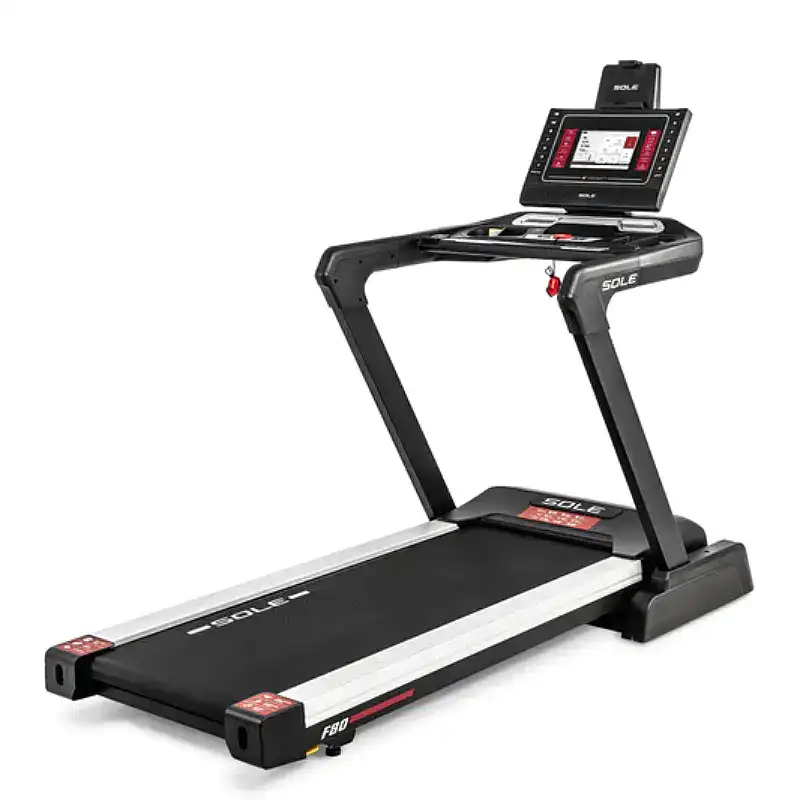
- Motor: 3.5 HP
- Deck: 22 × 60 in
- Speed: 0.5 to 12 mph
- Incline: 15 levels
- Display: 10.1-in touchscreen
- Price band: $$$
The F80 is a strong choice for steady runs and longer sessions. Its 22 × 60-inch deck gives runners room to move, while the folding frame and transport wheels make storage less awkward than its size suggests.
TreadmillReviewGuru measured 46.3 dB at 3 mph and 65.5 dB at 12 mph with nobody on the belt. With a tester walking or running, the reading changed to 53.5 dB at 3 mph, 61.0 dB at 6 mph and 65.5 dB at 9 mph. Those results show why the person on the treadmill matters as much as the motor.
Sole does not require a proprietary workout membership to operate the F80. Its touchscreen supports built-in entertainment apps and screen mirroring, although services such as Netflix still require your own account. The main compromise is response speed: published testing found that speed and incline changes take longer than on an interval-focused Horizon.
What works
- Quiet results in published testing
- Roomy 22 × 60-inch deck
- No Sole workout membership required
- Built-in apps and screen mirroring
- Lifetime frame and motor warranty listed in Canada
Watch out for
- Slow changes are less convenient for short intervals
- Firm deck may not suit runners who want a soft ride
- Third-party streaming services need their own accounts
- Heavy to move on stairs
#3
Best value for intervals
Horizon 7.0 AT
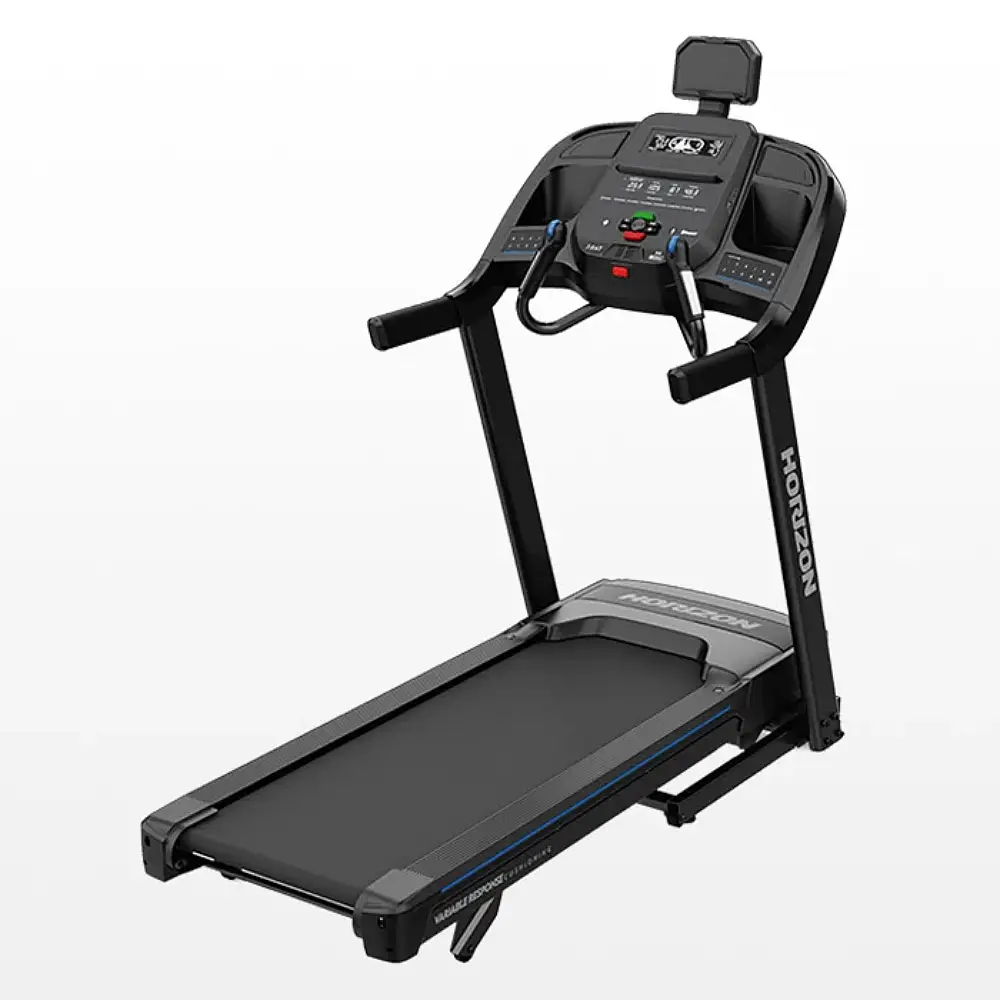
- Deck: 20 × 60 in
- Speed: 0.5 to 12 mph
- Incline: 0% to 15%
- Display: 7.25-in LCD + LEDs
- Capacity: 325 lb
- Price band: $$
The 7.0 AT gives runners the features that matter without tying the treadmill to a built-in touchscreen. Its 20 × 60-inch deck is narrower than the NordicTrack and F80, but it is still full length. The official 325-pound capacity, 12 mph top speed and 15% maximum incline make it capable enough for most home runners.
The main reason to choose it is control. Horizon’s QuickDial controls and RapidSync drive system are designed for fast speed and incline changes, which is useful for intervals. The 7.25-inch LCD is basic, but Bluetooth can send workout metrics to compatible apps such as Peloton and Zwift on your own device. App subscriptions may still cost extra.
Horizon lists a folding frame, a 277-pound machine weight and lifetime home warranties on the frame and motor in Canada. Published reviews generally describe the 7.0 AT as quiet, but we did not find a standardized measurement that could be compared fairly with the two decibel tests above.
What works
- QuickDial speed and incline controls
- Full-length 60-inch belt
- Works with several third-party apps
- No locked-in Horizon workout membership
- Strong Canadian home warranty
Watch out for
- 20-inch belt is narrower than premium picks
- Basic display
- Requires your phone or tablet for streaming
- No decline
#4
Best simple folding model
Sole F63
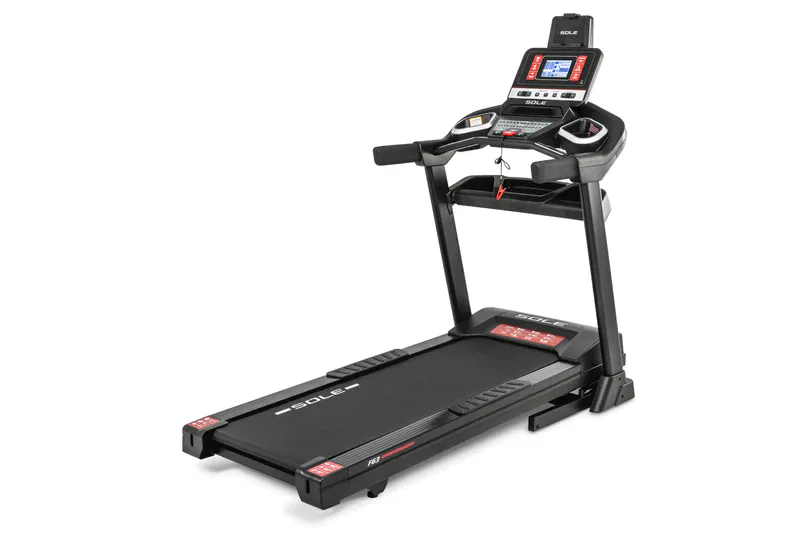
- Motor: 3.0 HP
- Deck: 20 × 60 in
- Speed: 0.5 to 12 mph
- Incline: 15 levels
- Display: 6.5-in LCD
- Price band: $$
The F63 is the low-tech option in this group. It has a 6.5-inch LCD, 10 onboard programs, a tablet holder and app connectivity, not a touchscreen loaded with streaming services. That correction matters: the earlier article incorrectly said every Sole treadmill included built-in streaming apps.
The 20 × 60-inch belt is long enough for running, and the frame folds to reduce the space it takes between sessions. Sole Canada lists a 3.0 HP motor, speeds from 0.5 to 12 mph, 15 incline levels and a 325-pound capacity.
A published hands-on review found the motor and incline quiet, while noting more foot noise from the firm belt. That makes the F63 worth considering in a shared home, but not automatically safe for an upstairs apartment. At 232 pounds, it can still send impact vibration through a floor. Check the building rules and speak with anyone directly below you.
What works
- Simple controls without a treadmill subscription
- Full-length 60-inch belt
- Folding frame
- Tablet holder for your own entertainment
- Lifetime frame and motor warranty listed in Canada
Watch out for
- No built-in entertainment screen
- Firm deck can create more footstrike sound
- Slow adjustments do not suit rapid intervals
- Still heavy for an upstairs room
#5
Best compact full-length deck
Echelon Stride 6s
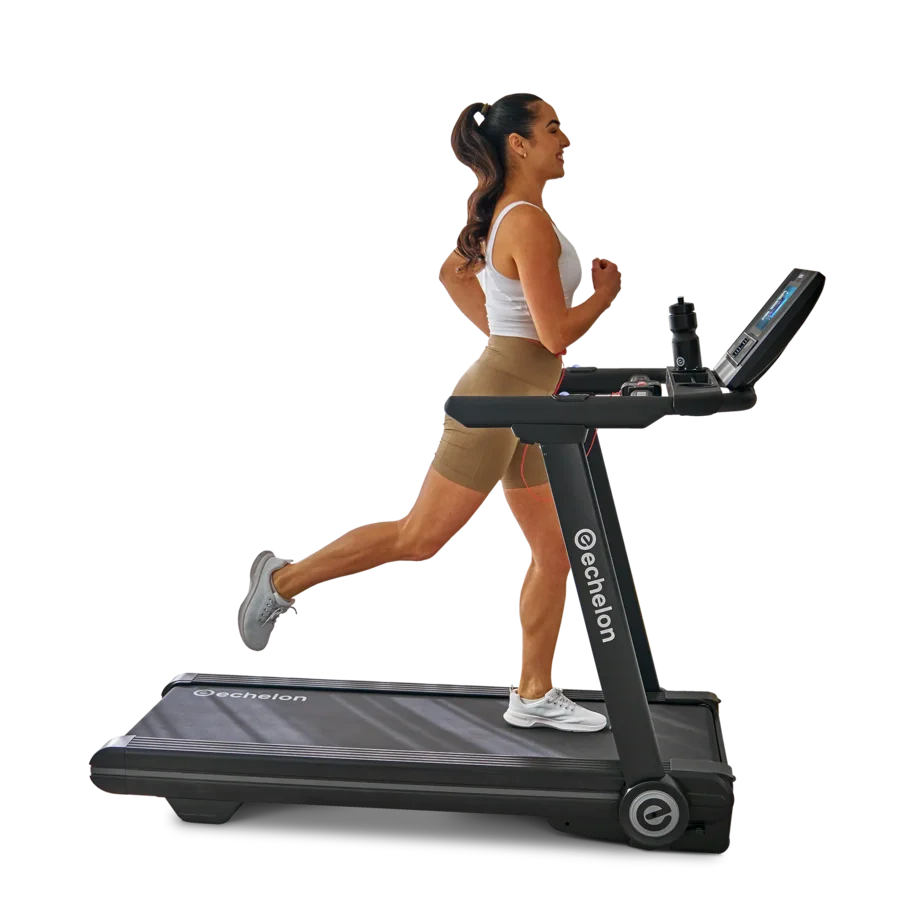
- Motor: 3.0 CHP brushless
- Deck: 20.5 × 60 in
- Speed: Up to 12.5 mph
- Incline: 12 levels
- Display: 10-in touchscreen
- Price band: $$$$
The Stride 6s solves a different space problem. Its console and rails fold onto the deck, and it has wheels for horizontal or upright movement. One hands-on reviewer reported a folded height of about 10 inches. Check your exact clearance before assuming it will fit under a bed.
The earlier article listed a 20 × 55-inch deck and 12 mph maximum. Echelon Canada’s current specifications say 20.5 × 60 inches and up to 12.5 mph. That makes it a real running-length treadmill, not a short walking pad. It also lists a 3.0 CHP brushless motor, 12 incline levels and a 300-pound capacity.
Published reviewers describe its operation as quiet, but we did not find a comparable standardized decibel result. The 10-inch touchscreen is built around Echelon content, and a Premier membership is needed for the full experience. The compact folding design is clever, but lifting and storing a treadmill this large still takes care.
What works
- Console and rails fold onto the deck
- Full 60-inch running length
- Brushless motor
- Wheels support horizontal and vertical movement
- Fast 12.5 mph top speed
Watch out for
- Full screen experience needs an Echelon membership
- 300-pound capacity is lowest in this group
- Premium Canadian price
- Compact storage does not make it lightweight
At a glance
Quiet Treadmill Comparison
| Model | Deck | Top speed | Grade | Display | Capacity | Best for |
|---|---|---|---|---|---|---|
| NordicTrack 1750 | 22 × 60 in | 12 mph | -3% to 12% | 16-in touchscreen | 400 lb | Overall |
| Sole F80 | 22 × 60 in | 12 mph | 15 levels | 10.1-in touchscreen | 350 lb | No treadmill membership |
| Horizon 7.0 AT | 20 × 60 in | 12 mph | 0% to 15% | 7.25-in LCD + LEDs | 325 lb | Intervals and value |
| Sole F63 | 20 × 60 in | 12 mph | 15 levels | 6.5-in LCD | 325 lb | Simple folding setup |
| Echelon Stride 6s | 20.5 × 60 in | 12.5 mph | 12 levels | 10-in touchscreen | 300 lb | Compact storage |
Which One Fits Your Training?
Choose the 1750 if you value soft cushioning and guided workouts. Choose the F80 if you want a wide deck and entertainment without a treadmill-specific membership. The Horizon 7.0 AT is the better match for intervals and value. The F63 keeps the console simple, while the Stride 6s offers the most unusual storage design without cutting the deck to walking-pad length.
Whatever you choose, match the machine to a realistic routine. Build a week with the running training plan creator, check workout speeds with the treadmill pace calculator, and compare footwear in the running shoe finder.
Useful Next Steps
Common questions
Quiet Treadmill FAQ
How loud is a treadmill?
There is no single normal number. Speed, footstrike, flooring, room shape and meter distance all affect the result. In one published test, the NordicTrack 1750 produced 50.8 dB at 3 mph with nobody on it. Another tester recorded the Sole F80 at 46.3 dB under similar belt-only conditions, but cross-site readings should not be treated as a controlled head-to-head test.
Can I use a treadmill in an upstairs apartment?
Possibly, but do not assume any model is apartment-safe. Check your lease or condo rules, confirm the floor can support the equipment, follow required clearances and consider the person below you. A dense mat may reduce vibration, but it cannot promise silence.
Does a more powerful motor mean a quieter treadmill?
Not by itself. Motor design, speed control, frame stiffness, deck construction and belt setup all affect sound. Horsepower is useful for comparing intended workload, but it is not a decibel rating.
Do I need a treadmill mat?
A suitable mat can protect the floor and may reduce vibration. Follow the treadmill and flooring manufacturer’s guidance, use the correct size, and remember that a mat does not cancel footstrike noise.
How often should I lubricate a treadmill belt?
Follow the schedule in your model’s manual. Requirements vary, and some decks or belts should not receive generic silicone lubricant. Over-lubricating can also cause problems.
Is a manual treadmill quieter than a motorized treadmill?
A manual treadmill removes motor noise, but curved slat belts can make a noticeable rolling or clacking sound. The type of noise changes; it does not automatically disappear.
Do touchscreen subscriptions make a treadmill louder?
The screen itself is not the main source of mechanical noise, and speakers can be muted or replaced with headphones. Automatic speed or incline changes can add brief motor sounds during connected workouts.
Quick answer
The Best Choice for Most Home Runners
The NordicTrack Commercial 1750 is the strongest overall choice if you want soft cushioning, a wide deck and guided training. The Sole F80 is the better fit if you want a wide running surface without a required treadmill membership. For faster controls at a lower price, start with the Horizon 7.0 AT.
If noise is the deciding factor, compare return policies as carefully as specifications. Your floor, room and stride can change the result more than a few decibels measured in somebody else’s test room.