Garmin Forerunner 165 – My review from testing as a Marathoner and Triathlete (2026)

Note: I bought the Garmin Forerunner 165 myself. This was not sent to me for review, and Garmin did not have any say in this article.

Quick verdict

The Garmin Forerunner 165 surprised me. I bought it after using more expensive Garmin watches, and I expected to miss a lot more features than I actually did.

It is not the watch I would buy for triathlon racing, long ultras or someone who wants every Garmin training metric. It does not have multiband GPS, Training Readiness, full Training Load, maps or true multisport mode.

But for normal running, marathon training, workouts, recovery tracking and daily wear, it has covered almost everything I wanted. The screen is clear, the watch is light, and it feels like a proper Garmin running watch without making me pay for features I do not use much.

My honest take: I would still buy the Forerunner 165 if it was on sale. If it is close in price to the newer Forerunner 170, I would compare both before buying.

Garmin Forerunner 165 running watch review
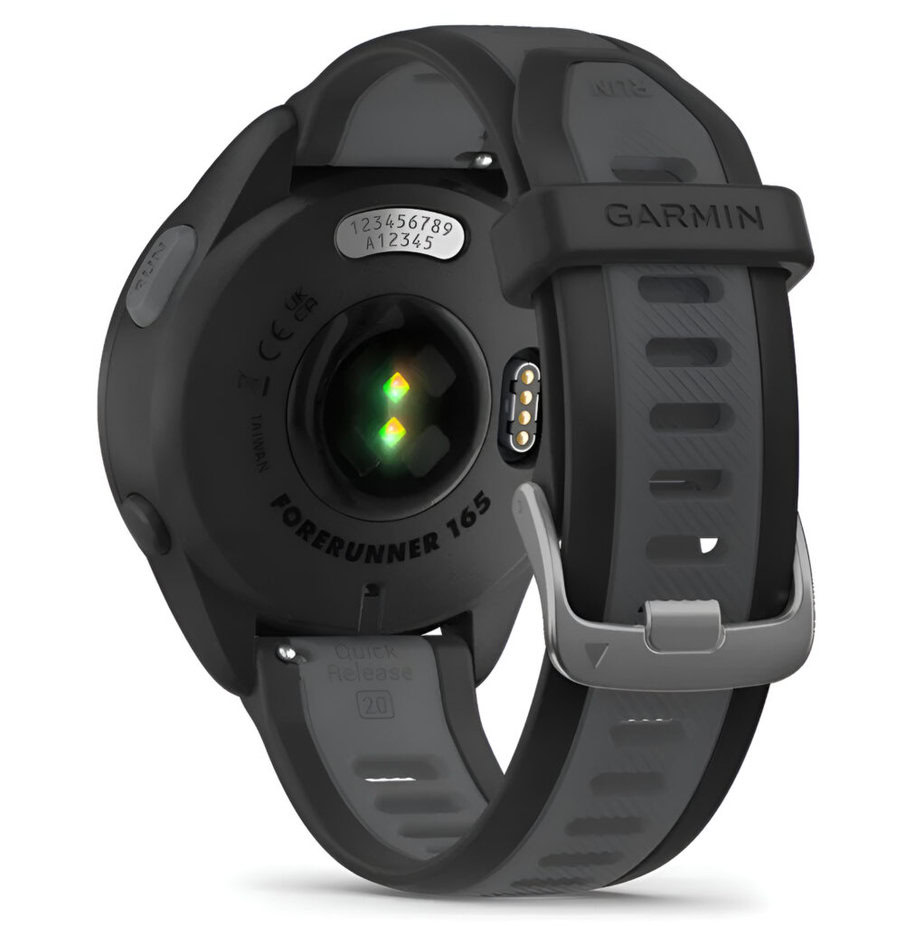
The Garmin Forerunner 165 is light, simple to wear daily, and feels more like a proper running watch than a basic fitness tracker.

Update for 2026: what about the Garmin Forerunner 170?

Garmin has now released the Forerunner 170 and Forerunner 170 Music, so the Forerunner 165 is no longer the newest watch in this part of the Garmin lineup.

That does not make the 165 a bad buy. It just changes how I would shop for it. If the Forerunner 165 is on sale, I still think it can be a really good running watch for marathon training, daily runs and recovery tracking.

If the price is close to the Forerunner 170, I would compare them first. I would not buy the 165 just because it is a Garmin. I would buy it because the price is right and because I do not need the missing features.

Garmin Forerunner 165 quick specsWhat it means for runners
43 mm case, 39 g weightLight enough that I barely notice it on daily runs or while sleeping.
1.2 inch AMOLED touchscreenBright, clear and much easier to read than older basic Garmin screens.
5 buttons plus touchscreenYou can still use buttons during sweaty runs, cold runs or workouts.
Up to 11 days in smartwatch modeGood everyday battery life if you do not run always on display all the time.
Up to 19 hours in GPS only modeEnough for most 5K, 10K, half marathon, marathon and long run training days.
Multi GNSS, but not multiband GPSGood for most road running, but not as strong as higher Garmin models in tricky GPS areas.
Music only on the Forerunner 165 MusicThe regular 165 does not store offline music. Buy the Music version if that matters to you.
No true triathlon modeYou can track run, bike and swim separately, but it is not a race day triathlon watch.

Not sure which running watch fits you? Try our Running Watch Finder. It helps narrow down Garmin, Apple, COROS and other running watches based on how you actually train.

Why I bought the Garmin Forerunner 165

As a runner who has used different Garmin watches over the years, I know how easy it is to get pulled into buying more watch than you need.

My Garmin history started with the Garmin 920XT. That watch was a big upgrade for me at the time and worked well for running and triathlon. I later moved to the Forerunner 955, which gave me more recovery data, more training tools and a lot more features.

I liked the Forerunner 955, but after it broke, I had to be honest with myself. I did not use every feature on that watch.

I wanted something that still felt like a real Garmin running watch, but I did not want to pay for a high end model again if I did not need to.

That is how I ended up with the Forerunner 165.

I was expecting it to feel like a step down. In some ways it is, at least on paper. But for the way I run and train most of the time, it has not felt like a cheap replacement.

The display was the first thing I noticed

The screen is the first thing that stood out to me.

I have used older Garmin watches where the display was fine, but not something I cared about. It showed the pace, time and distance, and that was enough.

The Forerunner 165 feels different because of the AMOLED screen. It is bright, sharp and much nicer to look at every day.

That might sound like a small thing, but you notice it when you are reading messages, checking your morning report or scrolling through workout screens.

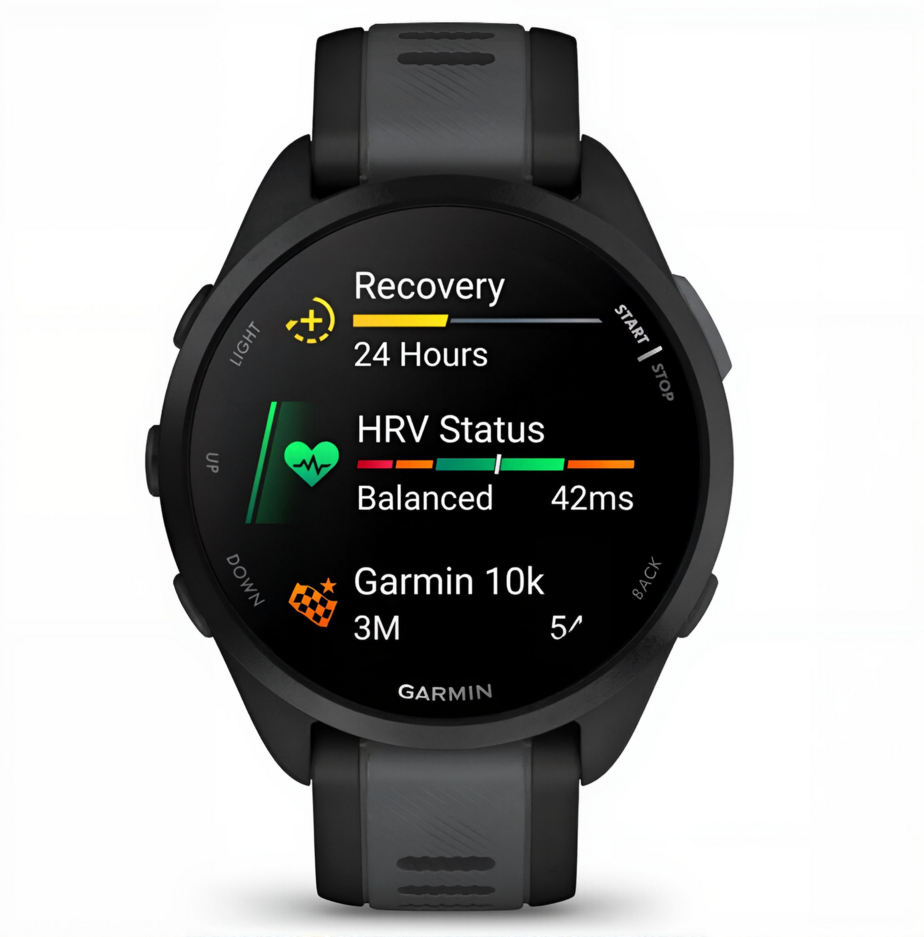
Garmin Forerunner 165 AMOLED display and watch face
The AMOLED screen is one of the biggest upgrades if you are coming from an older Garmin watch.

What I like about the screen

  • It is easy to read during normal outdoor runs.
  • Text messages and menus look clear.
  • The watch does not feel cheap on my wrist.
  • The touchscreen is useful for menus.
  • The buttons still work better during workouts.

I still prefer buttons while running. When I am sweaty, tired or wearing gloves, buttons are just easier. That is one of the reasons I still like Garmin for running more than a regular smartwatch.

The size and weight are almost perfect for me

The Forerunner 165 is not a huge watch, and I like that.

At 43 mm and 39 g, it feels lighter and less bulky than my old Forerunner 955. On paper, that might not sound like a big deal. On a long run, or when you wear it all day, it matters.

I do not want a running watch to feel like an adventure computer strapped to my wrist. I want it to give me the information I need and then disappear while I run.

The 165 does that well.

The features: enough for how I train

The best part of the Forerunner 165 is that it gives me most of the running features I actually use.

It does not have every advanced Garmin feature, but I do not need every advanced Garmin feature for most training days.

Recovery and health features I use

  • Body Battery: helpful as a quick check on how run down I might be.
  • Sleep Score: not perfect, but useful when I want to see sleep trends.
  • Resting heart rate: useful for watching fatigue over time.
  • HRV Status: one of the better recovery tools on the watch.
  • Recovery Time: helpful, as long as you do not treat it like a strict rule.
  • VO2 Max estimate: not something I obsess over, but useful as a general trend.

Running features that matter most to me

  • GPS run tracking
  • Track Run mode
  • Treadmill Run mode
  • Trail Run mode
  • Daily Suggested Workouts
  • Garmin Coach and adaptive training plans
  • PacePro pacing
  • Race Widget
  • Cadence and running dynamics
  • Heart rate zones

For marathon training, that is enough for me most of the time. I want to know my pace, distance, heart rate, recovery and whether I am stacking too much hard training together. The 165 gives me that without making the watch feel complicated.

What is missing on the Forerunner 165?

This is the part I would pay attention to before buying.

The Forerunner 165 is a good running watch, but Garmin clearly left out some features so there is still a reason to buy the Forerunner 265, 570, 970 or other higher models.

Main features missing from the Garmin Forerunner 165

  • No multiband GPS: the GPS is good for most of my road runs, but higher end Garmin watches can do better in dense trees, downtown areas or difficult GPS routes.
  • No Training Readiness: you get recovery information, but not Garmin’s full readiness score.
  • No full Training Status or Training Load: this matters more if you like digging into your training data.
  • No true triathlon mode: it can track run, bike and swim separately, but not as one full multisport race.
  • No full maps: this is not the watch I would pick if mapping is important to you.
  • No offline music on the standard model: you need the Forerunner 165 Music for that.

Do I miss those features every day? No.

Would some runners miss them? Yes.

If you mostly run roads, train for 5K to marathon distances and want useful Garmin data, the 165 makes sense. If you are deep into triathlon, trail racing, ultras or advanced training data, I would look higher in the Garmin lineup.

Garmin Forerunner 165 vs 165 Music

This is one of the easiest mistakes to make when shopping for this watch.

The regular Garmin Forerunner 165 does not have offline music storage. If you carry your phone anyway, that might not matter. I usually have my phone nearby, so this was not a deal breaker for me.

The Garmin Forerunner 165 Music adds offline music support. That means you can pair headphones and listen without carrying your phone, depending on the music services you use.

ModelBest forMain difference
Garmin Forerunner 165Runners who carry a phone or do not care about watch musicUsually cheaper, but no offline music storage
Garmin Forerunner 165 MusicRunners who want music without carrying a phoneAdds offline music support

My advice is simple. If you always run with your phone, save the money. If you hate carrying a phone, get the Music version.

GPS accuracy: good enough for my normal running

The Forerunner 165 has multi GNSS support, but it does not have multiband GPS.

That is one of the bigger differences between the 165 and more expensive Garmin watches. My old Forerunner 955 had stronger GPS options, so I expected to notice the downgrade more than I did.

For my normal road runs, neighbourhood routes and marathon training, the Forerunner 165 has been accurate enough that I do not think about it much. It locks on quickly and the routes look close enough for training.

Where I would expect it to have a harder time is in dense forest, downtown streets with tall buildings or twisty routes where a multiband watch has an advantage.

My GPS take

If you run mostly roads, sidewalks, paths and normal race routes, I think the Forerunner 165 GPS is fine for most runners. If you run a lot of trails or city routes where GPS always gets messy, I would compare it with a Garmin that has multiband GPS.

Heart rate accuracy: useful, but not perfect

The wrist heart rate on the Forerunner 165 has been useful for easy runs, long runs, daily tracking and recovery trends.

I use it for general training most of the time. Resting heart rate, heart rate zones and recovery trends have been good enough for how I train.

Where wrist heart rate can still struggle is during intervals, quick pace changes, cold weather or workouts where your arm movement changes a lot. That is not just a Forerunner 165 issue. I have seen that with other wrist based heart rate sensors too.

For most runs, I am fine using the watch. For intervals, threshold workouts or testing where I really care about the number, I would still use a chest strap.

That is not me saying the watch is bad. It is just how wrist heart rate works.

Battery life: good, but the screen settings matter

Battery life is one of the tradeoffs with an AMOLED watch.

The screen looks great, but if you use always on display all day, you will charge it more often. If you use gesture mode and keep your settings reasonable, the battery lasts much longer.

For my use, the battery has been good enough. I am not charging it every day, and it easily handles normal training weeks.

The GPS battery is enough for marathon training and regular long runs. I would not choose it for a 24 hour ultra or multi day adventure, but that is not what this watch is built for.

Battery life reality

If you want the longest battery Garmin makes, this is not it. If you want a bright screen and enough battery for everyday running, workouts and marathon training, the Forerunner 165 does the job well.

The price is the main reason the Forerunner 165 still makes sense

The Forerunner 165 makes the most sense when it is priced clearly below Garmin’s newer and higher end watches.

The Forerunner 55 is cheaper and simpler. The Forerunner 265 gives you more training data, multiband GPS and true multisport support. The newer Forerunner 170 is also worth comparing now, especially if the prices are close.

That is why I would shop the 165 carefully now. I would not just buy it because it is a Garmin. I would buy it because the price is right and because I do not need the missing features.

For my own running, the 165 still gives me the things I use most: GPS, pace, workouts, recovery time, HRV Status, Body Battery, race tools and a screen I actually like looking at.

WatchBest forWhy you might choose it
Garmin Forerunner 55Newer runners on a tighter budgetSimple, cheaper and enough for basic run tracking.
Garmin Forerunner 165Runners who want a light Garmin with a nice screenStrong run tracking, recovery features and good everyday comfort.
Garmin Forerunner 165 MusicRunners who want the 165 plus phone free musicAdds offline music support.
Garmin Forerunner 170Runners comparing newer Garmin optionsWorth checking if it is close in price to the 165.
Garmin Forerunner 265Runners and triathletes who want more training toolsAdds multiband GPS, Training Readiness, Training Status and multisport support.

You can also compare more models in our full guide to the best Garmin watches for running.

Garmin support was another reason I stayed with Garmin

This is not a feature on a spec sheet, but it matters to me.

When my Forerunner 955 broke outside warranty, I expected to pay a few hundred dollars for a repair or replacement.

Instead, Garmin sent me a refurbished replacement from their stock.

I cannot promise every support situation will go that way. But that experience matters when you are spending real money on running gear.

Sometimes the company behind the watch matters just as much as one extra metric in a comparison table.

Who should buy the Garmin Forerunner 165?

Good fit for

  • 5K, 10K, half marathon and marathon runners
  • Runners upgrading from an older basic Garmin
  • Runners who want a bright screen and real buttons
  • People who want recovery data without paying for a high end Garmin
  • Runners who mostly train on roads, paths and normal race routes
  • Anyone who wants a lighter watch for daily wear

Not the best fit for

  • Triathletes who need true multisport race mode
  • Ultrarunners who need very long GPS battery life
  • Trail runners who want the strongest GPS Garmin offers
  • Runners who want full maps
  • Data heavy runners who want Training Readiness and full Training Load
  • Runners who want music storage but buy the standard 165 instead of the Music version

The downsides

No watch is perfect. These are the things I would know before buying the Forerunner 165.

  1. The standard model does not have music storage. You need the Music version for that.
  2. It does not have multiband GPS. Most road runners will be fine, but trail and city runners may want more.
  3. It is not a true triathlon watch. It can track run, bike and swim, but not as one seamless multisport race.
  4. It skips some advanced training metrics. If you love Training Readiness, Training Status and full Training Load, look at the 265 or higher.
  5. The AMOLED screen affects battery life. The screen is excellent, but always on display drains battery faster.
  6. The Forerunner 170 now exists. That means the 165 is best when the price is clearly better.

Final verdict: is the Garmin Forerunner 165 worth it?

Yes, I think the Garmin Forerunner 165 is still worth it if the price makes sense.

It is not the newest option anymore. It is not the most advanced Garmin. It is not the watch I would buy for triathlon racing, long ultras or full mapping.

But for daily running, marathon training, workouts, recovery tracking and general fitness, it gives me the features I use most.

That is why I like it.

I expected to feel like I was settling after using higher end Garmin watches. I did not. I felt like I bought the watch that matched how I actually train.

Bottom line: if you are a runner who wants Garmin run tracking, a good screen, real buttons and useful recovery data without paying for the top models, the Forerunner 165 is still easy to recommend. Just compare the price against the newer Forerunner 170 before buying.

Still comparing watches? Start with our Running Watch Finder, or read our guide to the best running watches for marathons.

FAQ

Is the Garmin Forerunner 165 good for marathon training?

Yes. The Forerunner 165 works well for marathon training because it tracks GPS, pace, heart rate, workouts, recovery time, HRV Status, Race Widget, PacePro and daily suggested workouts. Most marathon runners will have enough here.

Does the Garmin Forerunner 165 have music?

The standard Forerunner 165 does not have offline music storage. The Forerunner 165 Music does. If you want to run without your phone and listen from the watch, choose the Music version.

Does the Garmin Forerunner 165 have triathlon mode?

No. The Forerunner 165 can track running, cycling and swimming separately, but it does not have a true triathlon or multisport mode. If you want race day triathlon tracking, look at the Forerunner 265 or higher.

Does the Garmin Forerunner 165 have multiband GPS?

No. The Forerunner 165 has multi GNSS support, but not multiband GPS. For most road runners, that is fine. For dense trails, tall buildings or tricky GPS routes, a higher model may be better.

Is the Garmin Forerunner 165 better than the Forerunner 55?

For most runners, yes. The Forerunner 165 has a nicer AMOLED display, better recovery features and a more modern feel. The Forerunner 55 still makes sense if you want a cheaper and simpler running watch.

Is the Garmin Forerunner 165 better than the Forerunner 265?

The Forerunner 265 is the better watch if you want multiband GPS, Training Readiness, Training Status, Training Load and true multisport support. The Forerunner 165 is the better buy if you do not need those extras and the price is lower.

Should I buy the Garmin Forerunner 165 or Forerunner 170?

I would compare prices first. If the Forerunner 165 is clearly cheaper, it can still be a good buy. If the Forerunner 165 and Forerunner 170 are close in price, I would look closely at the newer 170 before deciding.

Is the Garmin Forerunner 165 good for beginners?

Yes, but it may be more than some beginners need. If you only want basic pace and distance, the Forerunner 55 may be enough. If you want a watch you can grow into, the 165 is a stronger pick.

Is the Garmin Forerunner 165 good for small wrists?

Yes. The 43 mm case and 39 g weight make it one of the more comfortable Garmin running watches for runners who do not like bulky watches.

Similar Posts