Best Running Balaclavas and Face Masks for Cold Weather
If your running hat keeps your ears warm and it’s just your cheeks that sting in the wind, try a neck gaiter first. When you keep tugging your hat down and your gaiter up to cover the same gap, a balaclava is worth buying. They can also be used for other winter activities, we like to have a few as they can get wet and can also get misplaced easily.
For the rest of your layers, use our running outfit calculator with the temperature, wind and effort you expect.
This guide contains affiliate links. As an Amazon Associate, RunningGearLab earns from qualifying purchases.
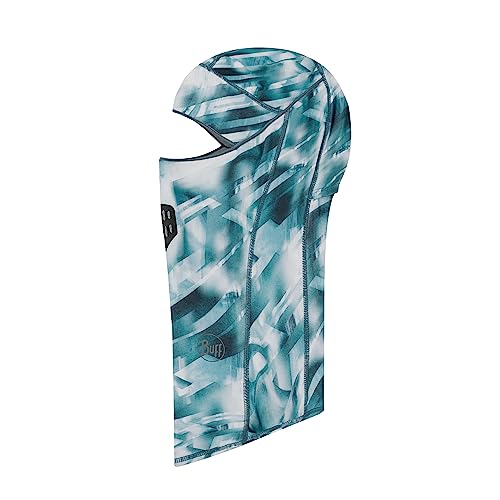
Best overall for winter running
BUFF ThermoNet Hinged Balaclava
The face panel moves independently of the hood. You can leave it down, then pull it over your nose when you turn into the wind. Small vents let your breath out while the panel is up.
Quick picks for winter runs
What we use in Winnipeg
We have a balaclava similar to the WTACTFUL below and a few BUFFs, some plain and some with extra fleece. The neoprene face mask comes out for extreme cold.
Running balaclavas, neck gaiters and face masks
Vented hood for changing pace
BUFF ThermoNet Hinged Balaclava
The VaporGrid™ mouthpiece allows you to breath well. The ThermoNet also has flat seams. It has a ponytail opening for anyone who runs with one. The material is moisture wicking and it dries fast.
Try the hinge with your headlamp or beanie in place. You should be able to uncover your mouth for a drink without shifting either one.
Fleece coverage for easy miles
WTACTFUL Double-Layer Balaclava

The WTACTFUL pairs brushed fleece around the head and ears with a separate breathing panel. This is the style I choose for really cold Canadian winter runs.
If you wear a ponytail, feed it through the rear opening before positioning the face panel. That keeps a lump of hair from pushing the hood forward, or go for the Buff with the pony opening.
Wool over the head, cheeks and neck
Smartwool Thermal Merino Balaclava

If your hat rides up and leaves a cold strip behind your ears, a one piece wool hood solves that particular problem. Smartwool uses 100% merino in an interlock knit through the crown and face. Tuck the neck inside your jacket to keep the back of your collar covered when you turn your head. This is a great option for people looking for a more natural material as the other options are synthetic.
You breathe through wool when the front is up. The fabric can get wet, wool should stay warm even when wet however if that bothers you choose the vented options.
For runners who already have a favourite hat
BUFF Merino Midweight Neckwear

For a route that starts in the wind and finishes on sheltered streets, a tube is a good option. Pull the top edge over your cheeks for the exposed stretch, then let it sit at your neck. This BUFF uses 250 g/m² merino throughout, with no added fleece.
Already own a plain BUFF? Try it with your usual hat first. Buy the midweight wool version if you want more warmth at the neck or prefer wool against your face.
Extra warmth at the jacket collar
BUFF Polar Neckwear

The Polar has two different ends. Keep the fleece low to fill the gap above your zipper and pull the thinner stretch fabric over your mouth. It’s a good choice when a plain tube leaves your neck chilly, especially on a slow start or a longer walk break.
Zip your jacket all the way up with the fleece tucked inside. If it bunches under your chin, a plain gaiter will sit more comfortably against a high collar. The fleece is not as stretchy as the thinner options.
Wind coverage across the nose and cheeks
Seirus NeoFleece Comfort Masque

If wind cuts through your usual gaiter, this is the cold weather running mask I’d look at for your nose and cheeks. Seirus uses fleece lined neoprene with breathing holes in front and an adjustable fastening at the back. You can wear the hat that fits you best because the mask leaves the crown of your head open.
Check where the holes sit with your jaw relaxed. If you have to tighten the strap until it presses on your nose to line them up, try a different size. This is what I wear on extremely cold runs. I try to run year round in Winnipeg, Canada.
Compare coverage and fit
| Face cover | Over your mouth | Fit with a hat |
|---|---|---|
| BUFF ThermoNet | Stretch fabric with small vents | Low-profile hood. Add a thin hat if needed. |
| WTACTFUL Double-Layer | Separate breathing panel | Fleece over the ears adds bulk under a snug hat. |
| Smartwool Thermal Merino | Merino wool knit | Full wool crown fits beneath a roomy beanie. |
| BUFF Merino Midweight | Merino wool, with no fleece section | Wear your usual hat when the tube covers your face. |
| BUFF Polar | Stretch upper, with fleece worn low | Separate hat. The extra fleece sits at the neck. |
| Seirus NeoFleece | Holes in fleece-lined neoprene | Open crown. Pair it with a hat that covers your ears. |
How to choose a balaclava for running
Match the face cover to the exposed stretch
A sheltered loop around freezing may call for little more than a hat and a thin gaiter in your pocket. The same temperature on an open river path can feel very different. If the wind hits one cheek for half the run, start with a gaiter you can pull up. If your ears and the back of your neck get cold too, a full hood gives you continuous coverage.
Plan for the slow parts as well. On a run with walk breaks, extra fleece at the neck can be welcome. For hill repeats, choose a face panel you can lower as soon as your breathing picks up.
Try it with your hat, jacket and mittens
Put on the hat or headlamp you normally wear and zip your jacket. Look down, then turn your head as if checking traffic. Can you still see clearly to both sides? Does the neck stay tucked in at the back? A tall collar on a winter running jacket can push a bulky mask higher than it sat in the store.
Try pulling the panel down and back up while wearing your running mittens. If that takes two bare hands in the kitchen, it’ll be a nuisance outside.
When the wind chill is severe
Environment and Climate Change Canada warns that at a wind chill of −28°C to −39°C (about −18°F to −38°F), exposed skin can freeze in 10 to 30 minutes. Move the run indoors in that range. For other conditions, our winter running guide covers wind, footing and when to cut a route short.
Winter face mask questions
Which running face mask works with glasses?
I’d start with the vented ThermoNet for a full hood. Fit across the bridge of your nose matters as much as the vents. Put on your prescription glasses or running sunglasses and exhale a few times. If air blows up under the lenses, reposition the nose edge and line the vents up with your mouth. Stop to clear fogged lenses before running on.
What if the fabric gets wet or starts to freeze?
Carry a dry gaiter in a pocket on longer runs. Once the cloth over your mouth is wet or stiff, step out of the wind and swap it. If you can’t keep your face covered comfortably or your cheeks start to feel numb, head indoors.
Will my ski balaclava work for running?
Try the one you have with your running jacket. Take a few deep breaths, turn your head and lower the front with your gloves on. If the eye opening stays put and you can uncover your mouth when you warm up, it can do both jobs. Thick ski fleece is more comfortable for an easy outing than for a hard workout.