Best Running Watches 2026: Garmin, COROS, Apple & Suunto
The Garmin Forerunner 170 is the best running watch for most runners in 2026. It gives you accurate run tracking, useful training guidance and a bright display without pushing you into premium map watch pricing.
That does not make it the right watch for everyone. Trail runners may need maps. Triathletes may want a dedicated multisport mode. Some runners simply need pace, distance and a battery that lasts through the week. This guide starts with the job the watch needs to do, then shows you where paying more makes sense.
If you are still learning the categories, begin with our running watches and tech hub. It connects the watch guides, comparisons, audio gear and training tools in one place.
Affiliate disclosure: RunningGearLab may earn a commission from links on this page, at no extra cost to you.
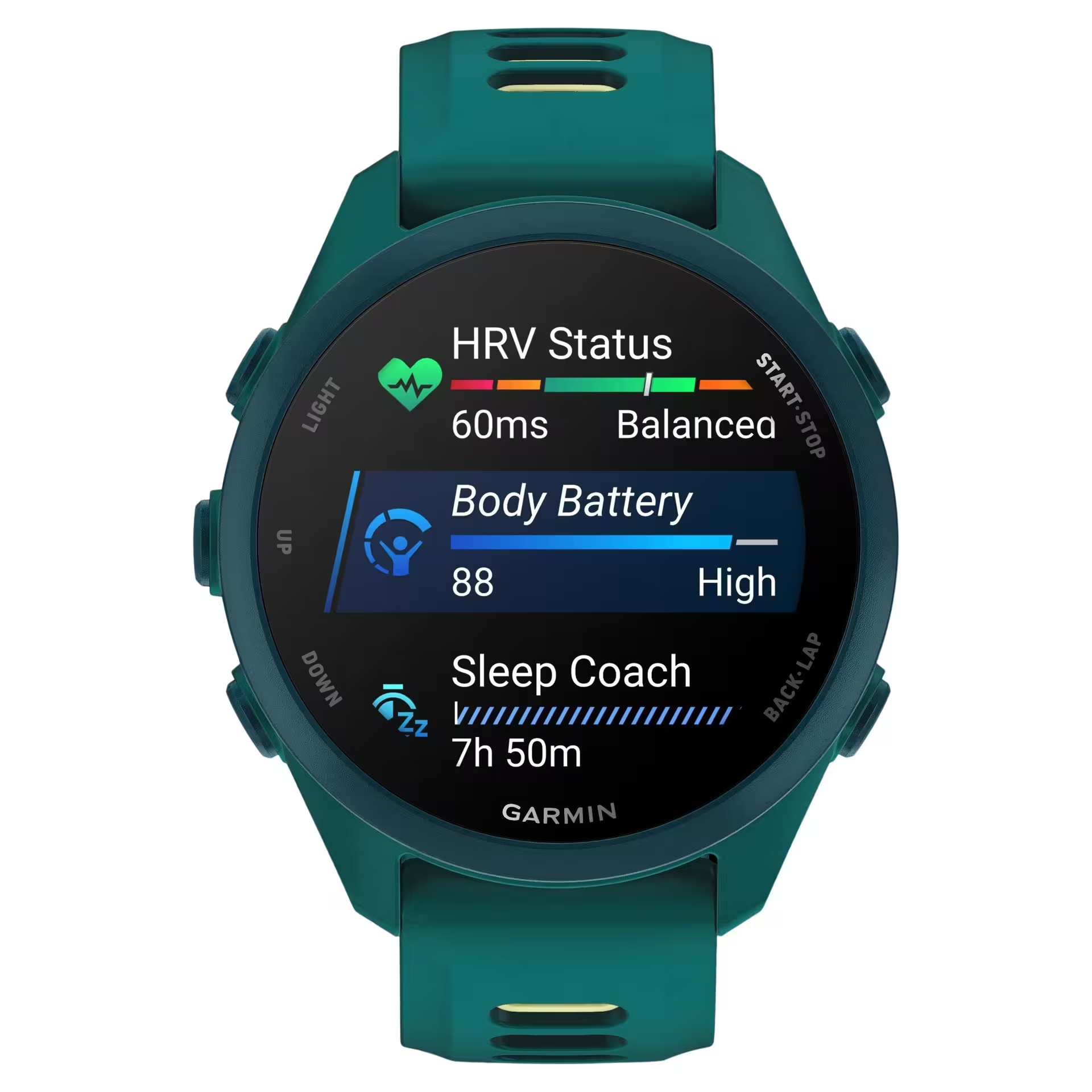
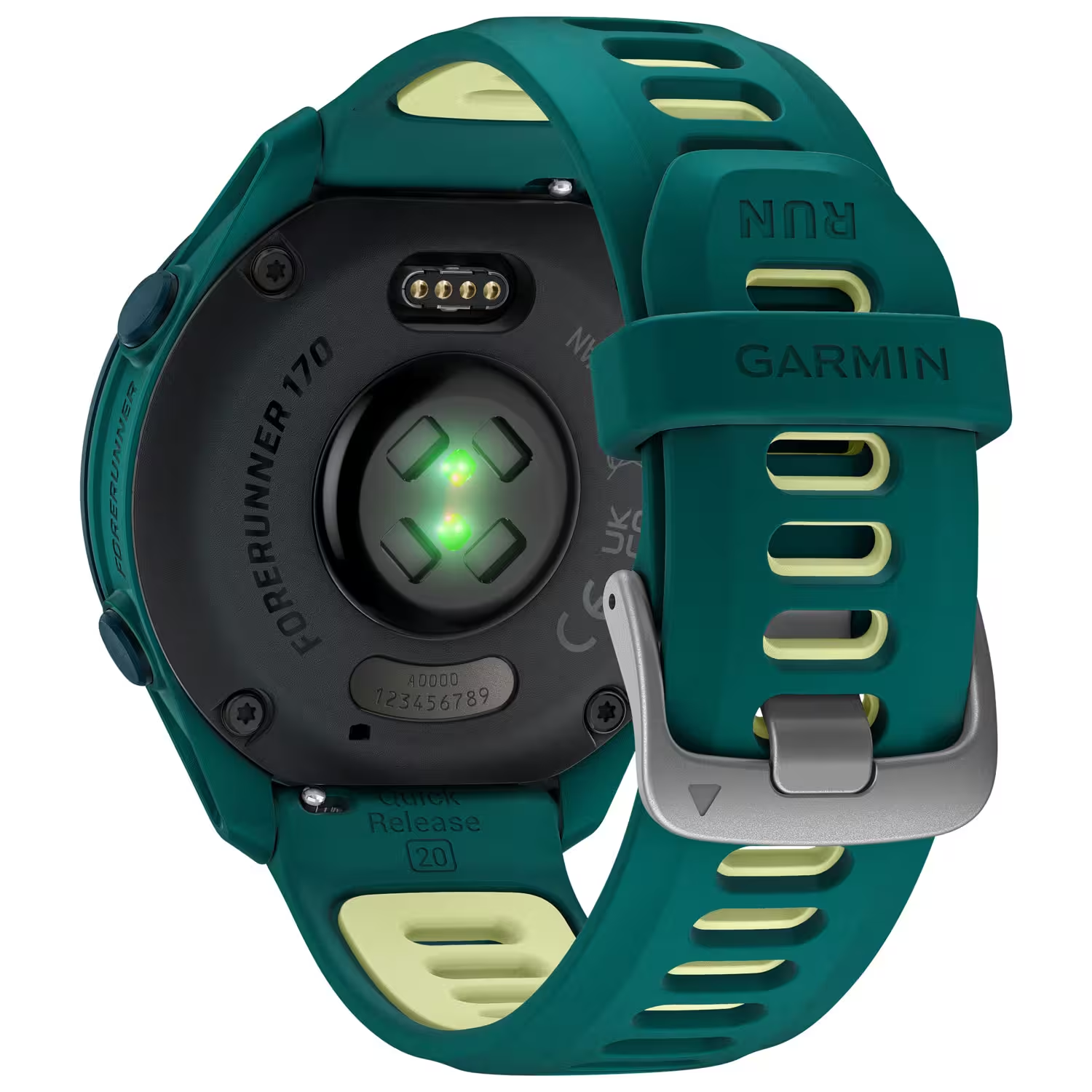
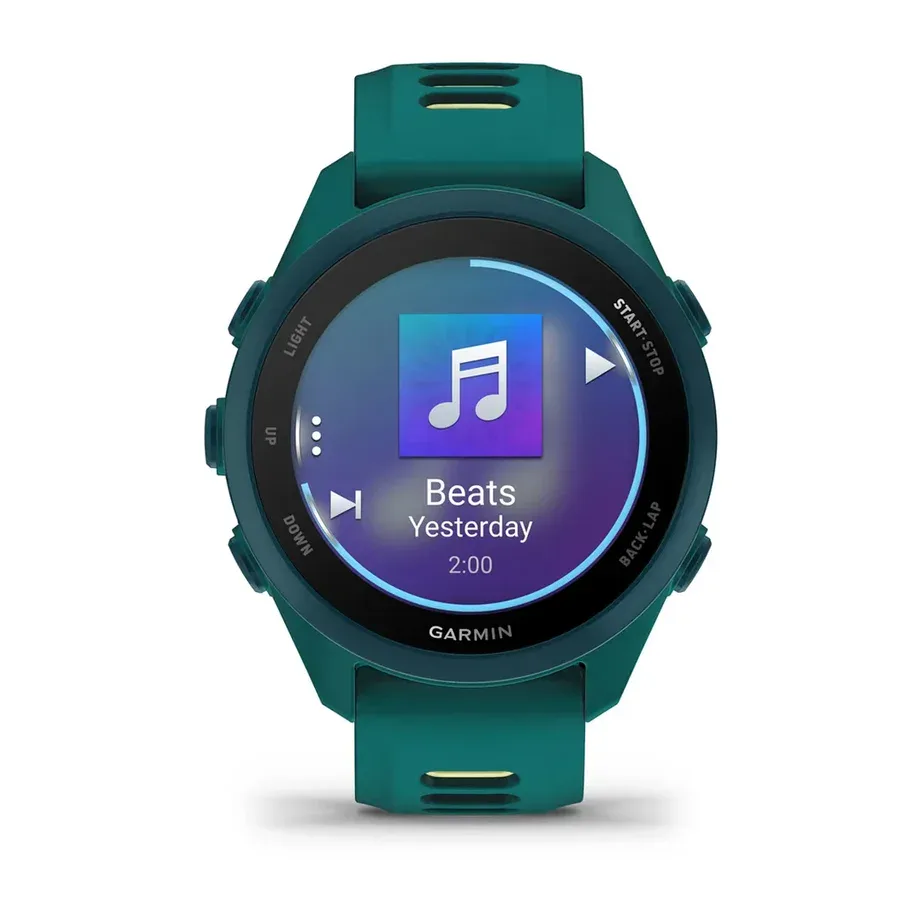
Three editable product images. The Music model is sold separately.
Best Running Watch for Most Runners
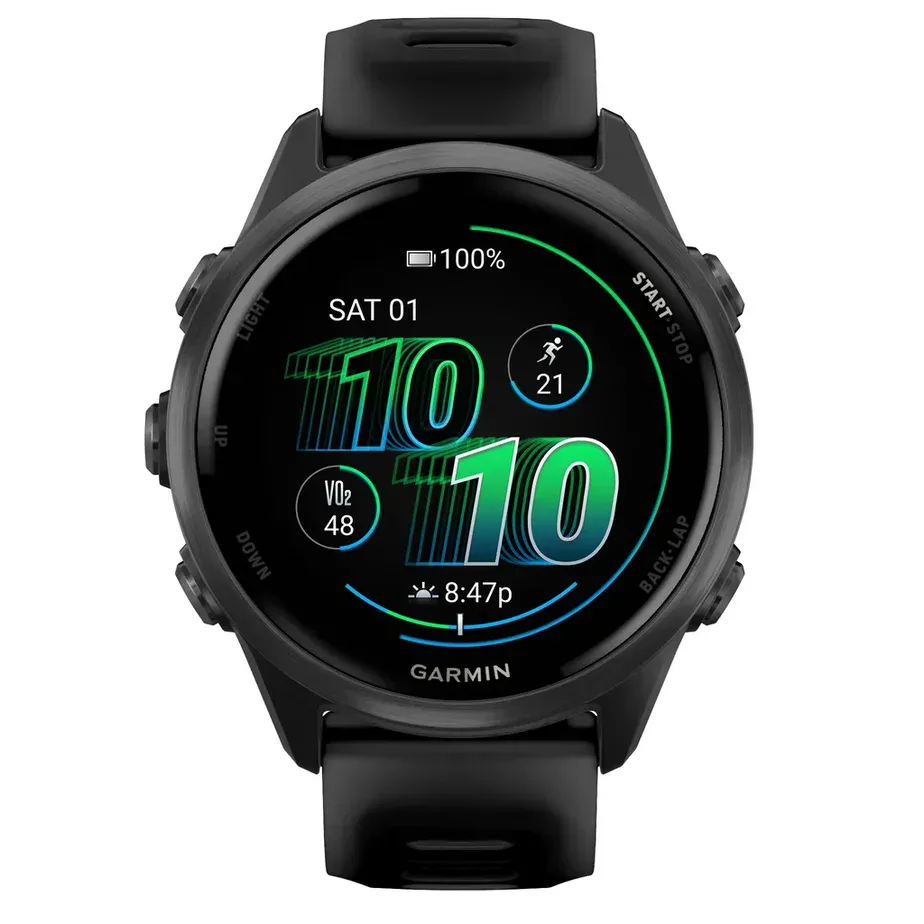
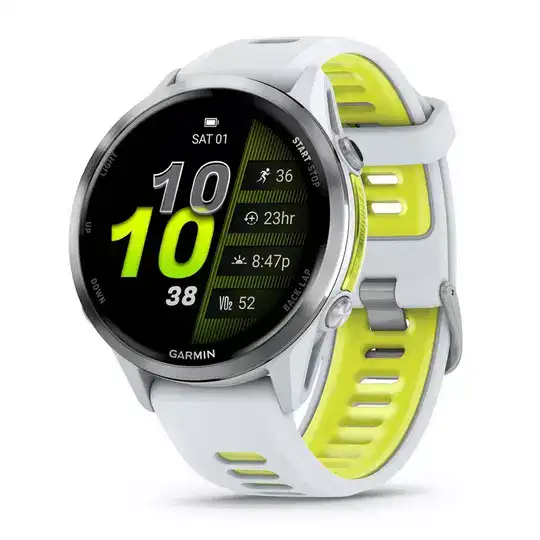
Garmin Forerunner 170
The Forerunner 170 covers the features most road runners use. You get a crisp AMOLED display, multi band GPS, recovery guidance, Garmin Pay and up to 20 hours of GPS battery. Choose the Music model if you want downloaded playlists without a phone.
43 mm case
20 hour GPS
Multi band GPS
Optional music
Justin’s take: I use the Forerunner 170 for regular training and triathlon racing after previously owning a Forerunner 955. The lighter, simpler watch suits me better. It does not record an entire triathlon with transitions as one activity, so multisport athletes should understand that limit before buying.
Quick reality check: A pricier watch will not make your everyday GPS file more useful by itself. Pay extra for a feature you can name, such as offline maps, multisport recording, longer event battery or deeper training tools.
Shop this guide
Find your watchQuick picksCompareFull reviewsGarmin levelsMusicFAQ
Last reviewed October 2026
Which running watch fits you?
Choose the closest answer in each row. You will get one starting point and a sensible alternative.
Want more filters? Use the full Running Watch Finder.
Quick picks
The best running watches at a glance
Start with your use case. Each card jumps to an editable full review.
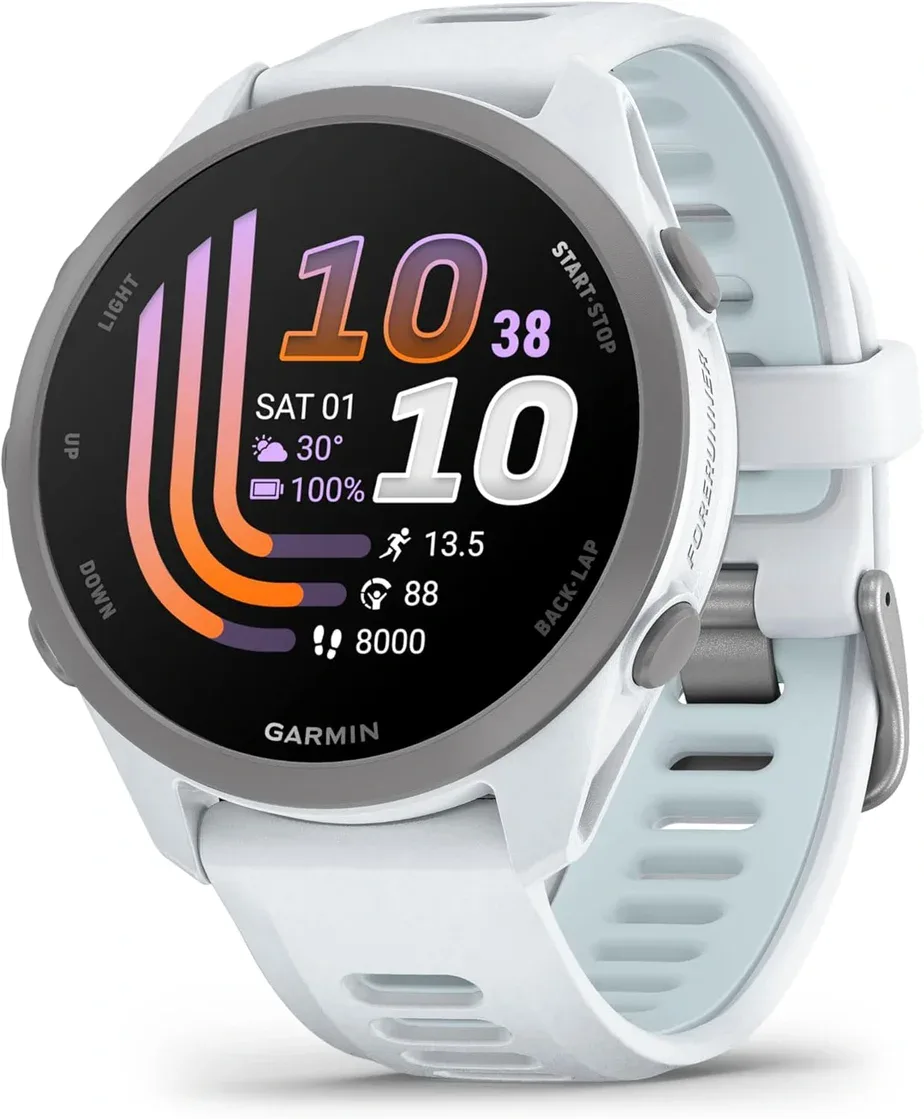

Best Simple Garmin
Forerunner 70
Core run tracking for newer runners and tighter budgets.
Choose by what you actually need
First running watch
Start with the Forerunner 70. See more lower cost choices in our best cheap running watches.
Road training
The Forerunner 170 is the easiest recommendation. Use the Watch Finder if case size or music changes your choice.
Marathon training
Look at the 170, 265 or 570. Our marathon watch guide explains the tradeoffs for long plans and race day.
Trails and routes
Prioritize maps and battery. Compare the 970, PACE 4 and Race 2, then visit our trail running watch guide.
The 8 best watches for runners in 2026
These reviews focus on buying decisions. You will see who each watch suits, what you are paying for and the reason you might choose something else.
1
Best for Most Runners
Garmin Forerunner 170
Case: 43 mm
GPS battery: Up to 20 hours
Navigation: Course guidance, no full maps
Music: Separate Music model
Bottom line: Buy the 170 when you want a modern Garmin running watch and do not need full maps or a dedicated triathlon activity.
This is the watch I would point most road runners toward first. The screen is bright, the case is easy to wear and the training tools go well beyond basic pace and distance. Yet the menus still feel manageable once you set up the data screens you use most.
I use the Forerunner 170 myself. Before that, I owned the more expensive Forerunner 955 and spent a lot of time with the Forerunner 165. I miss the 955’s single activity triathlon recording, but I do not miss paying for features I rarely opened. That experience is a big reason the 170 sits first here.
The main choice is whether you need the Music edition. If you always carry your phone, the standard model is enough. If you want downloaded playlists for a run, compare both versions before buying. Our Forerunner 165 review also explains what Garmin’s lighter midrange watches feel like in daily use.
Buy it if: You run mostly on roads and want one light watch for training, recovery and daily wear.
Skip it if: You need full maps, a single multisport race file or very long event battery.
What works well
- Bright AMOLED display
- Strong run and recovery tools
- Comfortable 43 mm case
- Optional onboard music
Know before buying
- No full offline maps
- No dedicated triathlon profile
- Music costs more
2
Best Value
COROS PACE 4
Case: 43.4 mm
GPS battery: Up to 41 hours
Navigation: Downloadable maps
Music: Local MP3 files
Bottom line: PACE 4 gives weight conscious runners a lot of battery and current features for the money.
The PACE 4 makes its case quickly. It is light, the GPS battery is generous and its dual frequency positioning is aimed at runners who train around tall buildings, trees and changing terrain.
There is an important update. COROS added downloadable maps through a 2026 software release. The experience is still different from Garmin’s premium routable maps, so serious navigation buyers should compare the interface before choosing. PACE 4 also stores local MP3 files, though it does not offer direct Spotify or Apple Music integration.
COROS works best for runners who value battery, simple workout execution and low weight. Garmin still has the broader wellness and app ecosystem. Neither approach is automatically better. The question is which set of tools you will open every week.
Buy it if: Battery, low weight and value matter more than a deep smartwatch ecosystem.
Skip it if: You want streaming music services or Garmin’s wider collection of wellness features.
What works well
- Very light with nylon band
- Strong GPS battery
- Downloadable maps now supported
- Local MP3 storage
Know before buying
- No streaming music integration
- Smaller app ecosystem than Garmin
- Map experience is still evolving
3
Best Sale Buy
Garmin Forerunner 265
Case: 42 or 46 mm
GPS battery: Up to 20 or 24 hours
Navigation: Courses, no full maps
Music: Included
Bottom line: The 265 remains a capable training watch, but its value depends on the discount beside newer Garmin models.
The Forerunner 265 has not stopped being a good running watch just because newer models exist. It has a bright AMOLED screen, two case sizes, onboard music and multisport support. The training readiness tools remain useful for runners who like to adjust hard days around sleep and recovery.
Price is the deciding factor. If it sits close to the Forerunner 570, buy the model whose newer tools you actually need. If the 265 is heavily reduced, it can be the smarter purchase. It is especially attractive to smaller wristed runners who want the 42 mm version.
Buy it if: You find a strong sale and want music, two case sizes and multisport support.
Skip it if: Its price is close to the newer 570 or you need full maps.
What works well
- Two case sizes
- Onboard music included
- Useful training readiness tools
- Multisport support
Know before buying
- Older model
- No full maps
- Only compelling at the right price
4
Best for Structured Training
Garmin Forerunner 570
Case: 42 or 47 mm
GPS battery: Up to 18 hours
Navigation: Courses, no full maps
Music: Included
Bottom line: Pick the 570 when structured training and newer Garmin feedback matter more than maps.
The 570 is built for the runner who checks tomorrow’s workout, follows a plan and pays attention to recovery. It brings Garmin’s current training experience into two case sizes and includes music storage.
The awkward part is its position. It costs more than the simple 170, yet it stops short of the 970’s full maps. That middle ground makes sense if training tools are the priority. It feels less convincing if you mostly start the run, check pace and save the activity.
Buy it if: You follow structured workouts and want a current Garmin with two case sizes.
Skip it if: You only need core run data or you are already paying enough to consider maps.
What works well
- Strong structured workout tools
- Two case sizes
- Music included
- Bright AMOLED screen
Know before buying
- No full maps
- Costs much more than entry models
- Battery is not the class leader
5
Best Garmin with Maps
Garmin Forerunner 970
Case: 47 mm
GPS battery: Up to 26 hours
Navigation: Built in maps
Music: Included
Bottom line: The 970 is for runners who will use Garmin’s maps and advanced training package often enough to justify the price.
The Forerunner 970 is the complete Garmin option in this list. It adds built in maps to the training, recovery and multisport features that serious runners expect. Routes are easier to understand at a glance, especially when a course has several close turns.
It is also a large, expensive watch. That matters. Plenty of road runners will get nearly the same day to day value from a 170 or 570. Buy the 970 because maps and premium tools solve a real problem, not because it sits at the top of Garmin’s range.
Buy it if: You need maps, multisport support and Garmin’s broadest training package.
Skip it if: Most of your runs follow familiar roads or you prefer a smaller case.
What works well
- Detailed built in maps
- Deep training and recovery tools
- Multisport support
- Music included
Know before buying
- Premium price
- One large case size
- Too much watch for many road runners
6
Best for iPhone Runners
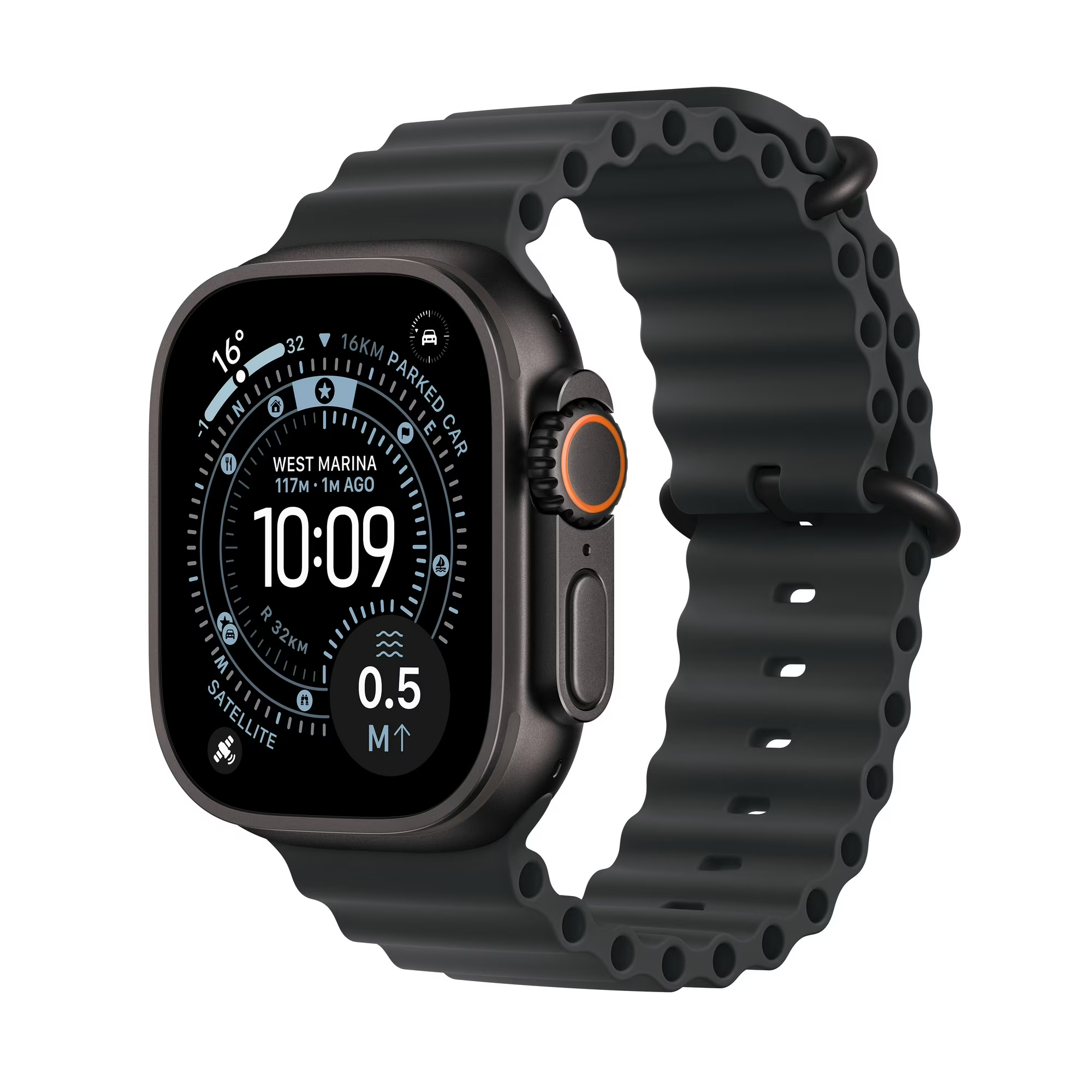
Apple Watch Ultra 4
Case: 49 mm
Battery: 50 hours normal use, 18 hour standard workout
Navigation: Offline maps
Music: Apps and downloaded media
Bottom line: Ultra 4 is the best choice here when you want a rugged running watch and a full Apple smartwatch in one device.
Ultra 4 makes sense for a specific runner. You use an iPhone, want strong app support and appreciate calling, payments, music and safety features on the same watch that records a long run. Its new readiness score and higher frequency heart data also make Apple more competitive as a training platform.
Its 49 mm case is substantial. Apple rates it for up to 50 hours of normal use, 18 hours of standard workout tracking or 45 hours in the reduced Max Extended Workout mode. The regular Apple Watch Series 12 is the more natural choice for runners who do not need that extra endurance or rugged build.
If you are deciding between ecosystems, our Garmin vs Apple Watch guide compares the experience beyond a spec sheet.
Buy it if: You use an iPhone and want apps, cellular options and serious outdoor hardware.
Skip it if: You want a small watch or a running first interface with multiweek battery.
What works well
- Excellent iPhone integration
- Broad music and app options
- Offline maps
- Strong safety and communication tools
Know before buying
- Large 49 mm case
- High price
- Shorter battery than many sport watches
7
Best Suunto
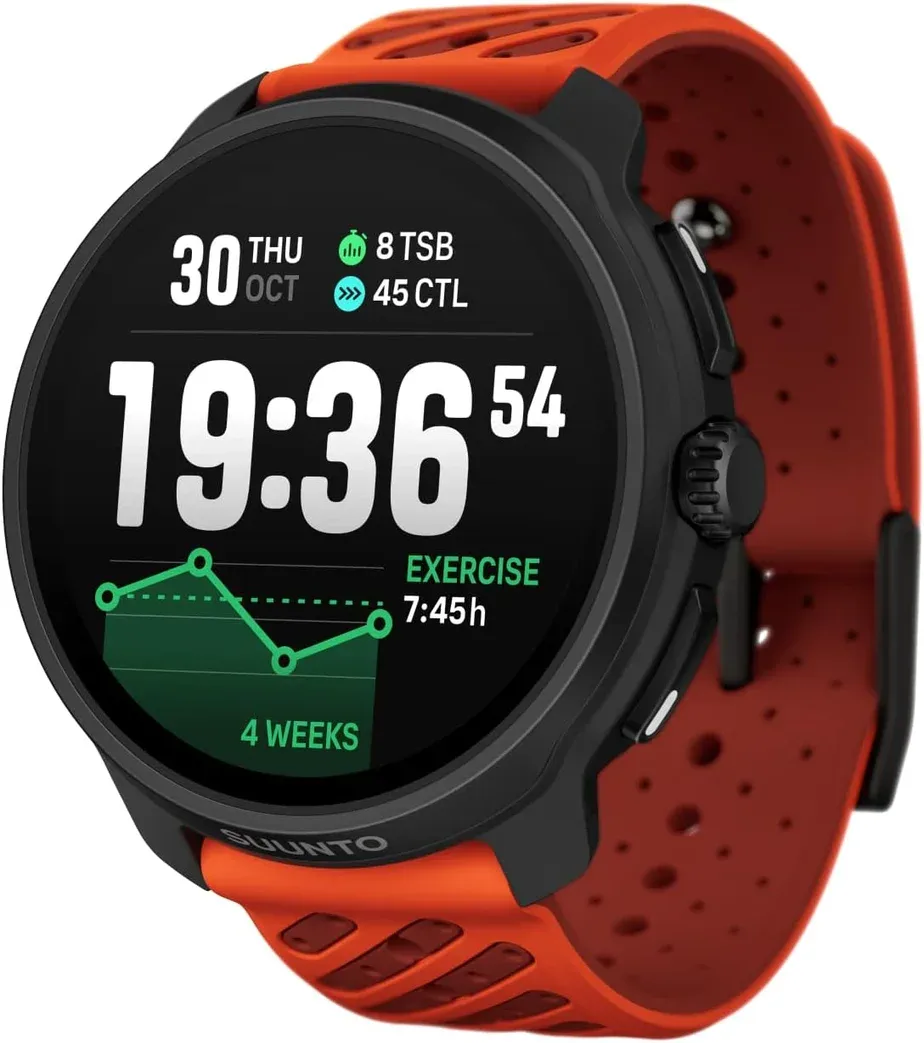
Suunto Race 2
Case: 49 mm
GPS battery: Up to 55 hours
Navigation: Offline maps, 32 GB storage
Weight: 65 or 76 g
Bottom line: Race 2 is a strong route watch for runners who want a large map display and long multi band GPS battery.
Suunto Race 2 is easy to understand on the move. The large display gives maps room to breathe, while the 55 hour performance battery provides a useful margin for long trail days and ultras.
The size is the tradeoff. A 49 mm watch will not disappear on a small wrist. It also is not the music choice in this group. Buy it for routes, battery and Suunto’s outdoor focus. Our ultra running watch guide has more options for very long events.
Buy it if: Offline maps, a large screen and long GPS battery matter most.
Skip it if: You want a compact case or onboard music for phone free runs.
What works well
- Offline maps
- Long multi band GPS battery
- Large, clear display
- Strong outdoor focus
Know before buying
- Large case
- No onboard music library
- Smaller app ecosystem than Apple or Garmin
8
Best Simple Garmin
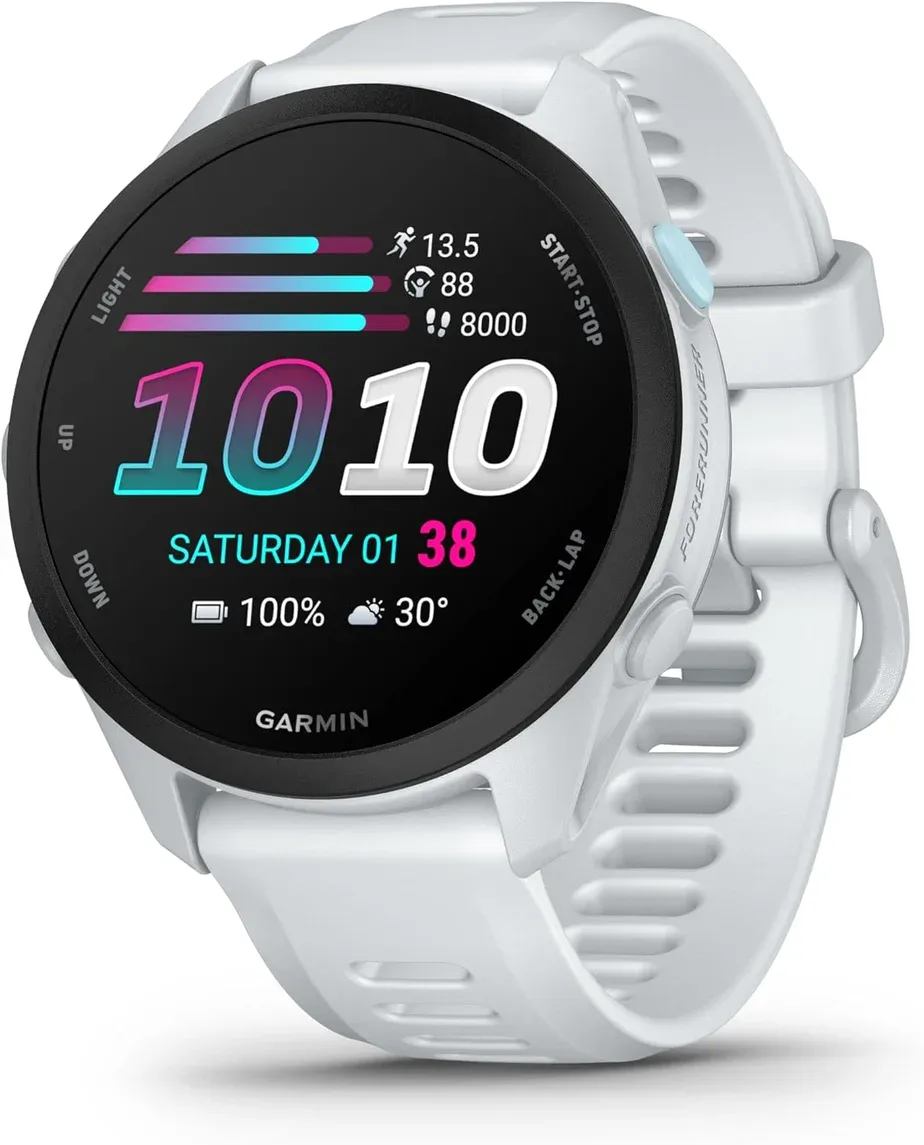
Garmin Forerunner 70
Case: 43 mm
GPS battery: Up to 23 hours
Navigation: Basic guidance, no maps
Music: No onboard storage
Bottom line: The 70 keeps the core Garmin running experience simple and gives newer runners room to grow.
The Forerunner 70 is for runners who do not want to turn every jog into a data project. It records the essentials, provides a clear Garmin interface and offers up to 23 hours in GPS mode.
You give up maps, stored music and some of the deeper tools found higher in the range. That is fine if you would not use them. The 170 is the better long term buy for runners who already know they want recovery guidance and more training detail.
Buy it if: You want a simple Garmin for pace, distance, heart rate and everyday runs.
Skip it if: You already know that music, maps or deeper recovery tools matter to you.
What works well
- Simple Garmin experience
- Up to 23 hours of GPS battery
- Comfortable everyday size
- Good first watch
Know before buying
- No onboard music
- No maps
- Fewer training and recovery tools
Running watch comparison
The numbers below use manufacturer maximums. They are useful for narrowing the list, but settings, screen use, navigation and music can shorten real battery life.
| Watch | Best for | Case | GPS battery | Maps | Music |
|---|---|---|---|---|---|
| Forerunner 170 | Most runners | 43 mm | Up to 20 hours | No full maps | Music model only |
| COROS PACE 4 | Value and battery | 43.4 mm | Up to 41 hours | Downloadable maps | Local MP3 files |
| Forerunner 265 | Discount value | 42 or 46 mm | Up to 20 or 24 hours | No full maps | Yes |
| Forerunner 570 | Structured training | 42 or 47 mm | Up to 18 hours | No full maps | Yes |
| Forerunner 970 | Premium Garmin maps | 47 mm | Up to 26 hours | Built in maps | Yes |
| Apple Watch Ultra 4 | iPhone and apps | 49 mm | 18 hours standard workout, 45 extended | Offline maps | Apps and downloads |
| Suunto Race 2 | Routes and long events | 49 mm | Up to 55 hours | Offline maps | No onboard library |
| Forerunner 70 | Simple Garmin | 43 mm | Up to 23 hours | No | No |
Apple’s longest workout mode reduces some alerts and metrics as it stretches battery life. COROS added downloadable maps to PACE 4 through a 2026 software update.
How we chose
Runner reviewed and carefully researched
Justin currently uses the Garmin Forerunner 170 for training and triathlon racing. He previously owned the Forerunner 955 and has used the Forerunner 165 extensively. That gives this guide a real reference point for comfort, menus, daily training and the features that sound useful but may not earn their cost.
For every model, we checked current manufacturer specifications, battery modes, mapping support, music options and software updates. We then judged each watch by the runner it serves, not by the length of its feature list. Manufacturer battery claims are maximums and are not perfectly comparable between brands.
The Garmin ladder in plain English
Each step should solve a problem. Stop when the next feature is something you would rarely use.
Forerunner 70Core run tracking and strong basic GPS battery.
Forerunner 170Better training guidance, multi band GPS and optional music.
Forerunner 570Deeper structured training and multisport tools.
Forerunner 970Full maps and Garmin’s premium feature set.
For more model by model detail, read our best Garmin watches for running.
Music without a phone
Which running watch is best for music?
Start by deciding whether you want streaming service downloads or simple MP3 files. That one choice removes a lot of confusion.
Garmin
Forerunner 170 Music is the easiest current choice for most runners. The 265, 570 and 970 also store music.
COROS
PACE 4 stores local MP3 files. It does not connect directly to Spotify or Apple Music.
Apple
Ultra 4 supports Apple Music, podcasts and third party apps, with the broadest smartwatch experience here.
Do not want to buy a watch just for audio? Compare watch storage with dedicated headphones and players in our guide to the best MP3 players for running.
Watch or screenless tracker? A screenless tracker can quietly collect sleep, recovery and daily activity. It usually cannot replace live pace, structured workouts or route maps. See our screenless fitness tracker guide if you want fewer notifications or prefer to keep wearing a traditional watch.
Running watch questions
What is the best running watch for most runners?
The Garmin Forerunner 170 is our best overall pick. It balances a comfortable case, bright screen, multi band GPS, useful training guidance and a reasonable place in Garmin’s range. Choose something else if full maps, dedicated multisport recording or extreme battery life is essential.
Do runners really need multi band GPS?
No. It is most helpful around tall buildings, dense trees, steep terrain and other places where satellite signals bounce or get blocked. Standard GPS can be perfectly adequate on open roads and paths.
Do I need maps on a running watch?
You need maps if you often follow unfamiliar routes and want to see nearby roads or trails at a glance. Simple breadcrumb guidance is enough for familiar courses and straightforward road routes.
Should I buy the Garmin Forerunner 265 or 570?
Buy the 265 when it is meaningfully cheaper and its features already cover your training. Choose the 570 for Garmin’s newer training experience and current hardware. Neither has the full maps found on the 970.
Which running watch can play music without a phone?
The Forerunner 170 Music, 265, 570 and 970 support stored audio, while Apple Watch Ultra 4 supports music apps and downloads. COROS PACE 4 plays local MP3 files but does not offer direct Spotify or Apple Music integration.
Can a screenless fitness tracker replace a running watch?
Usually not for active training. A screenless tracker can be excellent for sleep, recovery and daily activity, but runners still need a watch or phone for live pace, workouts and navigation.
Is Apple Watch Ultra 4 the best Apple Watch for every runner?
No. Ultra 4 is best for runners who need its larger battery, rugged case and outdoor features. The regular Apple Watch Series 12 is smaller and will suit many road runners who want Apple apps without the Ultra price or size.
Keep comparing
Use these guides to move from a broad shortlist to the right watch for your training.
Product facts checked against: Garmin, COROS, Apple and Suunto. Specifications and software features can change after publication.