Best Watches for Trail Runners in 2026: Maps, Battery and Mountain Picks
Many running watches can handle both roads and trails. The difference is what you need to care about once the pavement ends.
On trails, maps, battery buffer, elevation, buttons, and route tools start to matter more. A watch that feels fine on a road 10K can feel limited when you are under trees, climbing hills, or following a route you do not know.
This guide is built for real trail runners. Local dirt paths, hilly long runs, mountain races, 50K training, and those days when the route takes longer than planned.
If you mostly run roads, start with our broader best watches for runners guide. If your goal race is a road marathon, see the marathon watch guide. This page is for runners who care about maps, elevation, battery buffer, buttons, and trail durability.
For most runners who split time between roads and trails, I would start with the Garmin Forerunner 970.
It has built-in maps, strong GPS, a bright display, Garmin training tools, and a lighter feel than a fēnix. It makes the most sense if you run a mix of road, trail, hills, and races up to about 50K.
If you want a tougher watch with more battery, choose the Garmin fēnix 8 Solar 51mm. If you want strong trail maps for less money, look at the COROS APEX 4 46mm or Suunto Race 2.
Best Trail Running Watches at a Glance
These are the watches I would shortlist first. The right one depends on how far you run, how often you use maps, and whether you care more about weight, battery, or smart features.
Trail Running Watch Comparison Table
Brand battery numbers are useful, but they are not the whole story. Music, maps, screen brightness, cold weather, phone connection, and GPS mode can all reduce battery life.
| Watch | Best For | Trail Strength | Brand-listed GPS Battery | Main Tradeoff |
|---|---|---|---|---|
| Garmin Forerunner 970 Top Pick | Most trail runners who want a lighter map watch | Built-in maps, SatIQ, bright display, Garmin training tools | Up to 26 hours GPS-only | Not the longest battery and not as rugged as fēnix |
| Garmin fēnix 8 Solar 51mm | Mountain trails, long days, rough use | Maps, buttons, solar, flashlight, rugged case | Up to 95 hours GPS-only, or 149 hours with solar | Large, expensive, and more watch than many runners need |
| COROS APEX 4 46mm | Trail runners who want maps and battery for less | Topo maps, trail names, POIs, long battery, MIP screen | Up to 65 hours All Systems GPS | Fewer smart features than Garmin or Apple |
| Suunto Race 2 | Runners who want a big bright map screen | Free offline maps, improved navigation, clear AMOLED | Up to 55 hours | Less daily smartwatch polish than Apple or Garmin |
| Garmin Enduro 3 | Long trail ultras and multi-day routes | Huge battery, solar, maps, light for its class | Up to 120 hours GPS-only, or 320 hours with solar | Less sleek than Forerunner and not cheap |
| Apple Watch Ultra 3 | iPhone users who want one watch for life and trails | Dual-frequency GPS, offline maps support, strong safety tools | Up to 42 hours normal use, 72 hours Low Power Mode | Battery planning matters more on long trails |
Battery numbers are brand-listed estimates and use different settings. Test the exact GPS mode, maps, brightness, and alerts you plan to use before race day.
How to Choose a Trail Running Watch
A trail watch should match where you run. A local park loop and a mountain 50K do not need the same watch.
For local trails
You may not need full maps. Accurate GPS, heart rate, elevation, lap alerts, and enough battery for a long run can be enough. A lighter watch often feels better for daily training.
For new routes
Built-in maps or good route navigation matter more. You want to see junctions, turns, climbs, and where you are if the trail splits.
For mountain races
Battery buffer is key. Do not buy a watch that barely covers your goal time. Use the battery mode you plan to race in during at least one long run.
For winter or wet trails
Buttons matter. Touchscreens are nice at home, but gloves, rain, sweat, and cold fingers make physical controls easier.
The Best Watches for Trail Runners in 2026
Garmin Forerunner 970
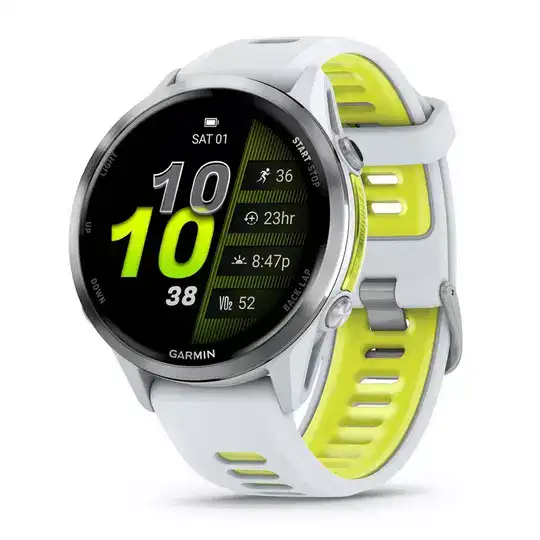
The Garmin Forerunner 970 is the best trail watch for most runners because it gives you real maps without the bulk of a fēnix. That matters if you also wear the watch for road runs, track workouts, gym days, sleep, and daily life.
For trail running, the big win is simple: you can follow routes, check your position, and still get Garmin’s deeper running tools. Training Readiness, HRV Status, Training Load, ClimbPro, and route support all make sense if you train on mixed terrain.
The 970 is not the battery monster on this list. If you are doing long mountain ultras, the fēnix 8 Solar or Enduro 3 gives you more room. But for most trail runners, the 970 is easier to live with.
What works
- Built-in maps in a lighter running-watch body
- Strong training and recovery tools
- Bright screen is easy to read at trail junctions
- Good choice if you split time between roads and trails
Watch out for
- Premium price
- Not as rugged as a fēnix
- Battery is good, but not built for very long ultras
- Only one case size
Garmin fēnix 8 Solar 51mm
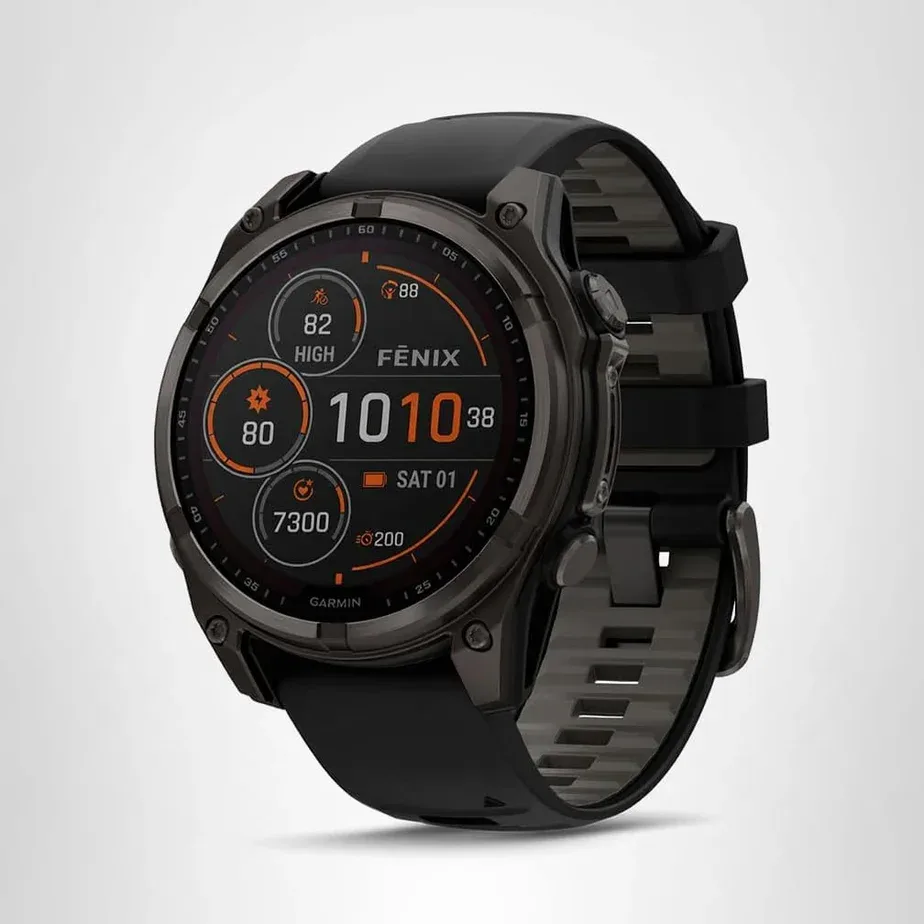
The fēnix 8 Solar 51mm is the watch I would pick for long trail days where battery and durability matter more than a sleek feel. It is big, but that size gives you a larger battery, physical buttons, solar charging, and a rugged case.
This is the better Garmin if you run remote routes, hike, camp, ski, or do long trail races where a watch may be recording for most of the day. The MIP display is not as colourful as AMOLED, but it is easy to read outside and easier on battery.
The catch is size. A 51mm fēnix can feel like too much watch if you have a small wrist or mostly run short local trails.
What works
- Excellent GPS battery for trail running
- Rugged case and physical buttons
- Maps, navigation, ClimbPro, and outdoor tools
- Solar helps on long sunny days
Watch out for
- Large and expensive
- Overkill for short local trails
- MIP screen is not as bright as AMOLED
- Solar helps, but it is not a magic charger
COROS APEX 4 46mm
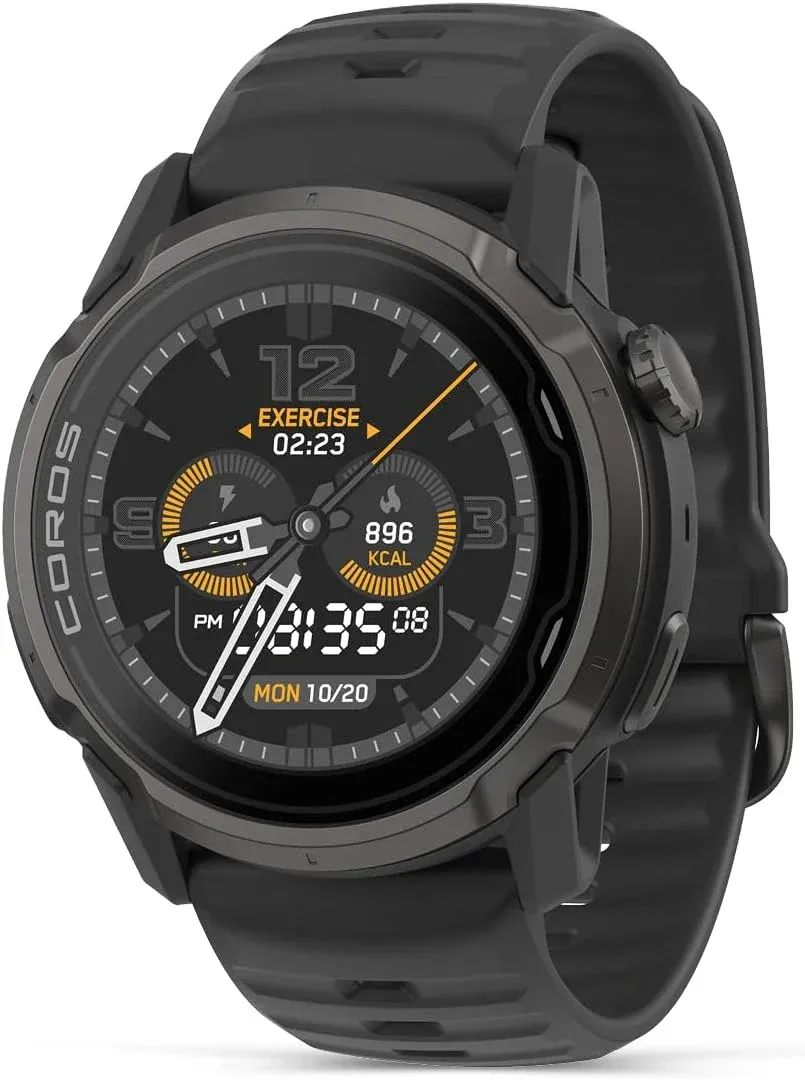
The COROS APEX 4 46mm is the trail value pick. It gives you long battery life, a durable build, and useful maps for less than most high-end Garmin watches.
The APEX 4 is especially interesting for trail runners because COROS added better map rendering, trail names, points of interest, and turn-by-turn guidance. That is the kind of detail that helps when your route has a few confusing junctions.
The COROS app is simpler than Garmin Connect. Some runners will like that. Others will miss Garmin Pay, deeper app options, and the heavier training ecosystem.
What works
- Strong battery for the price
- Useful topo maps with trail names
- MIP screen works well in bright sun
- Simpler software than Garmin
Watch out for
- Less smartwatch polish than Garmin or Apple
- MIP screen looks duller indoors
- No Garmin Pay-style ecosystem
- 42mm version has less battery than 46mm
Suunto Race 2
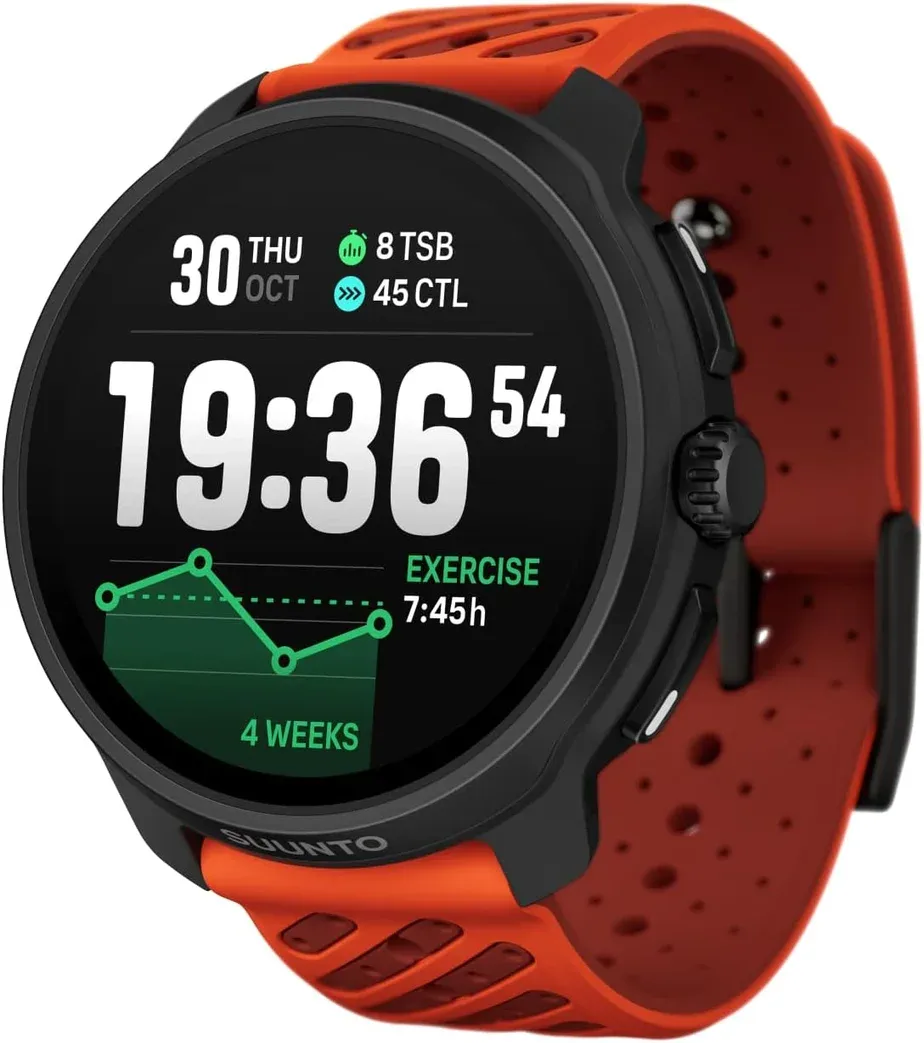
The Suunto Race 2 is a strong Garmin alternative for trail runners who care about maps and screen clarity. The AMOLED display is big and easy to read, and Suunto’s offline maps are one of the main reasons to consider it.
It makes sense if you like mountain routes, long climbs, and route planning, but do not want to spend fēnix money. It also feels less cluttered than Garmin if you do not want a watch full of menus.
The tradeoff is daily smartwatch depth. If payments, music storage, app options, and Garmin’s training platform matter to you, Garmin still wins.
What works
- Large bright map screen
- Free offline maps
- Strong battery for an AMOLED watch
- Good option for mountain and trail routes
Watch out for
- Fewer smart features than Garmin or Apple
- Not as familiar to many runners as Garmin
- App and ecosystem may feel simpler
- Large screen may feel big on smaller wrists
Garmin Enduro 3
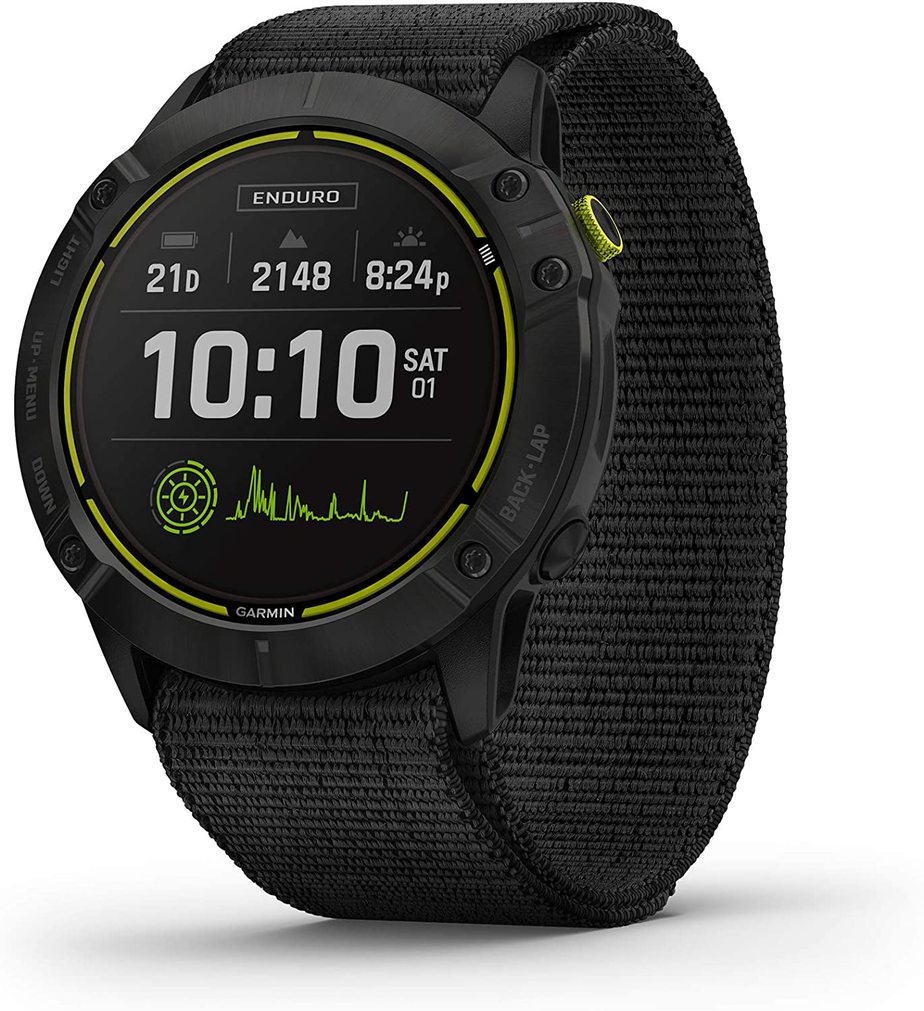
The Garmin Enduro 3 is the watch for runners who are past normal trail distances. If you are training for long ultras, multi-day mountain routes, or big backcountry days, battery becomes the main feature.
Compared with the fēnix 8, the Enduro 3 feels more focused on endurance. You get huge battery life, solar charging, maps, and a lighter build than you might expect for this kind of battery.
Most trail runners do not need this much watch. But if your races go overnight, or your long days often include hiking, navigating, and bad weather, it is one of the safest Garmin choices.
What works
- Huge GPS battery
- Good for 100K, 100 mile, and multi-day efforts
- Solar charging can help on long days
- Garmin maps and endurance tools
Watch out for
- Too much watch for short trail runs
- Still expensive
- MIP screen is not as colourful as AMOLED
- Less sleek than the Forerunner 970
Apple Watch Ultra 3
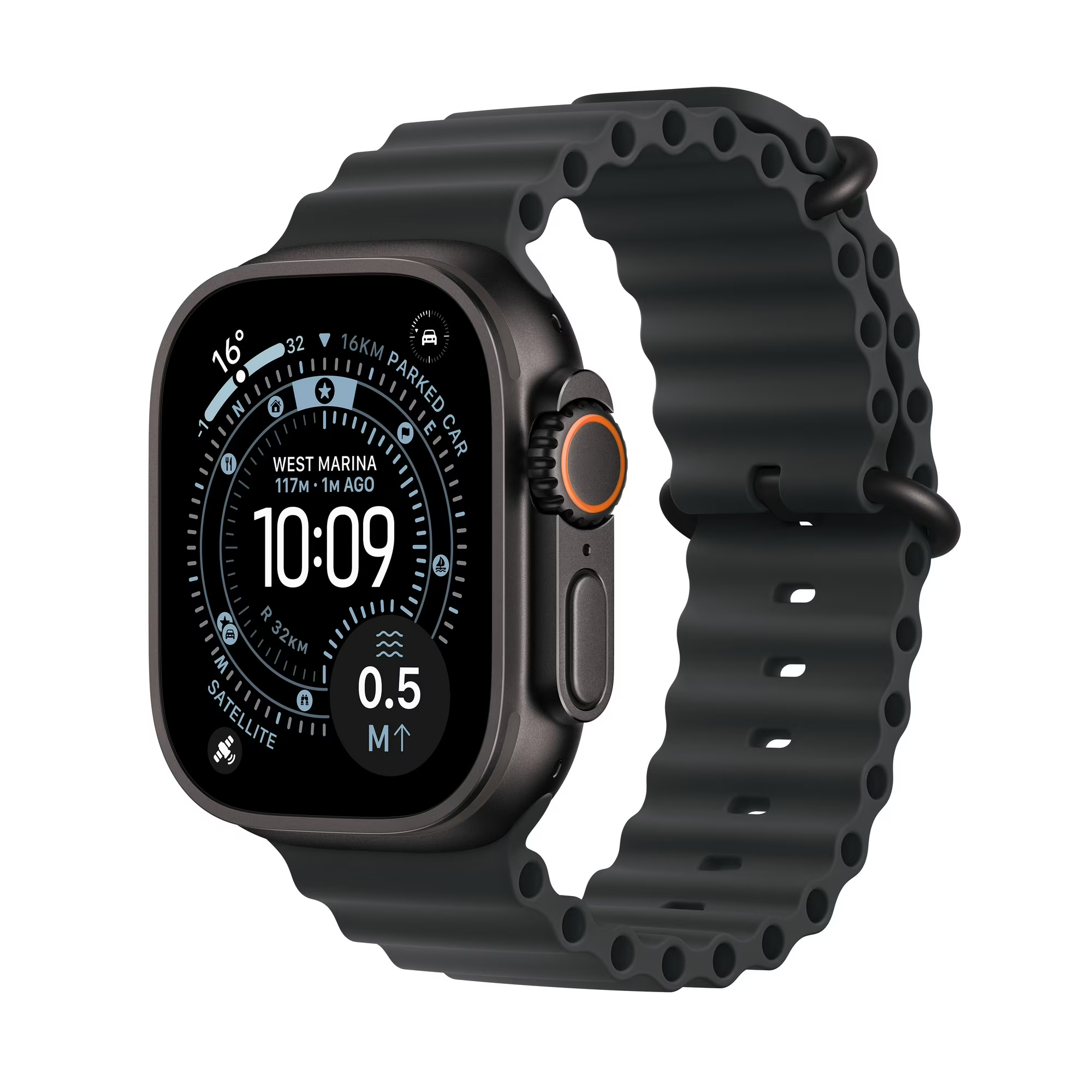
The Apple Watch Ultra 3 is the best choice if you want one watch for life, work, family, safety features, and local trail running. It is a better daily smartwatch than anything Garmin, COROS, or Suunto makes.
For trail running, the GPS is strong, the screen is excellent, and the app options are deep. It works well for local trails, shorter trail races, and runners who always carry an iPhone. Canadian runners should test the map setup before relying on it, since Apple lists topographic park maps as U.S.-only on its current spec page.
The tradeoff is battery planning. For a long trail ultra, I would rather have Garmin, COROS, or Suunto. For everyday trail runners who want the Apple experience, it can be a good fit.
What works
- Best daily smartwatch here
- Strong app support
- Bright screen and dual-frequency GPS
- Good safety and communication features
Watch out for
- Requires an iPhone
- Battery is not as simple for long trail races
- Touchscreen is less ideal in rain and gloves
- Less trail-specific than Garmin, COROS, or Suunto
- Map setup can be less straightforward for Canadian trail routes
Maps vs Breadcrumb Navigation: What Do Trail Runners Need?
This is where many running watch guides confuse people. Not every trail runner needs full maps, but some runners absolutely do.
Breadcrumb navigation
A breadcrumb line shows your route as a simple line. It can help you stay on track, but it may not show nearby trails, names, terrain, or points of interest.
Full maps
Full maps show more context. Depending on the watch, you may see trails, roads, turns, elevation, landmarks, and your exact position on the map.
If you run familiar singletrack, breadcrumb navigation may be enough. If you run new routes, mountain loops, trail races, or remote areas, I would choose a watch with real maps.
What About Budget Trail Watches?
A cheaper GPS watch can work for local trail running, especially if you already know your routes. The tradeoff is usually maps, battery, rugged materials, and better elevation tools.
If your budget is tight, check our best cheap running watches guide. For trail runners, I would avoid buying only on price if you plan to run new routes, long trail races, or remote areas.
Trail Watch Features That Actually Matter
- Battery buffer: Buy for your bad day, not your best day.
- Buttons: Easier than touchscreens in rain, cold, sweat, and gloves.
- Maps or route support: Important if you explore or race on unfamiliar trails.
- Barometric altimeter: Better for climbing and elevation changes than GPS-only elevation.
- Comfort: A big battery is not helpful if the watch annoys you for four hours.
- App ecosystem: Garmin is deep, COROS is simpler, Suunto is map-focused, and Apple is the best daily smartwatch.
Use the Running Watch Finder
Answer a few questions about your budget, race distance, battery needs, phone type, and training style. It is the fastest way to narrow this list before you spend money.
Try the Free Watch FinderMore RunningGearLab Watch and Trail Guides
Use these next if you are choosing a watch for a specific race or building your trail setup.
FAQ About Trail Running Watches
What is the best watch for trail running?
For runners who split time between roads and trails, the Garmin Forerunner 970 is the best starting point because it has built-in maps, strong GPS, a lighter feel than a fēnix, and Garmin’s training tools. If you want more battery and a tougher case, choose the Garmin fēnix 8 Solar or Enduro 3.
Do I need maps on a trail running watch?
You do not need maps for every trail run. If you only run familiar local trails, basic GPS and breadcrumb routes may be enough. If you run new routes, mountain trails, or remote races, full maps are worth it.
Is Garmin better than COROS for trail running?
Garmin is better if you want deeper maps, training tools, app support, and smart features. COROS is better if you want long battery, simpler menus, and strong value. Both can work well for trail running.
Is Apple Watch Ultra 3 good for trail running?
Yes, for iPhone users who run local trails, shorter trail races, or want the best daily smartwatch. For long trail ultras or remote mountain routes, Garmin, COROS, or Suunto are easier to manage because of battery and trail-first controls.
How much GPS battery do I need for trail running?
For short local trails, 10 to 20 hours is already more than enough. For trail marathons or 50K races, I would want at least 20 to 30 hours in the GPS mode you will actually use. For ultras, leave a bigger buffer.
Should I buy a fēnix or Forerunner for trail running?
Choose Forerunner if you want a lighter running-first watch. Choose fēnix if you want more rugged materials, bigger battery options, and outdoor features for hiking, skiing, and long mountain days.
Can I use a road running watch on trails?
Yes, if the trail is familiar and the run is short. A road watch can track pace, distance, heart rate, and elevation. The limits show up on new routes, long climbs, poor GPS areas, or races where navigation and battery matter more.
Buy for the trail you actually run.
For most trail runners, start with the Garmin Forerunner 970. For rough mountain days, go fēnix 8 Solar. For long ultras, look at Enduro 3. For value maps, COROS APEX 4 and Suunto Race 2 are the two I would compare first.