Best Heart Rate Monitors for Running in 2026: 8 Top Picks
Your running watch already measures heart rate, but an external sensor still makes sense when you care about fast changes, interval work or cleaner zone data.
Chest straps remain the best choice for runners who want the quickest response. Upper arm sensors are easier to live with and can be accurate enough for a lot of training. The right pick depends on whether you care more about precision, comfort or extra running metrics.
Updated and fact checked: August 2026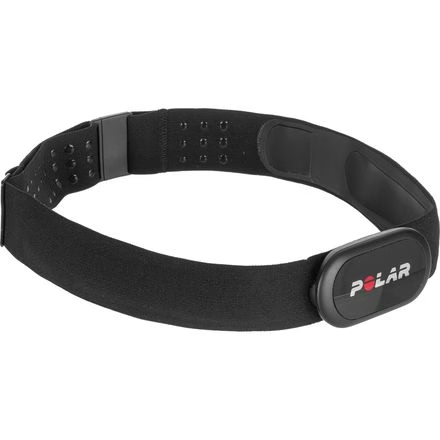
Polar H10
If you are buying a sensor mainly because you want cleaner heart rate data, the H10 is hard to argue with. It pairs with Garmin and plenty of other platforms. Researchers also use it as a reference device, and the coin cell battery can last for months of training.
Check Current PriceWhy it stands out: it does the main job extremely well without making you pay for running dynamics you may never use.
See the Heart Rate Monitors First
Accurate, widely compatible and proven enough to be used as a research reference.
Read review →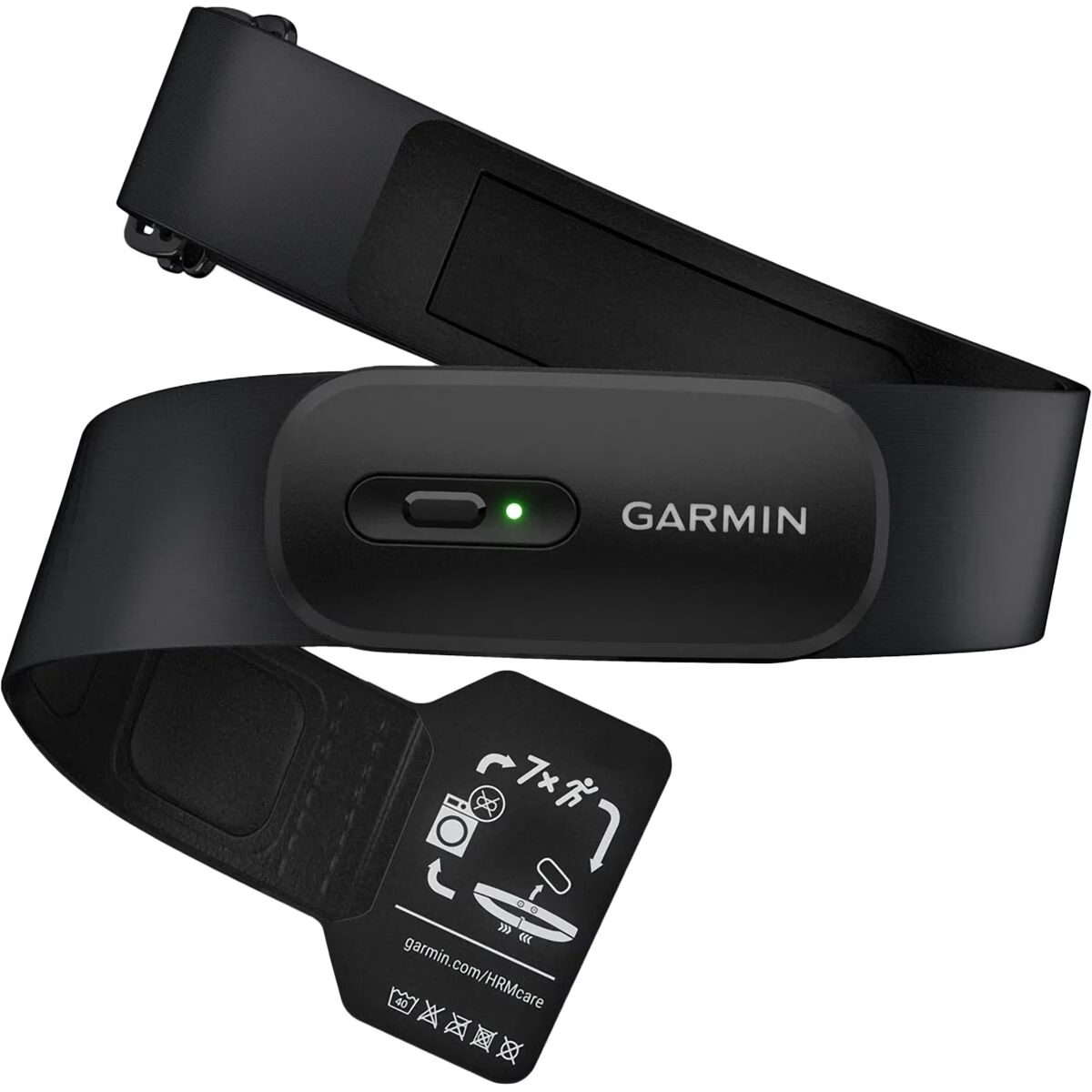
Heart rate, HRV, running dynamics and standalone activity recording.
Read review →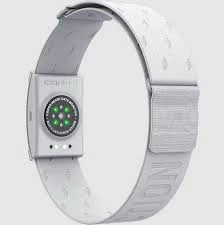
Upper arm optical sensor with 38 hours of battery and no chest strap.
Read review →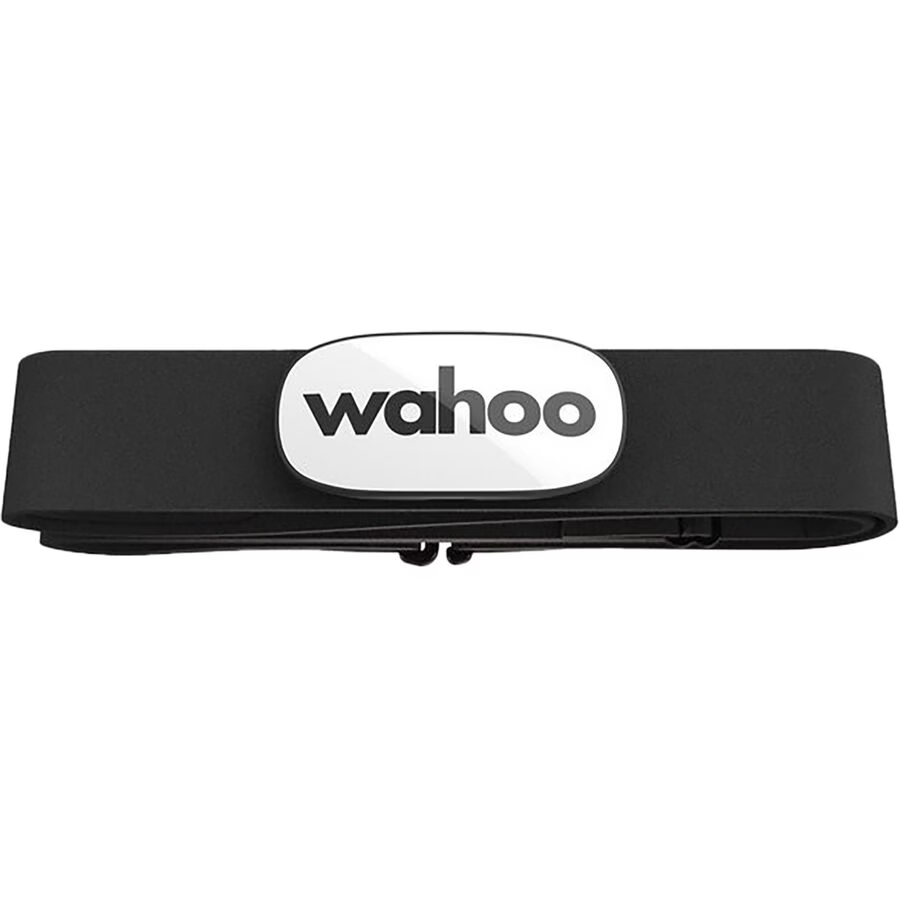
More than 100 active hours with ANT+ and three Bluetooth connections.
Read review →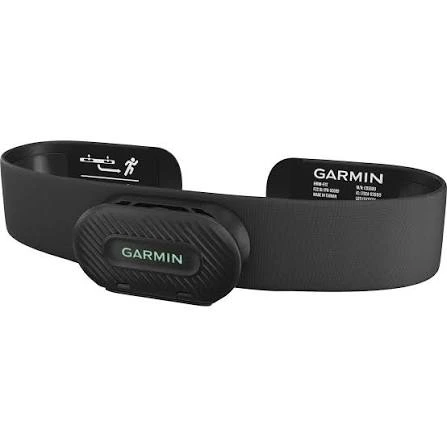
Clips to compatible medium and high support sports bras.
Read review →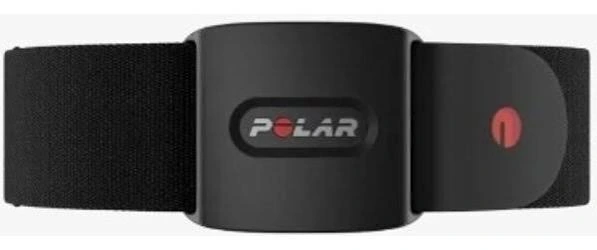
Arm based optical sensor with recording mode and swim support.
Read review →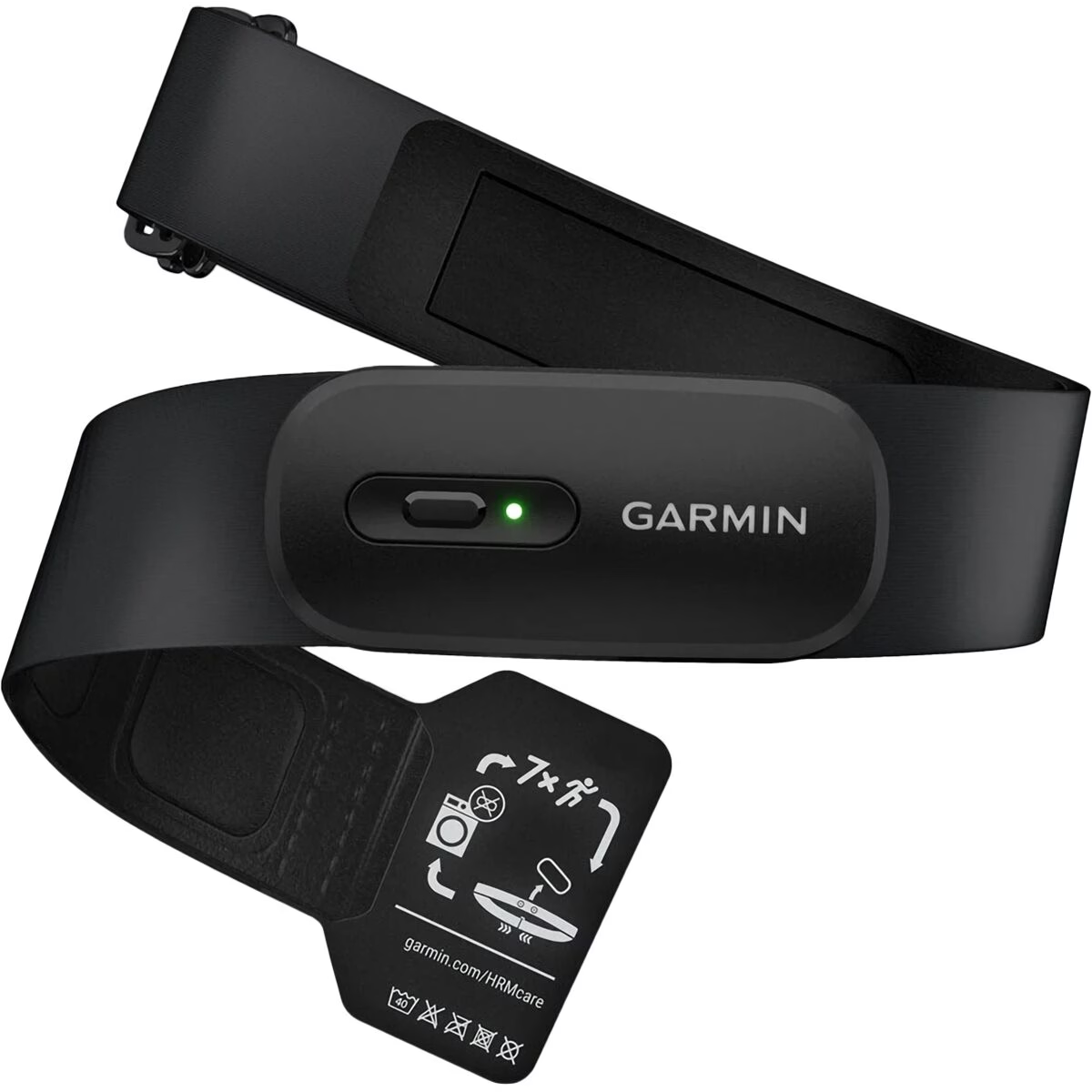
Accurate heart rate and HRV without paying for premium running metrics.
Read review →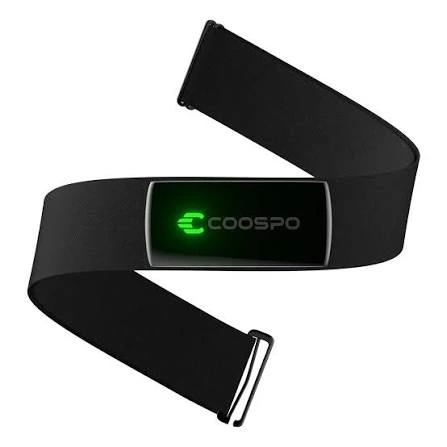
Bluetooth, ANT+, 50 hour rechargeable battery and zone LEDs for less.
Read review →Chest Strap or Arm Band?
First decide what you are actually willing to wear.
Electrical chest sensors react quickly when your effort changes. That matters most during intervals, threshold work and workouts where you are trying to hold a narrow heart rate range.
An arm band avoids the pressure around your ribs and is easier to forget about. For steady runs and longer workouts, that comfort can matter more than the small response advantage of a chest strap.
A modern watch can be perfectly useful on an easy run. Wrist readings get messier with cold skin, a loose fit, lots of arm movement or sudden pace changes.
Compare Heart Rate Monitors
Tap up to three monitors below. The comparison focuses on placement, battery, connectivity and whether the monitor records without a watch.
Choose up to 3 monitors. Polar H10, Garmin HRM 600 and COROS are selected to start.
Full Comparison
| Monitor | Sensor | Placement | Battery | ANT+ | Offline / Onboard Data |
|---|---|---|---|---|---|
| Polar H10 | Electrical | Chest | Up to 400 hr | Yes | One session |
| Garmin HRM 600 | Electrical | Chest | Up to 2 months* | Yes | Yes |
| COROS HR Monitor | Optical | Upper arm | 38 hr active | No | No |
| Wahoo TRACKR | Electrical | Chest | 100+ hr | Yes | No onboard memory |
| Garmin HRM-Fit | Electrical | Sports bra band | Up to 1 year* | Yes | Stores HR during timed activities |
| Polar Verity Sense | Optical | Upper arm / forearm | Up to 30 hr | Yes | Yes |
| Garmin HRM 200 | Electrical | Chest | Up to 1 year* | Yes | No |
| Coospo H9Z | Electrical | Chest | 50 hr | Yes | No |
* Garmin battery claims depend on the model and use. HRM 600 is rated up to two months at one hour per day. HRM 200 and HRM-Fit are rated up to one year at one hour per day.
The 8 Best Heart Rate Monitors for Running in 2026
Polar H10
You care about reliable heart rate first and extra running metrics second.
You hate chest straps or want a rechargeable battery.
The Polar H10 has been around for years, which is an advantage here rather than a sign that it is outdated. It measures the heart’s electrical signal at the chest, broadcasts over Bluetooth and ANT+, and can record a session without a watch.
Few consumer heart rate monitors have the same independent validation behind them. A 2026 validation study found excellent agreement with laboratory ECG for time domain HRV measures in healthy adults. The H10 is also commonly used as the reference monitor when researchers test other wearables.
The H10 is not perfect. Soft straps wear out, dry electrodes can be slow to wake up, and coin cell batteries are less convenient than USB charging. None of that changes the quality of the heart rate data once the sensor is working properly.
Garmin HRM 600
You already use a compatible Garmin watch and want the deeper Garmin running data.
You only want accurate heart rate and do not care about running dynamics.
Garmin treats the HRM 600 as a training sensor, not just a heart rate strap. With compatible Garmin watches it can add running dynamics, including ground contact time balance, stride length and vertical oscillation. Selected watches can also use newer metrics such as step speed loss.
The rechargeable battery lasts up to two months at one hour per day, and the monitor can record an activity when you are not wearing a watch. It also supports treadmill pace and distance data and swim heart rate with compatible devices.
The extra Garmin data is where opinions split. Garmin users like the extra data and the fact that everything lands in Garmin Connect. Other runners point out that much of the running dynamics data is already available from newer watches and may not change how they train.
COROS Heart Rate Monitor
You want better heart rate data without wearing anything around your chest.
Your watch needs ANT+ or you want a sensor that records workouts by itself.
COROS moves the optical sensor away from the wrist and onto the upper arm. The band sits snugly against the skin without wrapping around your chest. It is simple to put on and easier to forget about than most chest straps.
Battery life is strong at up to 38 hours of active use and 80 days on standby. It can connect to three Bluetooth devices at once, including many non-COROS watches.
There is no ANT+ and the monitor does not store a workout by itself. Runner feedback is strongest on comfort, although occasional connection complaints do show up. For short, sharp intervals, an electrical chest strap can still respond faster.
Wahoo TRACKR HEART RATE
You want chest strap response without dealing with coin cell batteries.
You want onboard workout memory or need a swimmable chest strap.
Wahoo’s TRACKR keeps the familiar chest strap format but switches to a rechargeable battery. A full charge is rated for more than 100 active hours, so charging should be occasional rather than part of your weekly routine.
You can pair it with up to three Bluetooth devices at the same time. It broadcasts over ANT+ and can hold three Bluetooth connections at the same time. That is useful if you train across a running watch, bike computer, phone and indoor equipment.
The IPX7 rating is enough for sweat and rain, but this is not the monitor I would buy for swimming. It is a strong road running and cycling choice for athletes who prefer rechargeable gear.
Garmin HRM-Fit
You wear compatible medium or high support sports bras and dislike a separate chest strap.
Your preferred bras have narrow bands, longline bands or front zippers.
HRM-Fit clips directly to the lower band of a compatible sports bra. There is no second elastic strap wrapped around the torso, which can make chest based heart rate much easier to tolerate.
Garmin is specific about compatibility. It works best with snug medium or high support bras with a flat band roughly 19 to 50 mm wide. Longline bands, very narrow bands and front hardware can interfere with fit.
Women runners who like HRM-Fit tend to praise the comfort, but the same limitation comes up quickly: your sports bra choices matter. It works well only if it matches the sports bras you already like wearing.
Polar Verity Sense
You want an arm sensor that can also record on its own and handle swimming.
You only run and prefer COROS’s simpler wear detection and longer active battery.
Verity Sense is the more feature rich arm sensor. It records sessions internally, broadcasts over Bluetooth and ANT+, and includes a dedicated swimming mode. It broadcasts over Bluetooth and ANT+, records sessions to internal memory and includes a swimming mode.
Polar rates it for up to 30 hours of training and WR50 water resistance. The sensor and band together weigh only 19 grams.
Moving an optical sensor away from the wrist can reduce some of the motion problems that affect watches. It still does not turn an optical arm band into an electrical chest strap, especially when heart rate changes quickly.
Garmin HRM 200
You use Garmin and just want reliable heart rate and HRV.
You want running dynamics or standalone workout recording.
HRM 200 strips Garmin’s chest strap back to the part most runners actually buy one for: heart rate and HRV. It sends heart rate and HRV data to compatible watches, bike computers, apps and fitness equipment.
Battery life is rated for up to one year, and Garmin offers two strap sizes. The strap is machine washable after the sensor is removed.
Newer watches already supply many running dynamics. In that case, heart rate and HRV may be all you need from the strap itself. If your watch already produces the running metrics you care about, spending more on the HRM 600 may not improve the part of the data you actually use.
Coospo H9Z
You want a rechargeable ANT+ chest strap without paying Polar or Garmin prices.
You want the strongest independent validation or care about precise HRV during running.
H9Z gives you a lot of hardware for the money: a rechargeable battery rated for 50 hours, Bluetooth, ANT+, IP67 water resistance and coloured LEDs that show heart rate zones.
A low price does not mean the H9Z should be treated as a Polar H10 with a different logo. A 2025 study of a different low cost Coospo chest strap found good agreement with the Polar H10 for heart rate during low intensity running, but poor agreement for some HRV measures while running.
That study used a different Coospo model, so it cannot be pinned directly on the H9Z. It does show why I would be more cautious with HRV analysis than with ordinary live heart rate.
Do You Need a Heart Rate Monitor if Your Watch Already Has One?
Not necessarily.
For easy runs and steady aerobic training, a modern running watch may be good enough. If the number looks believable, your watch fits snugly and you are not seeing obvious cadence lock or strange spikes, there is no rule saying you need another sensor.
An external monitor becomes much more useful when you train by heart rate during intervals or threshold work, or when cold weather makes wrist readings unreliable. It also makes sense when your watch regularly gives numbers that simply do not match your effort.
A Better Sensor Does Not Fix Bad Heart Rate Zones
A better sensor can clean up the heart rate reading. It cannot rescue a training plan built on badly set zones.
Age based maximum heart rate formulas are estimates. Your true maximum can be meaningfully different, and different watches use different zone systems. Before buying a monitor just to train in Zone 2, check the numbers you are using.
The RunningGearLab Heart Rate Zone Calculator lets you compare simple max heart rate zones with heart rate reserve. Then read Heart Rate Zones vs Pace Zones to decide when heart rate is actually the right cue for the workout.
How Tight Should a Chest Strap Be?
Snug enough to keep the electrodes against your skin, but not so tight that you spend the whole run thinking about it.
Dry winter air can make some chest straps slow to pick up a signal at the start. Wetting the electrode area before you run usually helps. After the workout, detach the sensor if the manufacturer recommends it, rinse or wash the strap as directed and let it dry.
Strap care matters. Long term Polar H10 users on Reddit often report that the sensor pod keeps working while the soft strap eventually needs replacement. That is normal wearable maintenance, not necessarily a reason to replace the entire monitor.
Use the Heart Rate Data Better
A more accurate number only helps if you know what to do with it.
Heart Rate Monitor FAQ
What is the best heart rate monitor for running?
Is a chest strap more accurate than a running watch?
Are arm band heart rate monitors accurate?
Can I use a Polar H10 with a Garmin watch?
Is Garmin HRM 600 worth it?
Is COROS heart rate monitor as accurate as a chest strap?
Can a heart rate monitor diagnose a heart problem?
The Short Version
Polar H10 is the best overall choice if you mainly want accurate heart rate. It works with a wide range of devices and has a stronger independent validation record than most competitors.
Choose Garmin HRM 600 if you already live in Garmin Connect and want the extra running metrics. Pick the COROS Heart Rate Monitor if comfort matters enough that you would rather wear an upper arm sensor than a chest strap.
If your watch already gives stable readings on easy runs, you may not need any of them. Buy an external monitor because it solves a problem, not because another runner has one.
Check Current Price