Best Reflective Running Gear and Safety Lights (2026)
Updated and fact checked: October 2026
Dark-run gear gets confusing because brands use “reflective,” “high visibility” and “lighted” as if they mean the same thing. They do not. Reflective material needs another light source, such as headlights, before it becomes bright. An LED is visible without waiting for a car’s beam to reach it. A headlamp helps you see the ground, but it may leave your back almost invisible.
This guide sorts the options by the job they actually do. You can buy one useful piece instead of collecting several bright-looking items that all leave the same blind spot.
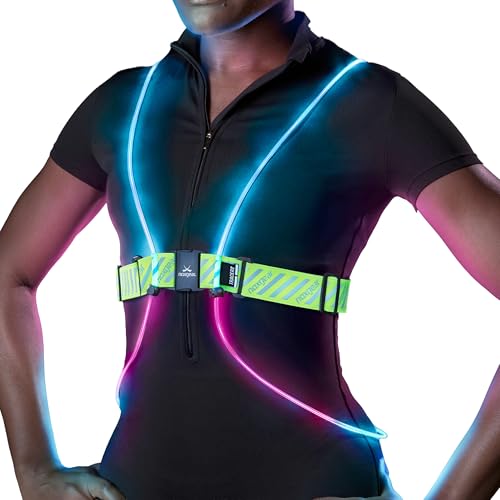
Best overall for being seen
Noxgear Tracer2
The Tracer2 is the easiest recommendation for a runner who spends time near traffic. It adds active light around the body without covering you in another warm layer. The adjustable design also fits over a T-shirt or winter jacket.
Important limit: it is a visibility vest, not a path light. Pair it with the right running headlamp when the ground is not already well lit.
Choose the correct size before ordering. Check the current listing for included accessories.
Affiliate disclosure: Running Gear Lab may earn a commission if you buy through some links on this page, at no extra cost to you. Availability, colours and product versions can change. We do not use pretend lab scores or claim every item was personally tested.
Quick picksCompareFull reviewsHow to chooseSafety checklistFAQ
Best reflective running gear and lights at a glance
Start with the label that matches your route. The “best” light for a dark trail is not the best answer for a runner who only needs to stand out at city intersections.
Best overall
Noxgear Tracer2
Active 360-degree torso light for road runners who want to be noticed from more than one direction.
Best reflective only

Amphipod Xinglet
A light, adjustable passive vest with no battery to charge. Best when headlights or streetlights are present.
Best path light

Fenix HM65R-T V2.0
The model we own. Strong for dark roads, trails and long efforts, but it still needs rear visibility near traffic.
Best headlamp alternative

Noxgear Wrist Light
A wide path light for runners who dislike a lamp on the head and want to aim the beam with an arm.
Best reflective layer
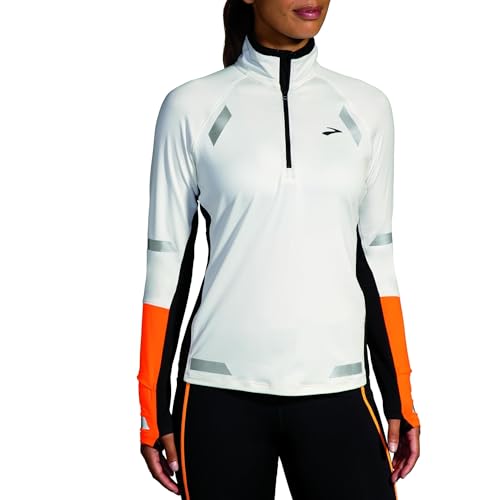
Brooks Run Visible 1/2 Zip 2.0
A useful cool-weather layer with fluorescent colour and reflectivity at moving parts of the body.
Best budget clip light
Nathan HyperBrite Orb
A small rear marker for a belt, vest or jacket. Cheap and simple, but not a substitute for broad visibility.
Best rugged wearable

Guardian Angel Micro
A durable magnetic light with front, rear and all-flash modes. Better built than a basic clip, but expensive.
Best for running with a dog

Noxgear LightHound
Active light around your dog, not just a small tag under the neck. Check sizing carefully before ordering.
The best reflective running gear and safety lights
1. Noxgear Tracer2: best overall for road visibility
Active + reflective
360° torso coverage
USB-C rechargeable
Adjustable fit
Best for: regular road runners who want one highly noticeable layer over summer or winter clothing.
A reflective vest waits for light to reach it. The Tracer2 carries its own. Flexible illuminated tubing runs around the torso, while reflective straps and fluorescent fabric add passive visibility. That combination is why it is our first choice for being seen near traffic.
It also avoids one problem with reflective jackets: heat. There is very little fabric, so you can wear it over a singlet in summer or open the adjustment over a winter coat. Runner feedback is generally strong on brightness and breathability. Fit is the common exception. Some people find the light tubes shift around the shoulders until the waist and shoulder adjustments are set properly.
The vest will not show you a pothole. On an unlit route, add a path light. If your streets already have good lighting, the Tracer2 may be all the extra equipment you need.
Buy it if: drivers, cyclists and other road users need to spot you from several directions.
Skip it if: your only problem is seeing an unlit trail. Buy a path light first.
2. Amphipod Xinglet: best simple reflective vest
Passive reflective
Front + rear panels
No charging
Height + waist adjustment
Best for: runners who want a light vest they can leave by the shoes and put on without checking a battery.
The Xinglet is the sensible low-maintenance choice. It gives you reflective coverage around the torso without the weight and warmth of a full vest. The height and waist adjustments also give it a better chance of fitting over both a T-shirt and a jacket.
The catch is the whole point of passive reflectivity: it only lights up when another light reaches it. That is useful in a headlight beam, but less helpful around a dark driveway, parking lot or cyclist without a strong front light. Add a small rear LED if those are part of your route.
Runners often like the Xinglet because it is easy to adjust across different body shapes. Still, strap-style vests are personal. If shoulder straps usually annoy you, try it over the clothing you run in before removing tags.
Theses are also great for older kids who might be scootering, biking or walking in the dark. It can be dark at 4:30 pm in the winter where we live.
Buy it if: you want dependable reflectivity with no battery, app or charging routine.
Skip it if: you need to be visible before headlights point toward you.
3. Fenix HM65R-T V2.0: best for seeing the route
1,600 lm max
Warm + cool beams
Replaceable 18650
IP68
Best for: dark roads, rough paths, trails and long runs where the ground matters as much as traffic visibility.
This is the one product in this guide we own and use. On dark Winnipeg mornings, the useful settings matter more than the 1,600-lumen headline. The 400-lumen mode gives a clear working beam and is rated for 12 hours. On easier ground, 130 lumens stretches the rating to 24 hours.
The warm beam is helpful when snow, mist or light rain throws glare back toward your face. The dial-adjusted headband also stays secure without needing to pull an elastic strap painfully tight.
There is no rear red light. That is the important exception here. The Fenix helps you see; it does not complete a road-visibility setup. Wear it with the Tracer2, a reflective vest or a secure rear clip light. For lighter and cheaper options, see our full running headlamp comparison.
Buy it if: you regularly run in real darkness and want one lamp for roads, trails and long events.
Skip it if: every route is well lit and you only need a small visibility marker.
4. Noxgear Wrist Light: best alternative to a headlamp
500 lm high
250 lm low
100° flood beam
98 g
Best for: runners who dislike head pressure or want to point a broad beam at curbs and uneven pavement.
A wrist light solves a very specific annoyance. The beam is not tied to where your face points. You can aim it at a curb, pothole, driveway or street sign without turning your head, and there is no lamp bouncing above your eyebrows.
Noxgear rates the high 500-lumen setting for 2.5 hours and the 250-lumen setting for up to five hours. The wide flood spreads light across the nearby path instead of concentrating everything into one small hot spot.
There is a trade-off. Your arm moves while you run, so the beam moves too. You will also feel 98 grams on one wrist more than you would in a balanced head strap. It is a smart alternative, not an automatic upgrade for everyone.
Buy it if: you want to direct the beam with your hand and hate wearing headlamps.
Skip it if: you want a perfectly steady beam or need both hands free for poles.
5. Brooks Run Visible 1/2 Zip 2.0: best reflective clothing layer
Passive visibility
Light warmth
Thumbholes
Small secure pocket
Best for: cool morning and evening runs when you already need a long-sleeve layer.
The best reflective clothing is clothing you would have worn anyway. Brooks combines fluorescent colour, contrast and reflective material around critical motion zones, so the top does more than place one tiny logo between your shoulder blades.
This is a light-warmth half zip, not a shell. The thumbholes help cover the hands on cool starts, and the watch window saves you from pulling a sleeve back every time you check pace. There is also a small secure pocket for a key or card.
It is still passive. On a dark road, pair it with a rear light and a path light. Also check the exact colour shown in the listing. Reflective placement stays useful, but a bright, high-contrast colour is a better daytime and dusk choice than a dark option.
Buy it if: you want one cool-weather layer that also improves passive visibility.
Skip it if: you run in warm weather or want active light that works without headlights.
6. Nathan HyperBrite Orb: best budget clip light
16+ lumens
Clip-on
Multiple modes
IPX4
Best for: adding an inexpensive rear light to a belt, vest, jacket or pack.
The HyperBrite Orb is not exciting, which is part of its appeal. Clip it to the back of something you already wear, turn it on and replace the coin cells when they run out. It gives a driver or cyclist one more chance to notice you from behind.
Small lights have small coverage. Do not clip it under a jacket hem or let a hydration pack hide it. Tug on the fabric after attaching it, then jog a few steps to make sure the clip has not rotated toward the ground.
This is an add-on, not a full system. It makes the most sense behind a reflective vest or bright top, especially when the front of your body already has a headlamp. We have had these for our bikes.
Buy it if: you need a simple low-cost rear marker and do not mind replaceable batteries.
Skip it if: this will be your only visibility aid on a dark road.
7. Guardian Angel Micro: best rugged wearable light
Front + rear LEDs
Magnetic mount
Rechargeable
Multiple modes
Best for: runners who want a tougher, more secure wearable light than a basic plastic clip.
The Micro is built around a strong magnetic mounting system rather than a light clip that can work loose on thin fabric. Front and rear LEDs can run in different combinations, including solid and flashing modes, so you can set it up for the position where you wear it.
For running, placement matters more than the number of modes. Mount it high enough that clothing and arms do not hide it, but angle bright light away from your eyes and oncoming people. The white-and-yellow version works as a general visibility light; runners who prefer the usual white-front, red-rear convention can choose the white-and-red model.
It costs much more than the Nathan Orb. You are paying for the mount, casing and control options, not a better path beam. It is still a “be seen” device.
Buy it if: a secure mount and durable build matter more than getting the cheapest blinker.
Skip it if: a basic rear clip is enough or you need a beam for the ground.
8. Noxgear LightHound: best for running with a dog
Active + reflective
360° light
12-hour rated battery
Removable light unit
Best for: runners and walkers who need their dog to be visible from more than the front.
A tiny collar tag can disappear under fur or swing below the dog’s chest. The LightHound wraps illuminated tubing around the body, so the dog remains easier to identify as it turns or moves ahead of you.
Noxgear rates the rechargeable battery for up to 12 hours. The lighting unit also removes so the harness can be washed. That matters after wet trails, winter slush and muddy shoulders.
Measure your dog instead of guessing from breed. A light is only useful if the harness stays positioned without restricting the shoulders or rubbing behind the front legs. Recheck the fit after the first few runs, and follow the manufacturer’s instructions for leash attachment and washing.
Buy it if: your dog joins dark runs and a small collar light keeps disappearing under fur.
Skip it if: your dog already has a secure, well-positioned illuminated harness that fits properly.
Reflective running gear comparison
On a phone, swipe the table sideways. Pay closest attention to the “main job” column. That is the gap each product is meant to fill.
| Product | Main job | Visibility type | Power | Main drawback |
|---|---|---|---|---|
| Noxgear Tracer2 | Be seen around traffic | Active light, reflective and fluorescent | USB-C rechargeable | Does not light the ground |
| Amphipod Xinglet | Simple passive visibility | Reflective | None | Needs another light source to work |
| Fenix HM65R-T V2.0 | See dark roads and trails | Forward light | USB-C, replaceable battery | No rear light |
| Noxgear Wrist Light | Aim light at the path | Forward flood light | USB-C rechargeable | Beam moves with your arm |
| Brooks Run Visible 1/2 Zip | Wearable reflective layer | Fluorescent and reflective | None | Not active light |
| Nathan HyperBrite Orb | Low-cost rear marker | Active clip light | Replaceable coin cells | Small coverage area |
| Guardian Angel Micro | Rugged multi-direction light | Active front and rear light | Rechargeable | Costs more than basic clips |
| Noxgear LightHound | Make a dog easier to see | Active and reflective | Rechargeable | Fit is size dependent |
Reflective is not the same as visible in every situation
Retroreflective material sends light back toward its source. It can work very well when a vehicle’s headlights hit it, especially on moving arms and legs. It does little before that beam reaches you. Active lights fill that gap, while a headlamp or wrist light helps you spot hazards on the ground.
No wearable makes a runner safe on its own. Visibility aids improve conspicuity, but route choice, intersections, driver attention and your own decisions still matter.
How to choose reflective gear for your route
Lit city streets
Start with an active vest or reflective layer plus a rear light. A small headlamp can help at broken sidewalks, but you may not need a large trail lamp.
Dark suburban roads
Use two separate jobs: an active or reflective layer to be seen and a path light to see the road edge, curbs and driveways.
Unlit trails
Prioritize a reliable headlamp with enough runtime for the whole run. Add a backup light for remote routes and reflective or rear visibility for road crossings.
Running with a dog
Light both bodies. Your vest does not make a dark-coated dog beside or ahead of you easy to identify. Fit the dog’s gear before the first run.
1. Decide whether you need to see, be seen or both
If streetlights already show every crack in the pavement, buying a huge headlamp may solve the wrong problem. If the route is pitch black, a glowing vest will not stop you from catching a toe on a root. Most runners near traffic need both jobs covered, but the gear does not need to be expensive or complicated.
2. Put visibility where movement helps people recognize you
Reflective material on moving ankles, knees, wrists and elbows can help a driver recognize the motion as a person. A torso vest gives broader coverage. Combining the two is more useful than relying on a small reflective shoe logo that may be hidden from some angles.
3. Check what is visible from behind
Put on your normal jacket, belt or hydration vest, then ask someone to look from the back. A hood, pack or swinging arm can cover a light that looked perfectly placed in your hand. This is also where an illuminated torso vest earns its keep.
4. Treat runtime as a working number, not a promise
Cold weather, battery age and higher brightness can shorten the useful time. Charge before the run and build in a margin. For a remote trail or race, a second working light is more useful than a spare cable for a dead unit.
5. Make the setup comfortable enough to wear every time
A vest that rubs or a headlamp that needs to be painfully tight will end up in a drawer. Test the fit over your actual seasonal layers. The running outfit calculator can help you choose the rest of the clothing for the forecast.
Three simple setups that make sense
- Budget road setup: Amphipod Xinglet plus Nathan HyperBrite Orb.
- Best all-around dark road setup: Noxgear Tracer2 plus a comfortable headlamp.
- Dark trail setup: Fenix HM65R-T V2.0 plus a small backup light, with reflective gear for the road section to and from the trail.
If you already carry a phone, the best running belts guide includes a Nathan belt with its own light and reflective details. It will not replace broad visibility, but it can combine storage with one more rear-facing marker.
Dark-run safety checklist
- Use a sidewalk or separated path when one is available.
- If there is no sidewalk, follow local pedestrian law and guidance for where to run. Facing traffic is commonly recommended so you can see approaching vehicles.
- Slow down at driveways, parking-lot exits and intersections. A light does not prove a driver has seen you.
- Avoid aiming a bright or flashing beam into another person’s eyes. Tilt path lights toward the ground.
- Keep music low enough to hear vehicles, bikes and people around you.
- Tell someone your route on remote runs and carry a charged phone plus identification.
- Charge lights before you need them. For trails and long events, pack a second working light.
- Choose a familiar route when conditions are icy, foggy or unusually dark.
How we chose these picks
We started with the job a runner needs done: active visibility, passive reflectivity, path lighting, rear marking or dog visibility. We then checked current manufacturer specifications, Amazon listings, independent reviews and recurring comments from runners who train in the dark.
The Fenix HM65R-T V2.0 is owned and used on dark morning runs. The other products are research-based recommendations, not a claim that we personally ran the same mileage in every item. We gave more weight to coverage, fit, useful runtime and the limits of each product than to a large maximum-lumen number.
Reflective running gear FAQ
What is the best reflective gear for running at night?
The Noxgear Tracer2 is our best overall visibility pick because it combines active light with reflective and fluorescent material around the torso. If you only want passive reflectivity and no charging, choose the Amphipod Xinglet.
Is a reflective vest enough for running at night?
Not always. A reflective vest needs an outside light source before it becomes bright, and it does not light the ground. On a dark route, add an active front or rear light and a headlamp or wrist light if you need to see hazards.
Should running lights flash or stay solid?
Both can attract attention, but a bright flash can bother other people and may make distance harder to judge. Use the mode that is noticeable without pointing into anyone’s eyes. A steady path beam aimed down is usually easier for you and others to tolerate.
How many lumens do I need for running?
About 100 to 200 lumens may be enough on lit roads. Dark roads and simple trails often feel better around 200 to 400 lumens. Rough or technical trails may need more. Beam shape, speed, weather and eyesight matter, so do not choose from the maximum-lumen number alone.
Where should I put a clip-on running light?
Place it high enough to stay visible and somewhere clothing, a hood or hydration pack will not cover it. A rear-facing clip works well on a secure belt or vest panel. Jog a few steps after clipping it on to confirm it does not rotate toward the ground.
What colour is best for running visibility?
Fluorescent yellow, lime and orange can stand out in daylight and around dawn or dusk. At night, active lights and retroreflective material matter more than fabric colour alone. Broad coverage and movement are more useful than choosing one supposedly perfect colour.
Do I still need reflective gear if I wear a headlamp?
Yes when traffic is part of the route. Most headlamps point forward and leave little or no light behind you. Add reflective material, a rear light or an illuminated vest so people approaching from the side or back have a better chance to notice you.
Research and product sources
- NHTSA: pedestrian conspicuity and reflective movement
- Noxgear Tracer2 product information
- Amphipod Xinglet product information
- Fenix HM65R-T V2.0 specifications
- Noxgear Wrist Light specifications
- Brooks Run Visible 1/2 Zip 2.0 details
- Guardian Angel Micro running-light details
- Noxgear LightHound product information
- Runner discussion: night visibility setups and fit
- Runner discussion: front, rear and reflective visibility