7 Best Ice Cleats for Running in Snow and Ice (2026)
A winter route rarely stays the same for long. In most parts of Canada, one block may be scraped to concrete, the next is packed snow, and a shaded corner is polished ice. That mixed footing matters more than the temperature printed on the forecast.
We still run outside through much of the winter, and meeting our small run group is often the push that gets us out the door. Traction helps. It does not make a bad route harmless, so we also slow down, change the route or use the treadmill when the surface is not worth fighting.
Updated and fact checked: October 2026

Best overall for icy roads
Kahtoola NANOspikes
These are the pair I would buy first for black ice, frozen sidewalks and hard-packed city paths. The studs are short enough for a natural road-running stride, with traction under both the heel and forefoot.
Important limit: they are road cleats, not deep mountain spikes. If most of your route is a steep, frozen trail, keep reading.
Amazon may open on one size or colour. Use Kahtoola’s chart for the exact shoes you plan to wear.
The short answer
Kahtoola NANOspikes are the best running traction cleats for most icy roads and sidewalks. Their ten low-profile carbide studs under each foot give you useful bite on glare ice and hard-packed snow without the tall, awkward feel of a trail crampon.
Choose Kahtoola EXOspikes when the run moves between roads and uneven trails. For a steep, frozen trail, the Black Diamond Distance Spike or Hillsound Trail Crampon Ultra gives you deeper traction. Bigger is not automatically better: long spikes are unpleasant on bare pavement, while tiny road studs can be outmatched on steep ice.
Affiliate disclosure: Running Gear Lab may earn a commission if you buy through some links on this page, at no extra cost to you. We personally owned the Nordic Grip Mini discussed below. The main recommendations are based on current specifications, independent testing and runner feedback; we do not claim to have run in every pair.
Quick picksCompareFull reviewsWhat we lostHow to chooseFit testFAQ
Best running traction cleats at a glance
Pick the card that sounds like your normal route. On a phone, swipe across the cards and tap a product to jump to the full review.
Best icy roads
Kahtoola NANOspikes
Low carbide studs for black ice, hard-packed snow and partly cleared pavement.
Best road to trail

Kahtoola EXOspikes
A little more bite and an open tread for routes that mix icy roads, snow and uneven trail.
Best fast trail spike
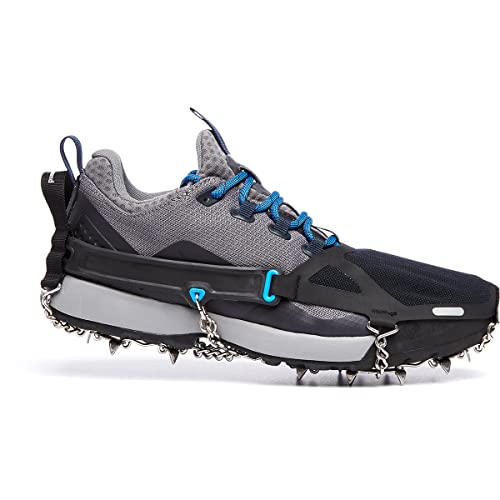
Black Diamond Distance Spike
A close-fitting softshell toe and 8 mm spikes for runners moving quickly on frozen trails.
Most aggressive

Hillsound Trail Crampon Ultra
Deep stainless-steel spikes and a top strap for steep, consistently icy trails.
Lower-cost runner

Yaktrax Run
Running-specific forefoot spikes, heel coils and a top strap, with more mixed durability feedback.
Swipe to see all five picks →
The best running cleats for snow and ice
1. Kahtoola NANOspikes: best for icy roads and sidewalks
Road running
10 studs per foot
5.3 mm carbide tips
176 to 232 g per pair
Best for: the runner whose usual winter route is plowed road, sidewalk or paved path with recurring patches of hard ice.
NANOspikes solve the problem most city runners actually have. You need enough metal to bite frozen pavement, but you do not want a long chain spike levering under your foot every time the route turns bare.
Each foot gets ten low tungsten-carbide studs spread beneath the heel and forefoot. Kahtoola also builds the studs into flexible traction plates, which helps spread the feeling underfoot. They are still cleats. You will hear them on concrete, and a long stretch of dry pavement will never feel as smooth as an ordinary outsole.
The fit deserves a real check before the return window closes. Some runners report pressure where the front band crosses a soft or low-volume toe box. Put them on the shoes you will use, flatten any twist in the band and jog for several minutes. Going up a traction size may help in some shoe-and-foot combinations, but follow the current chart rather than guessing.
Buy them if: black ice and packed snow are the main reasons you shorten winter road runs.
Skip them if: you need deep bite on steep trails or your route is mostly loose, fresh snow.
2. Kahtoola EXOspikes: best for roads that turn into trails
Road to trail
12 spikes per foot
7.4 mm carbide tips
188 to 230 g per pair
Best for: a winter run that starts on pavement, crosses packed snow and finishes on a moderate trail.
EXOspikes sit in the useful middle. The carbide tips are longer than the ones on NANOspikes, while aluminium steps and chunky TPU lugs add grip on uneven ground. The open layout also gives loose snow somewhere to go instead of turning the sole into one solid clump.
That extra structure is why I would choose them for mixed terrain. It is also why I would not automatically pay more for them on a city-only route. If most of your kilometres are scraped sidewalk with occasional black ice, the lower NANOspikes make more sense.
They are not a replacement for a mountaineering crampon. Think rolling trail, packed snow, frozen dirt and icy road transitions. For long, steep slopes where every step needs a deep point, move to one of the next two picks.
Buy them if: your winter route changes surface often and a road-only stud feels too limited.
Skip them if: you run almost entirely on plowed pavement or need deep spikes for steep ice.
3. Black Diamond Distance Spike: best for fast winter trail running
Technical trail
14 spikes per foot
8 mm stainless steel
Softshell toe cover
Best for: runners who want a light, close trail fit with more bite than a road stud.
The Distance Spike looks different for a reason. A softshell cover wraps the toe instead of stretching narrow rubber bands over it. That can feel kinder on a flexible running-shoe upper, keeps some loose snow away from the laces and makes the front easy to identify when your hands are cold.
Underneath are 14 heat-treated stainless-steel spikes, each 8 mm long. There is enough bite for frozen trail and uneven packed snow, but the points are still shorter than the Hillsound’s. This is the quicker, lighter-feeling choice. The Hillsound is the more planted choice for truly steep ice.
There is one concern I would not hide. Some owners on Black Diamond’s own product page report chain links opening or failing, including early in use. Many others praise the fit and traction. Inspect every link before the first run and before taking them somewhere remote, and use the warranty if anything looks wrong.
Buy them if: speed, packability and a secure running-shoe fit matter on frozen trails.
Skip them if: most runs are on city pavement or you want the deepest possible trail spikes.
The linked ASIN may open on a medium. Choose the size that matches Black Diamond’s current chart.
4. Hillsound Trail Crampon Ultra: best grip for steep icy trails
Steep trail
18 spikes
12 to 15 mm
420 g per pair
Top strap
Best for: steep, consistently snow-covered or icy trail where grip matters more than a barely-there feel.
The Trail Crampon Ultra is the serious option here. Eighteen stainless-steel points sit beneath each foot, including longer heel spikes for descents. Double-link side chains and an over-foot strap help keep the platform where it belongs when the trail tilts or the snow tugs at it.
You will notice the weight. Hillsound lists the pair at 420 grams, roughly twice the weight of several lighter choices in this guide. The 12 to 15 mm points also feel clumsy on clear concrete. I would happily carry more traction for a frozen ravine or steep trail, but I would not wear this setup for a normal plowed neighbourhood loop.
The top strap is a practical advantage. Snow and side-to-side movement can peel a plain stretch-on device away from a shoe. A strap does not guarantee it stays on, but it gives you another point of security.
Buy them if: the route stays icy, gets steep and calls for deep, secure traction.
Skip them if: you need a light road cleat or regularly cross long sections of bare pavement.
The linked listing may open on medium. Match the size to your actual running shoe, not only your foot size.
5. Yaktrax Run: lower-cost traction made for runners
Packed snow + ice
3 mm forefoot spikes
1.4 mm heel coils
Over-foot strap
Left/right design
Best for: a runner who wants a more affordable running-specific device for packed snow and neighbourhood ice.
Do not confuse the Run with the basic Yaktrax Walk. The running model adds small carbide spikes under the forefoot, keeps coils under the heel and uses an over-foot strap. It also has separate left and right shapes. Those details matter once you are moving faster than a walk.
The combination is sensible for a mixed neighbourhood route. The coils flex on compacted snow, while the small front spikes help at toe-off on ice. It is less aggressive than the trail models above and usually costs less.
Why is it fifth? Durability feedback is inconsistent. Some runners report several winters or hundreds of miles, while others report lost spikes, broken parts or the device coming off in snow. Fit and how much bare pavement you cover probably explain part of that spread, but I would still choose Kahtoola for frequent use and Yaktrax Run when the lower price is the deciding factor.
Buy them if: you want an entry-priced running model with a top strap for local packed-snow routes.
Skip them if: you need maximum durability for high mileage or dependable traction far from help.
Running traction cleats compared
On a phone, swipe the table sideways. The “best surface” and “main drawback” columns matter more than the number of spikes by itself.
| Product | Best surface | Traction under each foot | Fit design | Main drawback |
|---|---|---|---|---|
| Kahtoola NANOspikes | Icy roads, sidewalks and hard-packed snow | 10 tungsten-carbide studs, 5.3 mm | Full stretch harness and toe bail | Too mild for steep mountain ice; toe band can press some soft uppers |
| Kahtoola EXOspikes | Mixed road, snow and moderate trail | 12 carbide-tipped spikes, 7.4 mm, with lugs | Full stretch harness and toe bail | More noticeable than NANOspikes on long bare-pavement sections |
| Black Diamond Distance Spike | Fast running on frozen and uneven trails | 14 stainless-steel spikes, 8 mm | Softshell toe cover plus heel elastomer | Expensive; chain links should be inspected before remote runs |
| Hillsound Trail Crampon Ultra | Steep, consistently icy trails | 18 stainless-steel spikes, 12 to 15 mm | Harness, chains and over-foot strap | Heavy and awkward on cleared pavement |
| Yaktrax Run | Packed snow, ice and mixed neighbourhood routes | 3 mm carbide forefoot spikes plus 1.4 mm heel coils | Left/right frame with over-foot strap | Runner feedback on long-term durability is mixed |
Owned, but not recommended
Nordic Grip Mini Traction Aid: inexpensive, but too easy to lose
The pair we owned was the Nordic Grip Mini from Running Room, the small model that stretches over the toe box and puts two metal studs under the forefoot. It is not the larger Nordic Grip Running Traction Aid with a full strap system.
The Mini appealed to us because it was light, cheap and simple. Then one worked loose and came off without us noticing. By the time we realized, it was gone. A traction aid that disappears mid-run does not save money, and two front studs do not give the balanced heel-to-toe coverage of the main picks above.
That is one household’s experience, not proof that every pair will fall off. Still, it exposed the part of the design I dislike for running: there is little device around the shoe and no over-foot security strap. I would not buy it again for a run, especially on a route with deeper snow that can tug at the front of the shoe.
Which type of running traction should you buy?
Mostly black ice and plowed pavement
Choose NANOspikes. Short studs give useful road grip without putting a tall point under every step.
Road, packed snow and moderate trail
Choose EXOspikes. The deeper tips and open lugs handle more variety without jumping to a full chain spike.
Frozen trail at a running pace
Choose the Distance Spike. The close toe cover and 8 mm points balance speed, packability and trail grip.
Steep trail covered in ice
Choose the Hillsound. Its deep points and top strap make sense when secure traction matters more than weight.
Fresh, deep or drifting snow
Start with shoes and route choice. Spikes can bite the hard layer below, but they do not stop you from sinking into deep powder. Pair winter-ready trail running shoes with running gaiters when snow enters around the ankle.
Ice every day, all winter
Consider a studded winter shoe. A dedicated pair removes the daily on-and-off step. The trade-off is less flexibility when the pavement clears.
Low studs, coils or chain spikes?
- Low carbide studs: best for hard ice, paved paths and roads with bare sections. They keep the foot closer to the ground.
- Steel coils: flexible and comfortable on compacted snow, but they can wear on bare pavement and provide less point pressure on hard ice than a stud.
- Mid-length spikes: the useful trail-running middle. They bite frozen dirt and uneven packed snow without the deepest mountaineering-style points.
- Long spikes and chains: best when the trail is steep and consistently icy. They are heavy, noisy and awkward on clean concrete.
The five-minute fit test before your first run
Fit is not a small detail. Deep snow can pull at the harness, corners can twist the platform and a tight toe band can become painful several kilometres from home. Test the actual device on the actual shoe you plan to use.
Check the manufacturer’s chart
A bulky trail shoe and a slim road shoe in the same labelled size may need different traction sizes. If you sit on a boundary, check the brand’s footwear notes.
Centre the heel and forefoot plates
No traction plate should hang over the side. Front labels, toe bails and left/right markings need to face the correct way.
Flatten every strap
A twisted band can dig into the upper or pull unevenly. Make sure laces, gaiter hooks and shoe fabric are not trapped.
Tug and twist by hand
The device should not peel off the toe or heel with a light tug. Try to rotate it beneath the shoe. Noticeable movement now will be worse in snow.
Run a short loop, then look again
Start close to home. Check for toe pressure, shifted plates, loose links and missing studs after a few minutes, then check once more after the first full run.
Winter traction safety that still matters
- Remove cleats before smooth indoor floors. Metal studs can become slippery on tile or polished concrete and can damage flooring.
- Slow down before the corner. Cleats help most when points can press down. A hard sideways cut can still slide.
- Use shorter, controlled steps. Do not reach forward and expect the cleat to rescue an overstride.
- Inspect before every run. Look for stretched rubber, open chain links, worn coils, missing studs and a platform that no longer sits straight.
- Rinse off road salt and air-dry. Store the pair clean and dry. Follow the manufacturer’s care instructions and do not use heat unless the brand specifically allows it.
- Carry them for isolated icy sections. A small bag protects the inside of a belt or vest from sharp points.
- Do not treat traction as permission to ignore the forecast. Use our winter running guide for route, cold and wind decisions.
- Make yourself visible. Winter ice and winter darkness often arrive together. See our reflective running gear and safety lights guide.
What to wear with running cleats
Use the shoe that already fits you well and has enough room for your winter sock. A traction harness can squeeze a very soft upper, so this is not the day to wear a shoe that already feels tight across the toes. If you need help choosing the base shoe, start with the running shoe finder.
Do not solve cold feet by stuffing a thick sock into a snug shoe. Lost toe room and compressed insulation can make the fit worse. Our running sock guide explains the options, and the running outfit calculator can build the rest of the outfit from the temperature, wind and precipitation.
How we chose these picks
We first separated city ice, mixed winter routes and steep trail ice. Then we compared current manufacturer specifications, fit systems, spike depth, independent 2026 testing and repeated comments from winter runners. We looked for the reason a product should be chosen, not a made-up score that hides the surface it was built for.
We run through real Winnipeg winters, but we have not personally tested every product in this guide. The Nordic Grip Mini is the exception: we owned that exact two-stud model and lost one after it came off. Recommendations for the other products are research-based, and the article says so instead of pretending otherwise.
We also checked negative feedback. Toe pressure on some NANOspikes setups, open-link reports for the Distance Spike and mixed Yaktrax durability are included because those details can change which pair is right for you.
Running traction cleats FAQ
What are the best ice cleats for running?
Kahtoola NANOspikes are the best starting point for most road runners because their short carbide studs suit icy pavement and hard-packed snow. Kahtoola EXOspikes are better when the same run includes uneven trails. Use deeper chain spikes only when the terrain needs them.
Are Yaktrax good for running?
The Yaktrax Run is designed for running and combines forefoot spikes, heel coils, an over-foot strap and separate left/right shapes. The basic Yaktrax Walk is a different, coil-only product. Yaktrax Run can work for local packed-snow and icy routes, but long-term durability reports are more mixed than they are for our top pick.
Can I run on pavement in microspikes?
You can cross a short bare section in many traction devices, but deep chain spikes feel awkward and wear faster on pavement. Low road studs such as NANOspikes are the better choice when a route moves repeatedly between ice and cleared concrete. Remove every metal traction device before entering a building.
Do running cleats work on black ice?
Carbide or steel points can bite black ice better than an ordinary rubber outsole, especially when the cleat sits flat under the heel and forefoot. They do not make every patch safe. Keep steps controlled and avoid sudden turns, hard braking and steep off-camber ice.
Should traction cleats feel tight on running shoes?
The harness needs enough tension to stay centred, but it should not crush the toe box, curl the shoe or cause numbness and pressure. Try the device on the exact shoe, jog briefly and recheck the placement. If the size boundary or shoe volume makes the fit unclear, use the manufacturer’s current chart or contact the brand.
Are longer spikes always safer?
No. Longer spikes bite deeper snow and trail ice, but they can feel unstable, noisy and uncomfortable on hard bare pavement. Match the point length to the surface you run most. The best road cleat and the best steep-trail spike should not be the same design.
Do I need traction cleats for fresh snow?
Not always. A trail shoe with useful lugs may be enough in shallow, soft snow when there is no hard layer underneath. Traction devices become more useful when snow is compacted, polished or hiding ice. Deep powder is mainly a flotation and route problem, not something extra metal points can fix.
Can traction cleats damage shoes or floors?
A tight or twisted harness can press a soft shoe upper, and metal points can scratch floors or slide on smooth indoor tile. Fit them carefully, inspect the shoe after the first use and remove the cleats before going indoors.
Research and product sources
- Kahtoola traction comparison
- Kahtoola NANOspikes specifications and owner feedback
- Kahtoola EXOspikes specifications
- Black Diamond Distance Spike specifications and owner feedback
- Hillsound Trail Crampon Ultra specifications
- Yaktrax Run specifications
- Running Room Nordic Grip Mini product page
- CleverHiker 2026 winter traction testing
- Runner discussion: where NANOspikes stop being enough
- Runner discussion: Yaktrax, pavement wear and NANOspikes