Best Running Shoes for Kids in 2026: Preschool to Teen Picks
Buying runners for kids gets confusing fast. A preschooler who needs an indoor school shoe has very different needs from a 12 year old training for cross country.
We currently have three of the shoes in this guide in regular use at home. My older son wears the New Balance DynaSoft Reveal v4 BOA. My younger son wears the ASICS GT-1000 14 GS. My four year old daughter wears the Nike Cosmic Runner as her indoor school shoe.
If your child needs a wide shoe you can read our article Shoes for Kids With Wide Feet.
Affiliate disclosure: RunningGearLab may earn a commission from links on this page, at no extra cost to you.
BEST OVERALL KIDS RUNNING SHOE
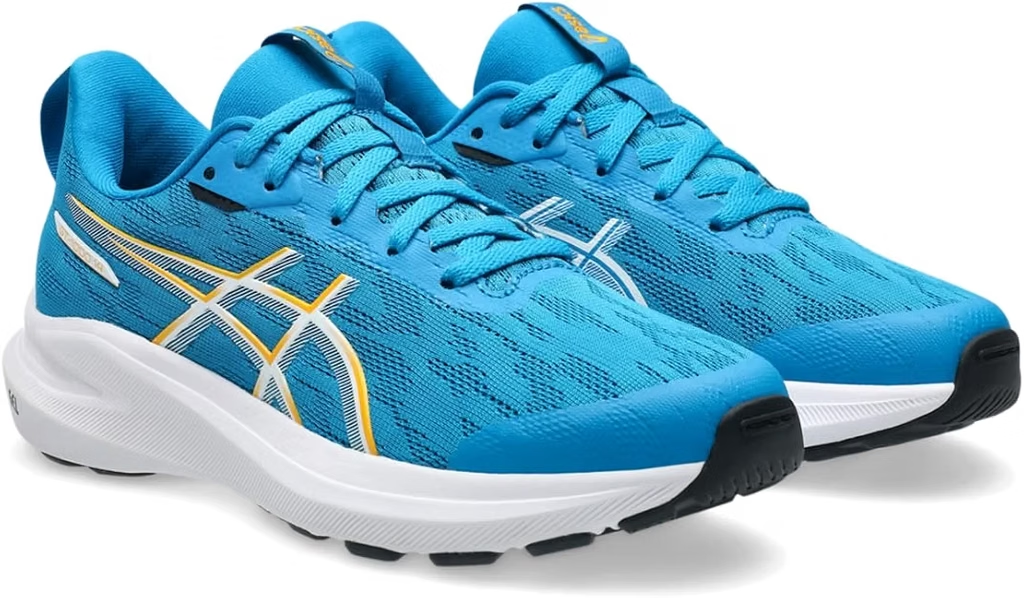
ASICS GT-1000 14 GS
The GT-1000 14 GS is the first shoe I would try for a grade school child who runs regularly. It has a fit designed for children, useful durability around the toe, and enough versatility for road running, school track, and a first cross country season. Our sons has chosen Asics shoes as his indoor school shoes now for 3 years. This year he choose the Turquoise color. He finds them very comfortable.
Grade school | Laces | Regular running | Family tested
Have an older teen moving into adult sizes? The Find Your Shoe hub covers adult daily trainers, stability shoes, trail shoes, and race shoes.
QUICK MATCH
Choose by Age and Use
These six picks cover the most useful differences without making you scroll through a long list of nearly identical shoes.
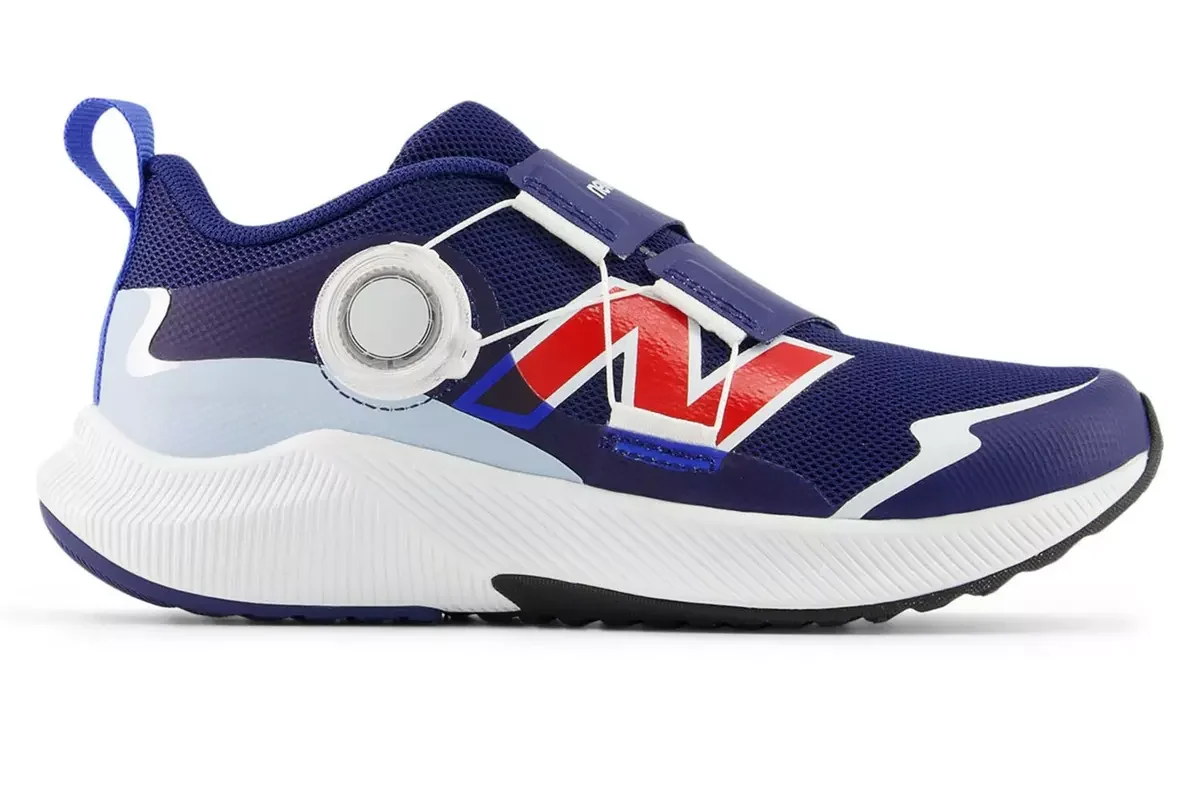
BEST BOA CLOSURE
New Balance Reveal v4 BOA
Simple independent fit with wide sizing available.
Want to try our new Running Shoe Finder Quiz?
Answer six quick questions to find kids’ running shoes by age, width, closure and terrain, including trail, cross-country and barefoot picks.
Jump to: Top picks | Compare | What matters | Age and stage | Fit guide | FAQ | Kids Trail Runners
Last reviewed: October 2026
TOP PICKS
The 6 Best Running Shoes for Kids in 2026
#1 | BEST OVERALL | GRADE SCHOOL
ASICS GT-1000 14 GS
Best for
Regular running and school teams
Closure
Standard laces
Experience
Current family shoe
Good choice if: you want one practical trainer for road running, school track, and beginner cross country.
My younger son wears the GT-1000 14 GS, so this is one of the shoes I can speak about from everyday use. It has worked well as an all purpose running shoe rather than something we need to save for one sport.
We replaced the standard laces with lock laces. That made the shoe much easier for him to manage while still letting him adjust the fit. The lock laces are not included with the shoe, but they have made it more practical for him.
ASICS includes a size checker on the sock liner. The outsole wraps around the inside of the forefoot, with added reinforcement around the toe.
Buy it if: your child needs a proper trainer that can handle several kinds of running.
What Works
- Fit designed for children
- Useful sockliner size checker
- Added durability around the toe
- Versatile everyday role
Watch For
- Standard laces may be inconvenient
- Not a dedicated race shoe
- Fit matters more than its ranking
#2 | BEST BOA | LITTLE KID AND BIG KID
New Balance DynaSoft Reveal v4 BOA
First hand pick: My older son’s current shoe.
Sizes
Little Kid and Big Kid
Widths
Standard and wide
Closure
BOA dial
Good choice if: independence and easy adjustment matter.
Both of my boys chose the New Balance shoes as their outdoor/home runners. The biggest advantage is the BOA dial. Kids can put the shoes on, tighten them properly, and get out the door without anyone checking there laces. They also find them very comfortable.
The BOA solves a problem I see with kids who never untie their shoes. They push their feet in, crush the heel, and eventually wreck a perfectly good pair. With BOA, there is no reason to do that. Press and turn to tighten, then pull the dial to release. We have had these now for a full season and are on to the next size up with no wear on the BOA, and my kids are very active with their shoes. My older son has also ran a 5K and a Duathlon in his pair.
New Balance uses its DynaSoft midsole, a mesh and synthetic upper, no-sew construction, and a rubber outsole. It is also sold in wide sizing, which makes it one of the easier options on this list if standard kids’ shoes often feel tight.
What Works
- Easy BOA closure
- Standard and wide sizing
- Comfortable for school wear
- Durable rubber outsole
Watch For
- The dial adds extra hardware
- Kids who already tie laces comfortably may not want the BOA
#3 | BEST EASY ON PICK | PRESCHOOL
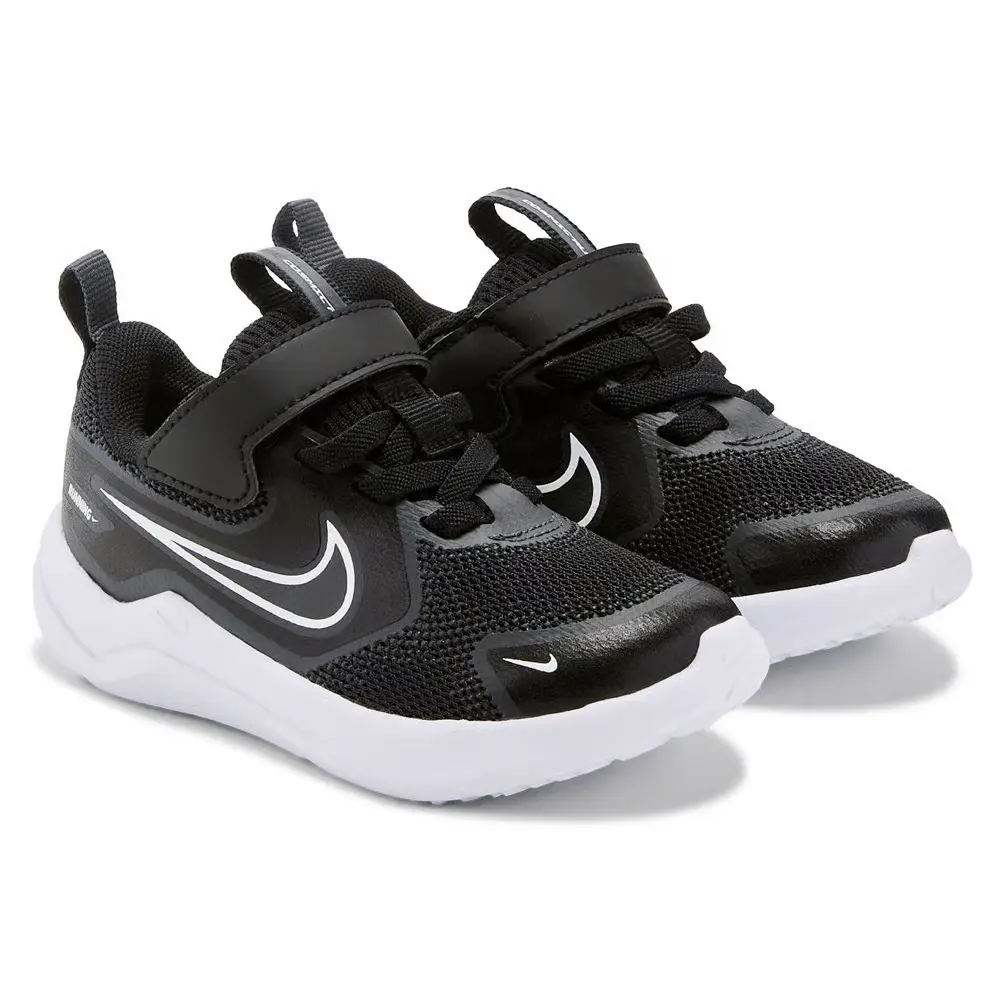
Nike Cosmic Runner
First hand pick: My four year old daughter’s indoor school shoe.
Version
Younger Kids
Closure
Elastic laces and strap
Best for
School, gym, and active play
Good choice if: your preschooler needs a flexible shoe they can manage without help.
My daughter wears the Cosmic Runner as her indoor school shoe. What I like most is how simple it is for her to manage. The elastic laces and strap mean she can put them on herself.
Her pair feels wider and more flexible than many children’s shoes we have tried. Nike does not sell it as a true wide size, so it will not suit every wide foot. In her case, the forefoot has enough room and the shoe bends easily.
This recommendation is for the Younger Kids version.
What Works
- Easy independent closure
- Flexible feel in our pair
- Roomier forefoot in our experience
- Reinforced areas for daily wear
Watch For
- Not officially a wide shoe
- Not intended for serious mileage
- Check which version you are buying
#4 | BEST VALUE | PRESCHOOL
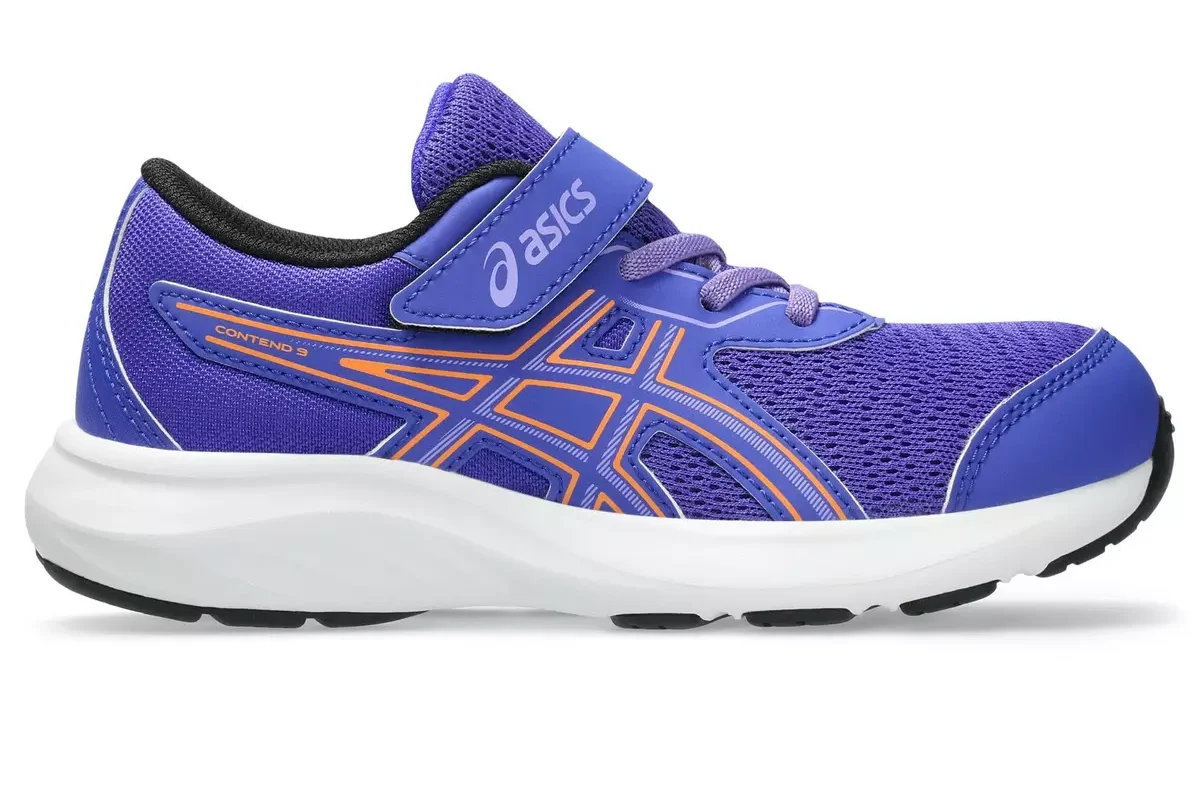
ASICS Contend 9 PS
Past family pick: My younger son’s previous shoe.
Type
Preschool trainer
Closure
Hook and loop strap
Best for
School and active play
Good choice if: you want a straightforward preschool shoe with a simple closure and durable construction.
My younger son wore the Contend 9 PS before moving into the GT-1000 14 GS. It worked well for the preschool stage because it was simple, manageable, and built for everyday wear.
The CUB MATCH sockliner uses a tiger graphic across the two insoles. Younger children can match the picture to work out which shoe belongs on each foot. It sounds small, but it is genuinely practical when a child is learning left from right.
What Works
- Easy preschool closure
- Helpful left and right graphic
- Reinforced toe
- Simple construction
Watch For
- Not a performance trainer
- Less adjustable than laces
- Try it on for wider feet
#5 | BEST FOR REGULAR RUNNING | BIG KID
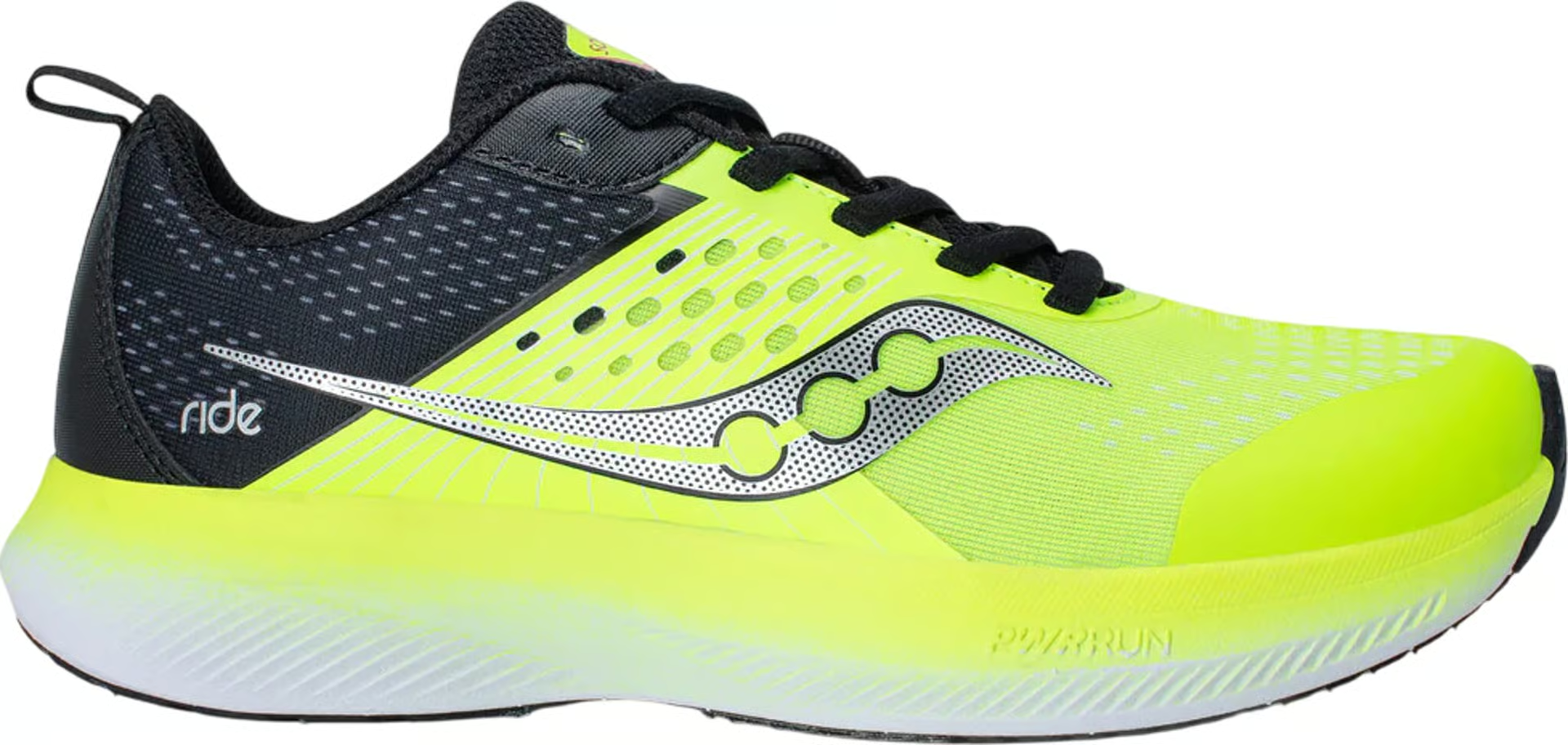
Saucony Ride KDZ
Type
Big Kid running trainer
Closure
Traditional laces
Best for
Regular training and school teams
Good choice if: running has become a regular activity rather than occasional playground laps.
Saucony rebuilt the idea behind its adult Ride for smaller feet, with generous cushioning, a breathable upper, and flexible construction.
It remains a regular trainer rather than a spike. That is useful for many developing runners. A child can train on roads, a track, or packed cross country courses without needing another pair for every surface.
Once racing becomes more serious, compare it with a dedicated cross country shoe or spike.
What Works
- Built as a real running trainer
- Light and breathable upper
- Useful across several surfaces
- Good bridge to race footwear
Watch For
- Traditional laces
- Not a racing spike
- Check carefully for wide forefeet
#6 | PREMIUM PICK | OLDER KIDS
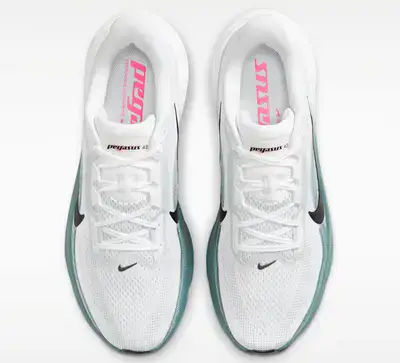
Nike Pegasus 42
Type
Older Kids road trainer
Closure
Traditional laces
Best for
Regular running and track practice
Good choice if: your older child runs several times a week and wants an adult style daily trainer.
The Pegasus 42 is the most performance focused Nike here. The current version uses ReactX foam, an Air Zoom unit, breathable mesh, and a durable rubber outsole.
Nike also gave the 42 more room through the toes and forefoot than the Pegasus 41. That is a welcome change for growing feet.
I would save the money and choose something simpler for a child who mainly needs school shoes. For one running several times a week, the Pegasus is easier to justify.
What Works
- Current Pegasus model
- Roomier forefoot than version 41
- Breathable upper
- Built for regular training
Watch For
- Premium price
- Traditional laces
- More shoe than younger children need
AT A GLANCE
Compare the 6 Picks
On a phone, swipe sideways to view every column.
| Shoe | Best for | Closure | Fit note | Experience |
|---|---|---|---|---|
| ASICS GT-1000 14 GS | Grade school running | Laces | Last designed for kids | Family use |
| New Balance Reveal v4 BOA | Easy on school shoe | BOA dial | Standard and wide | Family use |
| Nike Cosmic Runner | Preschool and active play | Elastic laces and strap | Roomy feel in our pair | Family use |
| ASICS Contend 9 PS | Preschool value | Hook and loop | Try on for width | Past family use |
| Saucony Ride KDZ | Regular running | Laces | Big Kid sizing | Researched |
| Nike Pegasus 42 | Older children running regularly | Laces | Roomier forefoot than version 41 | Researched |
Fit matters more than ranking. A shoe that feels good on one child may feel completely wrong on another. When possible, have your child walk or jog in the shoes and explain what feels tight, loose, stiff, or uncomfortable.
What Actually Matters in a Kids’ Running Shoe
Start With Fit
The heel should feel secure without squeezing the toes. Aim for roughly 10 to 15 mm of room in front of the longest toe while your child is standing.
Look for Flexibility
Younger children generally do well in shoes that bend naturally through the forefoot. The heel and upper should still hold the foot securely.
Skip Unnecessary Technology
A preschooler does not need the same performance features as an older child training for a 5K. Prioritise fit, comfort, manageable closures, and durability.
Check the Outsole and Toe
Children can be hard on shoes. Reinforcement around the toe and decent rubber coverage often matter more than a fancy foam name.
What to Look For by Age and Stage
Preschool
Prioritise comfort, flexibility, grip, and a closure they can manage. Compare the Cosmic Runner and Contend 9 PS first.
Grade School
Once running clubs, track, and cross country begin, a proper trainer becomes more useful. Start with the GT-1000, Reveal BOA, or Ride KDZ.
Older Kids
Look for a shoe that can handle repeated training. The Pegasus 42 and Ride KDZ make more sense here than a basic school sneaker.
Teens in Adult Sizes
Let your teen try both youth and adult models once sizing overlaps. Adult shoes offer more choices, but they are not automatically the better fit.
Cross Country or Track?
Most young runners can begin in a comfortable daily trainer. Once racing becomes more competitive, compare the cross country shoe guide and the track spike guide.
How to Fit a Running Shoe on a Child
Measure Both Feet While Standing
Feet are not always the same size. Measure both and fit the larger foot. Use the brand’s current size chart when ordering online.
Leave Room at the Toes
Aim for roughly 10 to 15 mm, or about a thumb width, between the longest toe and the front of the shoe. The foot should not slide around inside.
Check the Heel
Have your child walk and jog in the shoes. The heel should remain in place. A shoe that keeps slipping may be the wrong shape for that foot.
Listen to Your Child
Ask what feels tight or scratchy and whether one shoe feels easier to move in. A technically impressive shoe will not help if your child avoids wearing it.
Check Again Before the Shoe Looks Worn Out
Check preschool shoes about once a month and whenever there is a growth spurt. For older children, reassess every few months. Check immediately if a familiar shoe becomes uncomfortable.
Training for a first 5K? Use one of the beginner 5K training plans instead of adding mileage at random. If blisters are becoming a problem, compare the best running socks.
COMMON QUESTIONS
Kids’ Running Shoe FAQ
Do kids need dedicated running shoes?
A comfortable athletic shoe can be enough for playground time and casual activity. A dedicated running shoe becomes more useful when a child runs regularly or joins cross country or track.
How much toe room should there be?
Aim for approximately 10 to 15 mm in front of the longest toe while the child is standing. The heel should remain secure.
How often should I check the fit?
Check the fit regularly, especially during growth spurts. Younger children can outgrow shoes surprisingly quickly, while older children can usually be reassessed every few months.
Should kids wear stability or neutral shoes?
Most children do not need corrective footwear simply because their feet appear flat or pronate. Begin with a comfortable shoe. Ask a qualified health professional if there is pain, stiffness, an unusual gait, or a clinical recommendation.
Does Brooks make kids running shoes?
Brooks does not currently manufacture shoes in dedicated children’s sizes. Some older children can fit adult Brooks shoes once their youth size overlaps with the smallest adult sizes.
Is the Nike Cosmic Runner a wide shoe?
Nike does not market it as a true wide shoe. My daughter’s pair feels roomier than several other shoes we have tried. Children who require a true wide size should choose a model that is actually sold in wide widths.
When can children start wearing adult running shoes?
There is no set age. Once sizing overlaps, let your child try youth and adult models. The better fitting shoe is the better choice.
Which Kids’ Running Shoe Would I Buy?
For a grade school child who runs regularly, I would start with the ASICS GT-1000 14 GS and see how it fits. My younger son wears it now, and it has been a practical choice.
For preschoolers, I would choose between the Nike Cosmic Runner and ASICS Contend 9 PS. The Cosmic is easier to enter and feels more flexible in our daughter’s pair. The Contend is the simpler value option.
If independence matters for an older child, the New Balance Reveal v4 BOA is hard to beat. For children running several times a week, compare the Saucony Ride KDZ and Nike Pegasus 42.
Where to Go Next
Use the Shoe Finder
Useful when older children move into adult sizes.
Best Winter Boots for Kids
Compare Stonz, Merrell, BOGS, Sorel, Baffin and Kamik kids’ winter boots
Compare XC Shoes
Choose spikes or flats by course and experience.
Best Cross Country Shoes for Kids
Compare kids XC spikes, spikeless shoes and first season options
Best Watches for Kids
Find a Watch for your kid.
Best Trail Runners for Kids
Looking for kids trail running shoes? We compare popular kids trail runners.
How this guide was checked: Four shoes include current or past family use. Product details were checked against current manufacturer information. Fit guidance was reviewed against information from the Canadian Paediatric Society, American Podiatric Medical Association, and American Academy of Pediatrics.