Best Trail Running Shoes for Women 2026: 5 Tested Picks

Why Trail Running Shoes Are the One Piece of Gear Worth Getting Right

Trail running asks more of your shoes than road running ever does. You need grip on wet roots and loose gravel, protection from rocks you didn’t see coming, a base wide enough to keep your ankle from rolling on a cambered descent, and an upper that survives being scraped against trees and brush for hours. The good news is that the women’s trail shoe market in 2026 is the strongest it has ever been. The bad news is that it’s also more confusing than ever, with brands releasing supercritical foams, rocker geometries, and integrated gaiters at a pace that makes it hard to tell which shoes actually deliver and which just look impressive on paper.

This article contains affiliate links. If you buy a shoe through one of our links, we may earn a small commission at no extra cost to you. It helps keep this site running. We only recommend gear we’d put on our own feet.

This guide covers the five women’s trail running shoes that are genuinely worth your money in 2026. Every one has been independently tested and reviewed across multiple sources, and each picks its own niche. The Hoka Speedgoat 7 is the do it all mountain shoe most runners should start with. The Saucony Peregrine 15 is the value pick that punches well above its $140 price. The Brooks Cascadia 19 is the best beginner friendly option. The Salomon Speedcross 6 owns mud and soft terrain in a way nothing else on this list does. And the Altra Lone Peak 9 is the answer for runners who need a wide toe box and a zero drop platform. Pick by terrain and fit, not by brand loyalty.

Sizing rule that matters most: Go a half size larger than your normal road shoe size. Your feet swell during long trail runs, and on technical descents your toes will press forward against the front of the shoe. A half size up prevents the bruised toenails that come from repeated downhill impact. Hoka and Salomon both run small and almost always need this adjustment.

Jump to Your Pick

What Actually Matters in a Women’s Trail Running Shoe

Outsole Compound and Lug Depth

The outsole is the single biggest difference between a trail shoe that feels confident and one that has you tip toeing around wet rocks. Vibram Megagrip is the gold standard, sticky on wet and dry surfaces and durable enough to outlast most other compounds. Saucony’s PWRTRAC and Salomon’s Contagrip are the closest competitors. Lug depth matters too: 3 to 3.5mm lugs work best for hardpack and crossover use, 4 to 5mm handles most trail conditions, and 5mm or more is the right call for soft, muddy, or technical terrain.

Stack Height and Cushioning Tuned for Lighter Body Weight

Women’s trail shoes are typically built on a women’s specific last with a softer foam tuning that actually compresses under a lighter body weight. The right stack height depends on what you run. For shorter, more technical runs, a moderate stack of 25 to 32mm in the heel keeps you connected to the ground and stable on rocks. For longer runs and ultra distance, a higher stack of 35mm or more reduces fatigue and protects the legs over multi hour efforts.

Wide Base for Lateral Stability

A wide base is what keeps you upright on cambered descents and uneven terrain. This matters more than any specific stability feature for most trail runners. The Hoka Speedgoat and Brooks Cascadia both use noticeably wide platforms that create inherent stability without needing a medial post. Look at the shoe from above and behind: if the base flares wider than the upper, you’re going to feel more confident on technical ground.

Toe Box Room for Long Days

Your feet swell during trail runs, especially on hot days and during the back half of a long effort. A toe box that fits perfectly at the store will feel cramped four hours into a trail marathon. Look for round toe shapes with visible space across the top of the foot. Altra’s FootShape last is the most generous option here, but the Topo and Brooks lasts are also genuinely roomy. Salomon and Hoka tend to run narrower and may need a wide width version if you have a wider forefoot.

Rock Protection

Many trail shoes include some form of rock plate, either a stiff plastic insert or a denser foam layer that distributes the impact of stepping on a sharp rock. Trails with a lot of loose granite or volcanic rock genuinely benefit from this. Smoother trails do not, and a rock plate just adds weight and reduces ground feel. The Saucony Peregrine 15 has a forefoot rock plate; the Brooks Cascadia 19 uses a flexible Trail Adapt plate.

What to Look For by Terrain Type

Hardpack & Buffed Singletrack

Lower lugs (3 to 4mm) and a more cushioned ride for the smoother surfaces. The Brooks Cascadia 19 or Saucony Peregrine 15 are excellent here. Avoid aggressive mud lugs that feel like running in cleats on packed dirt.

Technical & Rocky Terrain

Wide base, rock plate, and confident grip are the priorities. Hoka Speedgoat 7 with its Vibram Megagrip is the standout. A more locked down upper helps too your foot shouldn’t slide on technical descents.

Mud, Snow & Soft Ground

Deep, aggressive lugs (5mm+) with a softer rubber compound that bites into soft surfaces. The Salomon Speedcross 6 is purpose built for this. Mud shedding lug spacing also matters so the outsole doesn’t pack with debris.

Long Runs & Ultra Distance

Maximum cushioning, wider toe box for foot swelling, and outsole durability that holds up to 50+ mile efforts. Hoka Speedgoat 7 and Altra Lone Peak 9 both excel here for very different reasons.

Top 5 Reviews

The 5 Best Trail Running Shoes for Women in 2026

#1
Best Overall · Technical Terrain

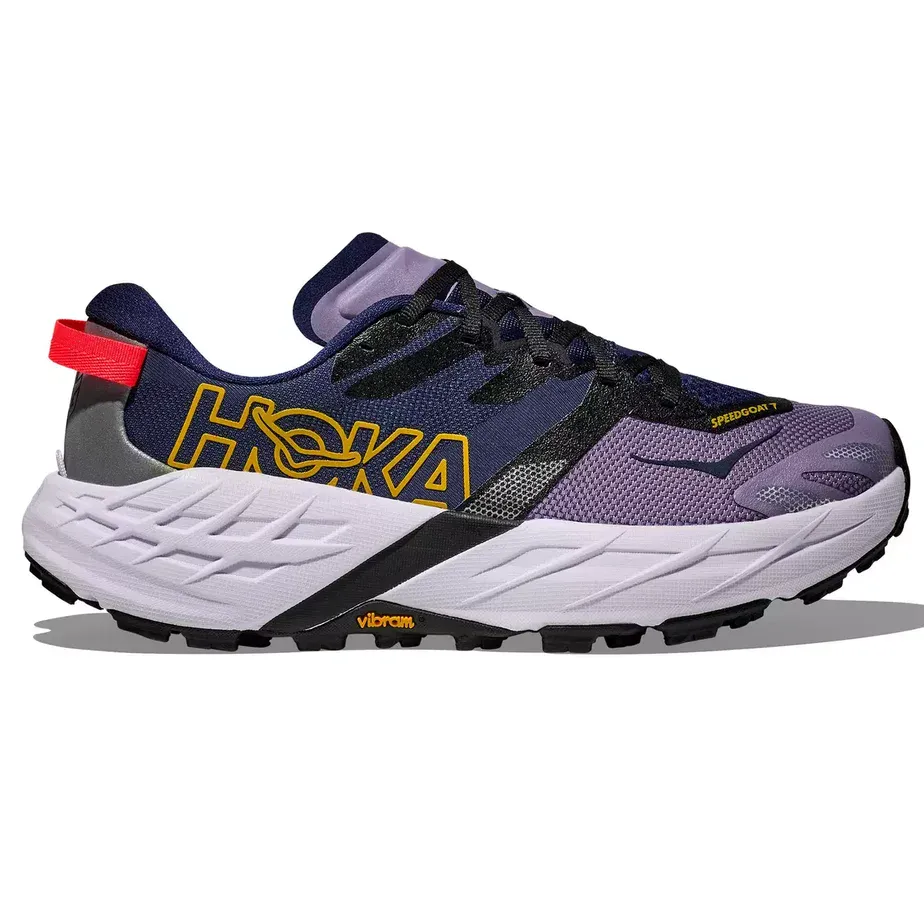
Hoka Speedgoat 7 — Best Overall

Hoka Speedgoat 7 Trail running shoe
Weight: 7.9 oz (224g) women’s Drop: 6mm Stack: 38mm heel / 33mm forefoot Foam: Supercritical EVA Outsole: Vibram Megagrip, 5mm lugs Price: ~$170

The Hoka Speedgoat has been the most recommended trail shoe in the world for years and the seventh version is the best one yet. The big change this time is the new supercritical EVA midsole, which finally gives the Speedgoat the responsive, energetic ride that the brand’s road shoes have had for a couple of generations. Reviewers across iRunFar, Treeline, GearJunkie, and Believe in the Run have all named the Speedgoat 7 their top trail running shoe pick for 2026, and the consensus is the same: it kept everything that worked about the Speedgoat 6 and fixed what didn’t.

For women specifically, the Speedgoat 7 hits the sweet spot of light weight, cushioning, and grip in a way nothing else does. At 7.9 ounces in a women’s size 8 it’s lighter than most less cushioned trail shoes, which means you can run in it day after day without your legs paying for the protection. The Vibram Megagrip outsole with its updated lug orientation handles wet rock, packed dirt, loose gravel, and shallow mud with the kind of confidence that lets you stop thinking about footing and just run. The wide base provides inherent stability on technical descents without needing any prescriptive support features.

The new heel collar shape and added gaiter integration loop are small but welcome upgrades for runners doing real trail mileage. The classic Hoka caveat applies: the Speedgoat runs narrow and Hoka officially recommends sizing up a half size from your normal Hoka size. If you have a wider foot, the 2E wide width is worth the extra effort to find. At $170 it’s not cheap, but for the right runner it earns it.

Check Price on Amazon

What Works

  • New supercritical EVA midsole is finally as responsive as it should be
  • Vibram Megagrip outsole is the gold standard for wet and dry traction
  • Lightweight at 7.9 oz despite the high stack and protection
  • Wide base provides inherent lateral stability on technical descents
  • Available in 2E wide for runners with wider feet
  • Refined heel collar and gaiter integration are small but useful upgrades
  • Handles everything from rolling singletrack to high alpine terrain

Watch Out For

  • Most expensive shoe on this list at $170
  • Standard width runs narrow order the wide if in doubt
  • Hoka recommends sizing up a half size from your normal Hoka
  • Tongue is shorter than ideal, which makes lock-lacing tricky
  • Toe box can feel tapered for runners with wider forefoot
#2
Best Value · All-Around Trainer

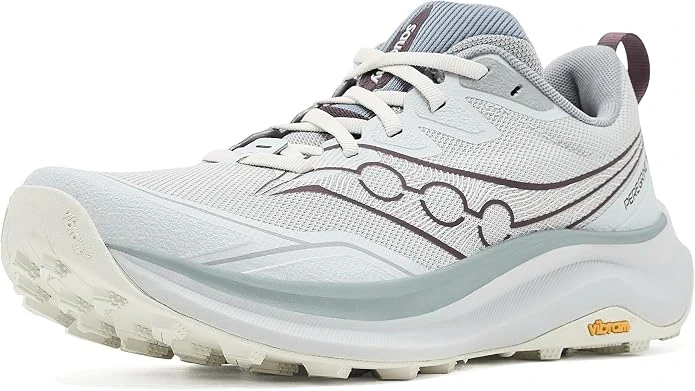
Saucony Peregrine 15 — Best Value & All-Around

saucony-peregrine-15
Weight: 7.78 oz (220g) women’s Drop: 4mm Stack: 28mm heel / 24mm forefoot Foam: PWRRUN Outsole: PWRTRAC, 5mm chevron lugs Price: ~$140

The Saucony Peregrine 15 is the trail shoe I’d hand to most women starting to take their trail running seriously. At $140 it’s $30 less than the Speedgoat 7, and at 7.78 ounces in a women’s 6.5 it’s actually slightly lighter. What it gives up is some cushioning (the 28mm heel stack is significantly lower than the Speedgoat) and outsole stickiness in really slick conditions, but for most trails most of the time, the Peregrine is genuinely competitive with shoes that cost a lot more.

The 15 is the version where Saucony finally got the foam right. The new PWRRUN compound is noticeably softer than the firmer ride of the Peregrine 14, which makes the shoe more forgiving on long runs while keeping the responsive, low to the ground feel that has made the Peregrine a cult favorite for over a decade. The 5mm chevron lugs grip well on dirt, gravel, and packed mud, and the rock plate in the forefoot adds protection without making the shoe feel stiff. The 4mm drop is lower than most traditional trainers but not so low that it requires a long transition.

The honest knock is that the toe box runs narrow, and Saucony’s PWRTRAC outsole is good but not Vibram Megagrip-good in really wet conditions. If you mostly run dry to moderately wet trails and want a versatile shoe that handles distances from 5K to ultra without specializing in any one thing, the Peregrine 15 is the most sensible pick on this list. A wide width is also available.

Check Price on Amazon

What Works

  • Best price-to-performance ratio on this list at $140
  • Lightest shoe on this list at 7.78 oz women’s
  • New PWRRUN foam is meaningfully softer than version 14
  • 5mm chevron lugs grip well across most trail surfaces
  • Forefoot rock plate adds protection without losing flexibility
  • Available in wide and Gore Tex versions
  • Versatile across distances from short runs to ultras

Watch Out For

  • Toe box runs narrow, try the wide if you have a wider forefoot
  • PWRTRAC is good but slips on mossy rocks and very wet surfaces
  • 4mm drop requires some adjustment from 8mm+ shoes
  • Lower stack than max cushion options for very long ultras
#3
Best for Beginners · Versatile Daily

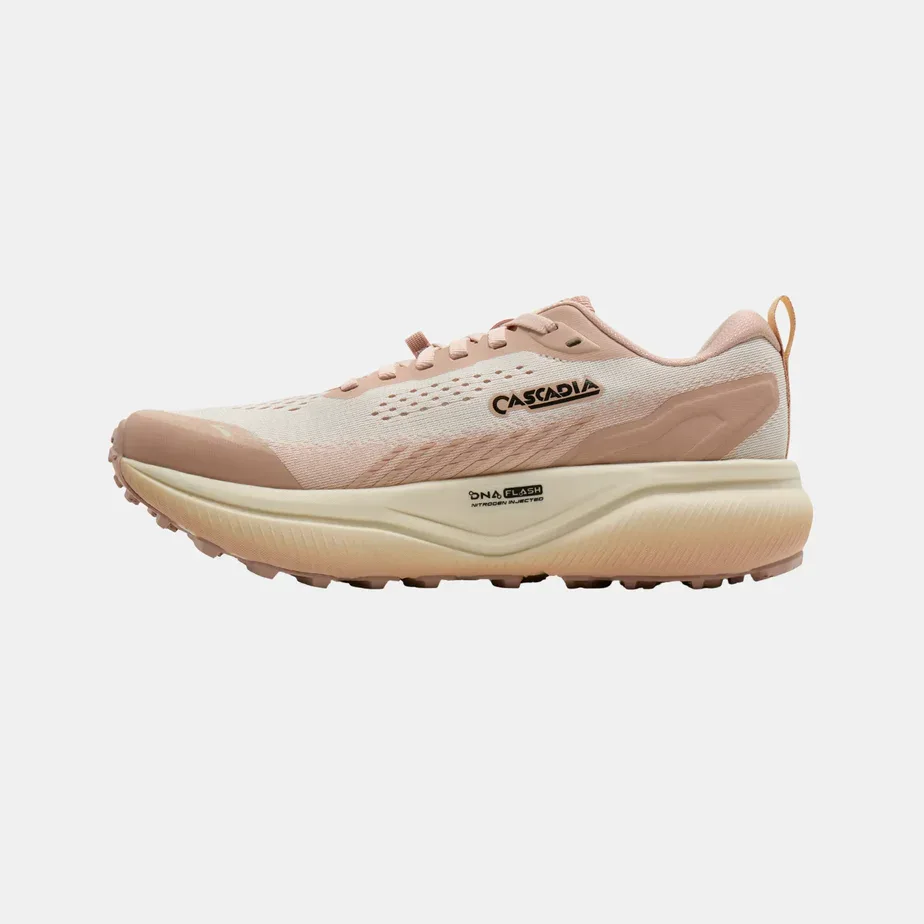
Brooks Cascadia 19 — Best for Beginners

brooks-cascadia-19
Weight: 9.8 oz (278g) women’s Drop: 6mm Stack: 34mm Foam: DNA LOFT v3 (nitrogen-infused) Outsole: TrailTack Green, 3.5mm lugs Price: ~$150

The Brooks Cascadia has been around for 19 versions for a reason: it’s one of the easiest trail shoes for someone coming from road running to put on and feel comfortable in. The 19 is the first version to get Brooks’ DNA LOFT v3 nitrogen infused foam (previously reserved for the more expensive Caldera), and the upgrade transformed the shoe. Where past Cascadias were dependable but heavy and unexciting, the 19 is genuinely fun to run in. Brooks dropped weight, added cushioning, and refined the rock plate while keeping everything that made the line so reliable.

For a woman who is new to trail running or wants one shoe that handles a mix of road approaches and trail miles, the Cascadia 19 is the most approachable option on this list. The TrailTack Green outsole is sticky enough for wet roots and rocks but smooth enough to handle pavement on the way to the trailhead without feeling clunky. The 3.5mm lugs are moderate, which means they don’t catch on hardpack the way deeper mud lugs do. The roomy toe box accommodates foot swelling on long efforts and is genuinely wider than the Hoka or Saucony options on this list.

The 6mm drop and stable, neutral construction make the Cascadia 19 forgiving for runners still figuring out their form on trails. It’s also become a quiet favorite for hikers and thru hikers, which speaks to its all day comfort. Available in standard, wide (2E), and Gore Tex versions. The honest tradeoff is weight, at 9.8 ounces it’s heavier than the Speedgoat 7 and Peregrine 15, but for the runner who wants comfort and versatility over speed, the extra weight is a fair trade.

Check Price on Amazon

What Works

  • New DNA LOFT v3 foam is a huge upgrade over previous versions
  • Roomy toe box that genuinely accommodates wider feet
  • TrailTack Green outsole works on roads, trails, and wet rock
  • 3.5mm lugs handle most trail conditions without feeling overbuilt
  • Available in wide and Gore-Tex versions
  • Excellent for road to trail crossover use
  • Brooks 90-day trial run guarantee gives you time to test it

Watch Out For

  • Heaviest shoe on this list at 9.8 oz women’s
  • 3.5mm lugs underperform in deep mud or snow
  • Less responsive than the Hoka Speedgoat 7 for fast efforts
  • Wider platform feels bulky for runners who prefer agile shoes
#4
Best for Mud · Soft Terrain Specialist

Salomon Speedcross 6 — Best for Mud & Soft Terrain

salomon-speedcross-6
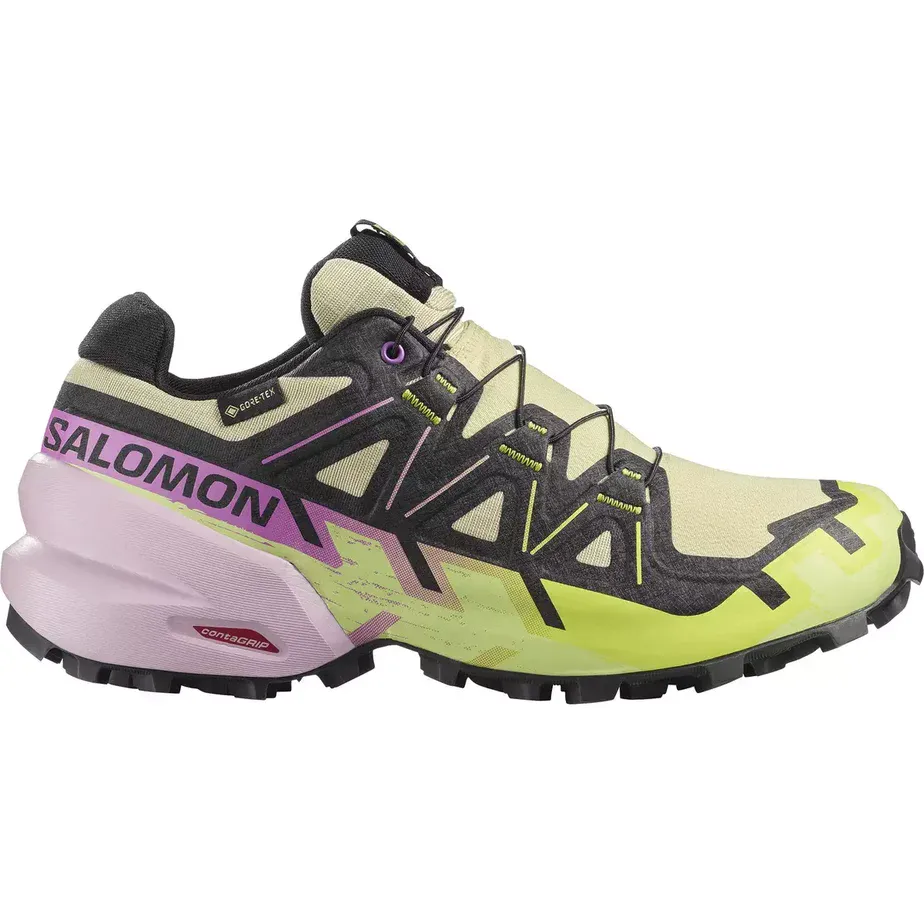
Weight: 9.2 oz (261g) women’s Drop: 10mm Stack: 32mm heel / 22mm forefoot Foam: EnergyCell+ Outsole: Mud Contagrip, 5mm lugs Price: ~$140

The Salomon Speedcross 6 is a specialist. If most of your trail running happens on hardpack singletrack or buffed dirt, this is not the shoe for you. But if you regularly run through mud, snow, soft pine duff, or technical terrain where the trail is more suggestion than surface, the Speedcross 6 is the best women’s trail shoe on the market for that job. The deep, sharply pointed 5mm Mud Contagrip lugs bite into soft surfaces in a way nothing else on this list can match, and the snug Sensifit upper locks the foot down so it doesn’t slide around when the lugs are doing their work.

The 10mm drop is the highest on this list and the closest to a traditional road running shoe, which makes the Speedcross 6 immediately familiar for women coming from road running. The double lasted upper construction is unusual and contributes to the shoe’s distinctive precise fit and lateral stability. Salomon’s Quicklace system is a love it or hate it feature: it makes the shoe fast to put on and adjust mid-run, but if you’re used to traditional laces it takes some getting used to. There’s no rock plate, but the firm midsole and substantial outsole rubber provide adequate underfoot protection for most conditions.

The honest caveats: the Speedcross 6 is overkill on smoother trails and the deep lugs feel awkward on pavement or hardpack. The narrow fit is intentional but won’t work for runners with wider feet, order the wide version if there’s any doubt. Breathability is also limited, which is a tradeoff for the outstanding debris and water resistance. As a winter running shoe or a dedicated soft-terrain pick, the Speedcross 6 is genuinely without equal.

Check Price on Amazon

What Works

  • Best mud and soft-terrain grip on this list, full stop
  • Deep 5mm Mud Contagrip lugs bite soft surfaces aggressively
  • 10mm drop feels familiar for runners coming from road shoes
  • Sensifit upper locks the foot down securely on side-hill terrain
  • Quicklace system is fast to adjust mid-run
  • Excellent winter trail running and snow shoe
  • Available in wide and Gore-Tex versions

Watch Out For

  • Overkill on hardpack, dirt road, and pavement
  • Runs narrow, order the wide width if you have any doubt
  • 10mm drop is high if you’re used to lower-drop shoes
  • Limited breathability makes hot summer running uncomfortable
  • No rock plate for very rocky technical terrain
#5
Best Wide Toe Box · Zero Drop

Altra Lone Peak 9 — Best Wide Toe Box / Zero Drop

altra-lone-peak-9
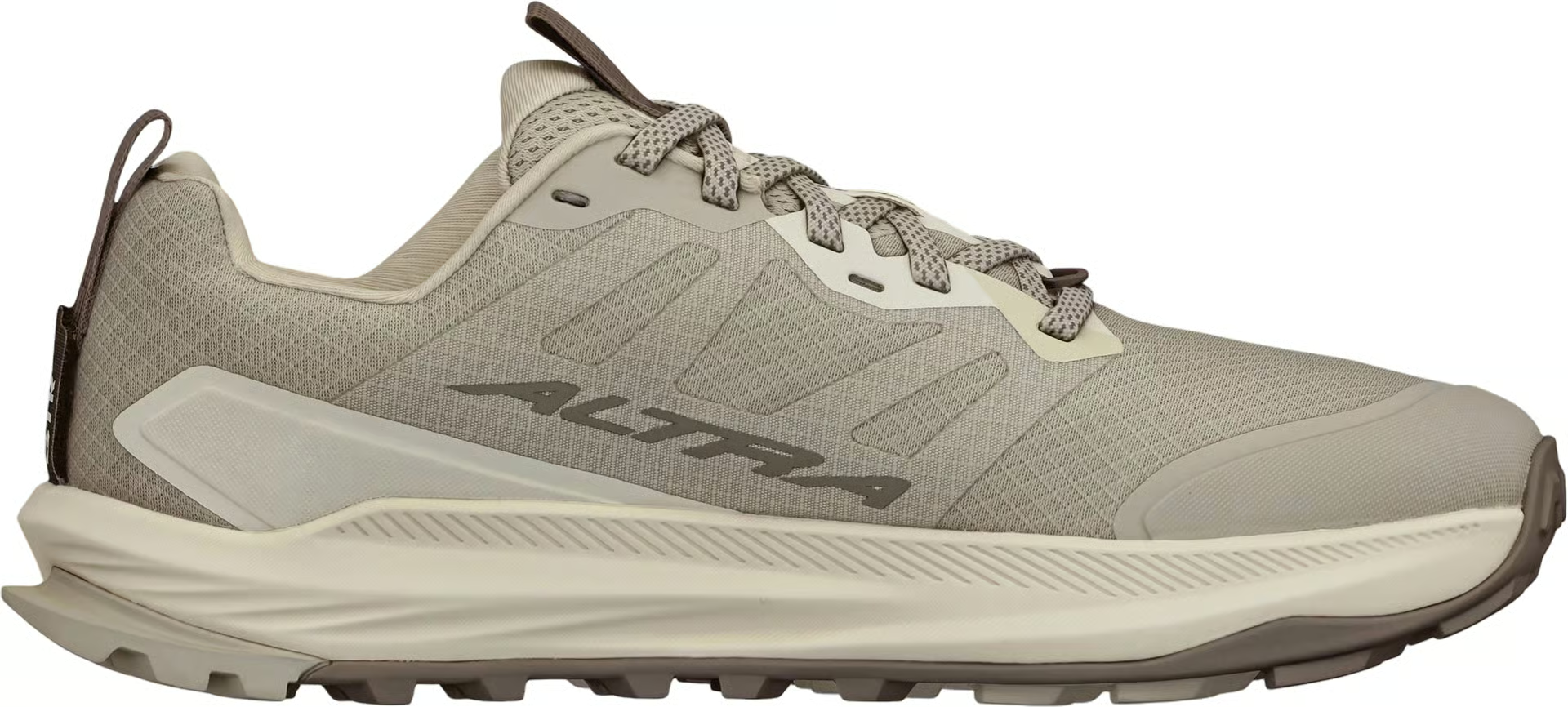
Weight: 9.3 oz (264g) women’s Drop: 0mm Stack: 25mm Foam: Altra EGO Outsole: MaxTrac, 3.5mm lugs Price: ~$140

The Altra Lone Peak 9 is the answer for women who have tried other trail shoes and felt their toes getting cramped or pinched. Altra’s FootShape last is genuinely the widest toe box in mainstream trail running, and once you spend a few hours in shoes that let your toes spread naturally, going back to a tapered toe box feels claustrophobic. The Lone Peak is also the most popular zero drop trail shoe in the world, with a cult following among thru hikers and ultra runners who have found that the natural foot position works better for their bodies over very long distances.

The 9th version updates the upper for better durability with a 100% recycled ripstop mesh, improves the MaxTrac outsole for better grip than the previous version, and tweaks the EGO midsole for a slightly firmer, more responsive feel. The 25mm stack is moderate, which means you get good ground feel and stability on technical terrain while still having enough foam under you for long efforts. The StoneGuard insert provides flexible rock protection without the stiffness of a full rock plate. Altra also offers a Lone Peak 9+ version with a Vibram Megagrip outsole for runners who want maximum grip durability.

The honest tradeoff with any zero-drop shoe is the transition period. If you’re coming from a shoe with 8 to 10mm of drop, plan four to six weeks of progressive use before doing long runs in the Lone Peak, your calves and Achilles need time to adapt. Once they do, the natural foot position is genuinely comfortable for many runners. Available in standard, wide, and waterproof All Weather versions. For ultra distances and thru hiking, this is the most recommended shoe on the market for a reason.

Check Price on Amazon

What Works

  • Widest toe box in mainstream trail running by a meaningful margin
  • Zero-drop platform encourages natural foot position
  • Updated MaxTrac outsole has noticeably better grip than the LP8
  • Available in wide and waterproof All Weather versions
  • Cult favorite for thru hiking and ultra distance running
  • Lone Peak 9+ version available with Vibram Megagrip outsole
  • StoneGuard insert protects against rocks without stiffness

Watch Out For

  • Zero drop requires a 4 to 6 week transition for most runners
  • Heavier than previous Lone Peak versions at 9.3 oz
  • Limited breathability on very hot summer days
  • Standard MaxTrac outsole wears faster than Vibram Megagrip
  • Wide midfoot can feel sloppy for runners with narrow feet
At a Glance

Quick Comparison

ShoePriceWeightDropStackBest ForBuy
Hoka Speedgoat 7 Top Pick~$1707.9 oz6mm38/33mmBest all-aroundAmazon
Saucony Peregrine 15~$1407.78 oz4mm28/24mmBest valueAmazon
Brooks Cascadia 19~$1509.8 oz6mm34mmBeginners, road-to-trailAmazon
Salomon Speedcross 6~$1409.2 oz10mm32/22mmMud and soft terrainAmazon
Altra Lone Peak 9~$1409.3 oz0mm25mmWide toe box, zero dropAmazon

Not sure which is right for you?

Find Your Trail Shoe in 90 Seconds

The five options above cover different terrains, foot shapes, and running styles. If you want a recommendation that accounts for your specific situation, answer 7 quick questions and the Shoe Finder will point you in the right direction.

Take the Shoe Finder →

Free to use. No account or email needed.

Buying Guide

How to Fit a Trail Running Shoe

Size Up a Half Size from Your Road Shoe

Your feet swell during long trail runs and on technical descents your toes will press forward against the front of the shoe. A half size up from your road shoe size prevents the bruised toenails that come from repeated downhill impact. This is especially important for Hoka and Salomon shoes, which both run small and almost always need this adjustment. Fit to your larger foot, most women have one foot a half size bigger than the other.

Account for Foot Swelling

Try shoes on in the afternoon when your feet are at their largest, not first thing in the morning. The target is a thumb’s width of space between your longest toe and the front of the shoe when standing. If it feels perfect at the store, it will probably feel tight by mile 10 of a long trail run. Err on the side of slightly more room.

Check the Heel Lockdown

Lace the shoe up and walk around your heel should not slip even slightly. If it does, try a runner’s loop through the top eyelet, which usually fixes the problem. If the heel still slips after that, the last shape isn’t matching your foot and a different model is the answer. Heel slip on technical descents is the most common cause of trail running blisters.

Bring Your Trail Socks

The thin socks you wear with road shoes are not the right test for trail shoe fit. Bring the actual cushioned trail or hiking socks you’ll be running in. The thicker sock changes the volume of the shoe meaningfully and will affect both the fit and the size you need.

Replace by Wear, Not Just Mileage

Trail shoes typically last 300 to 500 miles depending on terrain and body weight. Vibram Megagrip outsoles outlast softer compounds. Check the lugs every 50 miles or so when they’re rounded down to half their original height, traction has dropped significantly. Look at the shoe from behind on a flat surface; if it leans outward, the midsole has compressed and the shoe is no longer protecting your foot the way it should.

Planning your first trail race? The Marathon Finder includes trail events at all distances from 5K to 100 miles. The fitting matters more than which specific shoe you pick, but for a first trail race the Saucony Peregrine 15 and Brooks Cascadia 19 are the most beginner friendly options on this list.
Common Questions

FAQ

What’s the difference between trail running shoes and road running shoes?

Trail running shoes are built with deeper lugs for traction on dirt, mud, and loose terrain, a more durable upper to resist abrasion from rocks and brush, a wider base for stability on uneven ground, and often a rock plate or thicker midsole to protect the foot from sharp objects. Road shoes prioritize cushioning and lightweight construction for repetitive impact on smooth surfaces. You can run road in trail shoes (the lugs wear faster), but running trail in road shoes risks slips, rolled ankles, and bruised feet.

Do women need different trail running shoes than men?

Yes, in most cases. Women’s trail shoes are built on a women’s specific last with a narrower heel, slightly different volume, and often a softer midsole tuned for lighter average body weight. Every shoe on this list is available in a women’s specific version. The exception is some unisex trail shoes, where women are usually advised to size down 1 to 1.5 sizes from their normal women’s size.

How do I know if I need stability or neutral trail shoes?

Most trail runners do well in a neutral shoe with a wide base, because the uneven terrain itself activates stabilizing muscles in your foot and lower leg. If you have significant overpronation that’s been flagged by a coach, physiotherapist, or running store gait analysis, look for a trail shoe with mild guidance rails. Most trail shoes are technically neutral but include features like wide bases or chassis systems that add inherent stability without using a stiff medial post. See the stability shoes guide for more on what stability features look like.

How long do women’s trail running shoes last?

Most women’s trail running shoes last 300 to 500 miles depending on terrain, body weight, and how aggressively you use them. Shoes used on rocky, technical terrain wear faster than shoes used on packed dirt. Vibram Megagrip outsoles tend to outlast softer rubber compounds significantly. Replace your trail shoes when the lugs are visibly worn down, the midsole feels flat or compressed, or the upper develops holes that let in debris.

Should I size up in trail running shoes?

For most trail running, go a half size larger than your road shoe size. Your feet swell during long runs and on technical descents your toes will press forward against the toe box. A half size up prevents the black toenails that come from repeated downhill impact. The Hoka Speedgoat specifically recommends going up half a size from your normal Hoka size. Salomon shoes often run small and may need a half size up as well.

What lug depth do I need on a women’s trail shoe?

For most trail conditions, 4 to 5mm lugs are the right balance of grip and comfort. Shorter lugs (3 to 3.5mm) work better for hardpack and crossover road to trail running. Longer lugs (5mm or more) are designed for soft, muddy, and technical terrain where you need maximum bite. The Salomon Speedcross 6 has aggressive 5mm lugs for mud and snow, while the Brooks Cascadia 19 uses moderate 3.5mm lugs that perform well across mixed terrain without feeling overbuilt for buffed singletrack.

Are zero drop trail shoes good for beginners?

Not usually. Zero drop shoes like the Altra Lone Peak 9 place your heel and forefoot at the same height, which puts more load on the calf and Achilles than most runners are used to. If you’re transitioning from a traditional 8 to 10mm drop shoe, plan a four to six week ramp-up where you wear them for shorter runs first. Beginners are generally better starting in a moderate 5 to 8mm drop shoe like the Hoka Speedgoat or Brooks Cascadia and trying zero drop later if a wider toe box becomes a priority.

Do I need waterproof (Gore-Tex) trail running shoes?

Only in specific conditions. Waterproof GTX versions are excellent for cold winter trail running, snow, and short wet runs where you won’t fully submerge the shoe. The downside is that once water gets in over the collar, GTX shoes drain very slowly and stay wet for hours. For warm-weather trail running, summer ultras, or anywhere you’re crossing creeks, a non-waterproof shoe with a quick-drying mesh upper is the better choice. Most of the shoes on this list are available in both standard and GTX versions.

Quick Answer

If We Had to Pick One for Most Women

For most women running trails in 2026, the Hoka Speedgoat 7 is the right starting point. It’s the consensus top pick across iRunFar, Treeline, GearJunkie, and Believe in the Run for good reason: the new supercritical EVA midsole made the shoe genuinely responsive without losing the cushioning that made the Speedgoat famous, the Vibram Megagrip outsole handles wet rock and dry trail with equal confidence, and at 7.9 ounces it’s lighter than most less cushioned shoes. At $170 it’s not cheap, but it’s the most versatile trail shoe most women will own.

If $170 is more than you want to spend, the Saucony Peregrine 15 at $140 covers most of the same ground in a slightly lower stack package and is genuinely competitive with shoes that cost a lot more. For women new to trail running who want a familiar, beginner friendly option, the Brooks Cascadia 19 is the most approachable shoe on this list. And if you run mostly mud, snow, or technical soft terrain, the Salomon Speedcross 6 is the right specialist tool for that job.

See Hoka Speedgoat 7 on Amazon →

Similar Posts