Best Base Layers for Kids: 12 Warm Picks (2026)
Quick answer: Wee Woollies is our best overall pick for a child who likes merino wool. Our sets felt genuinely soft and were easy to wear, but pure merino can develop holes at the knees. If your child is very hard on clothing, the Helly Hansen merino set is the smarter premium option because it adds fleece knee panels.
For a cheap spare set, start with Decathlon BL 100. For a child who needs no wool and moves hard, Under Armour ColdGear is the better performance option.
Shop the best base layers for active kids
Swipe the cards on a phone. Each pick is labelled as family-used or researched, and the full notes are below.
Best overall · family-used
Wee Woollies merino set
Wee Woollies merino set
The softest-feeling merino set we owned. Comfortable enough for all-day wear, but rough knees can still make holes.
Best for rough knees · researched
Helly Hansen merino set
Helly Hansen Kids’ Merino Set
A 100% merino set with fleece panels over the knees. That is a practical detail for children who wear out leggings first.
Best cheap spare · family-used
Decathlon WEDZE BL 100
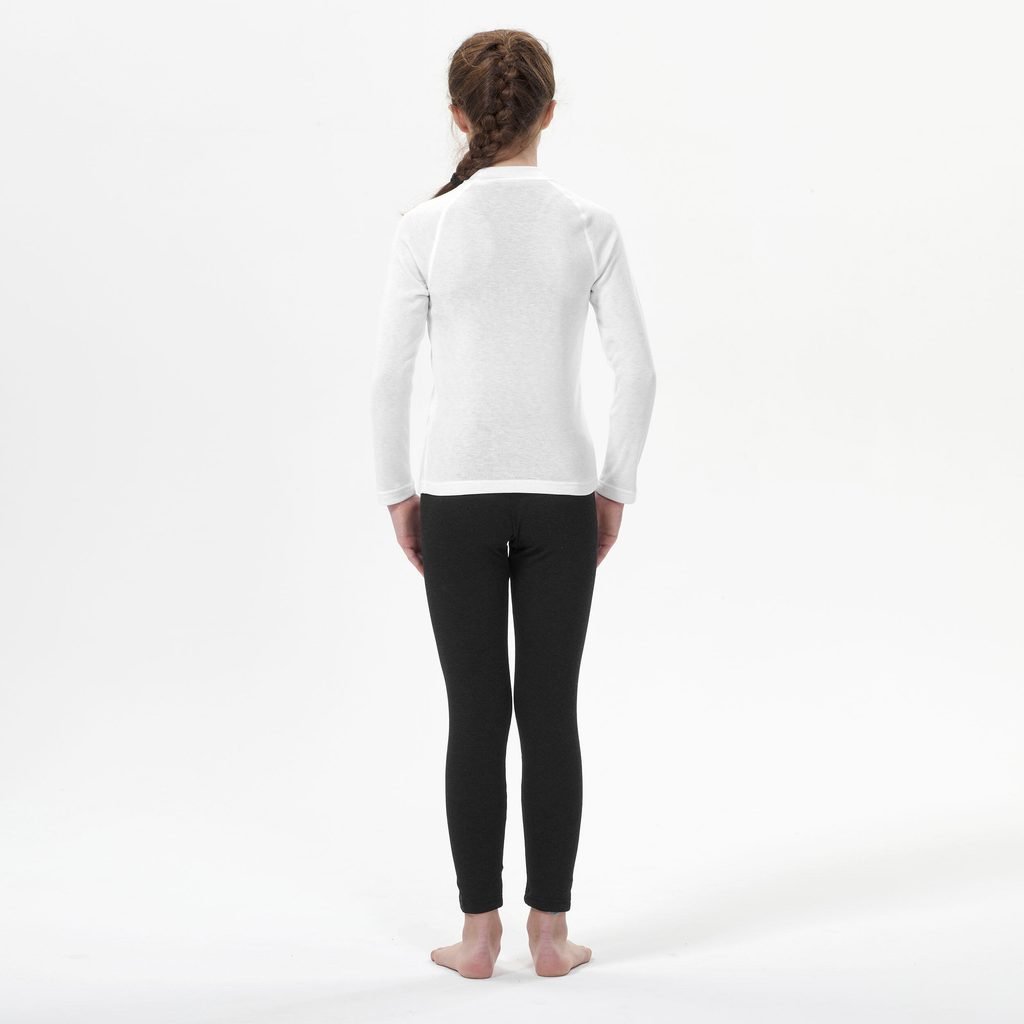
A full synthetic set for about C$16. Our older Decathlon pair lost some softness after washing, but the price is hard to beat.
Best Amazon merino set · researched

Merino.tech Kids’ 250 Set
A 250 g/m² merino top, bottom and beanie in one Amazon listing. Warm and convenient, but not the first pick for rough knees.
Best Amazon synthetic pack · researched
Spyder Kids’ Thermal Set

A stretchy 92% polyester set for easy care and active winter use. Confirm the piece count because Amazon variations can change.
Best high-output synthetic · researched
Under Armour Youth ColdGear
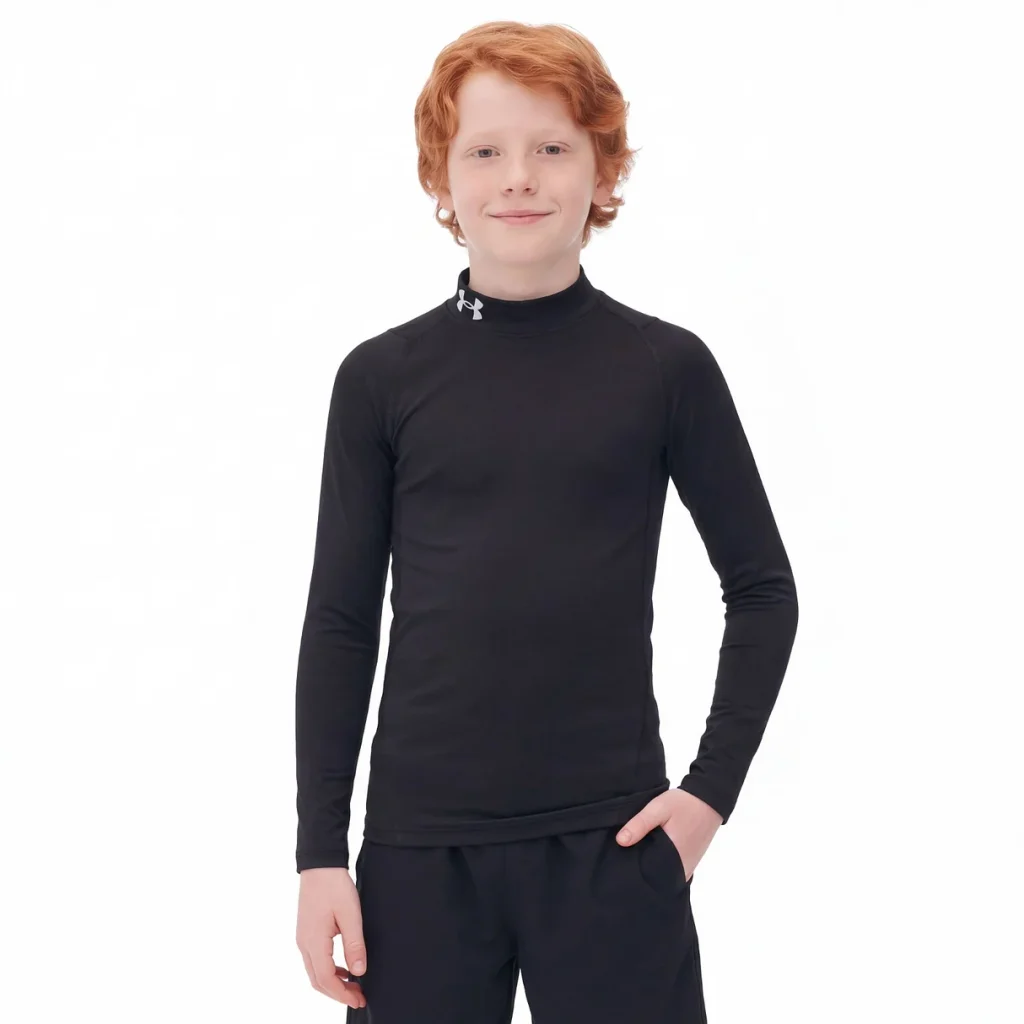
Brushed inside, smooth outside and vented where kids heat up. Better for hard movement than a thick casual thermal. We have had these for under hockey gear.
Best lower-cost merino blend · family-used
Mountain Warehouse Merino II
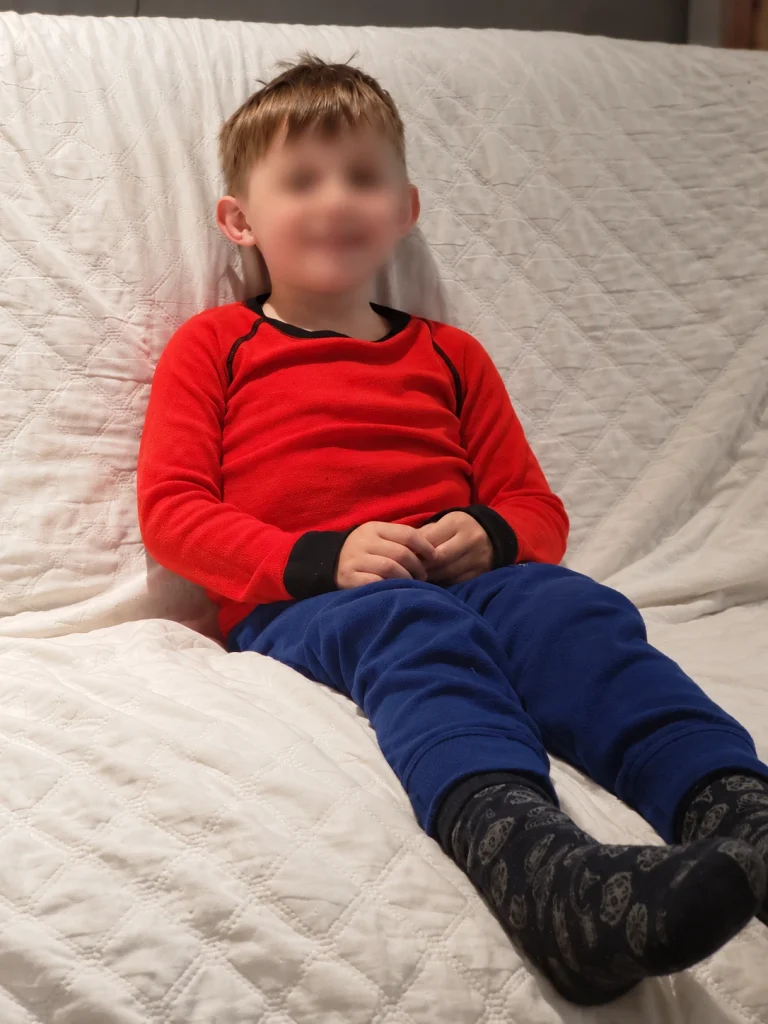
Our merino shirt was worn, but it pilled and felt rougher than Wee Woollies or MEC. The current set is a 70/30 blend.
Best US-made premium set · researched
Chasing Windmills Long Johns
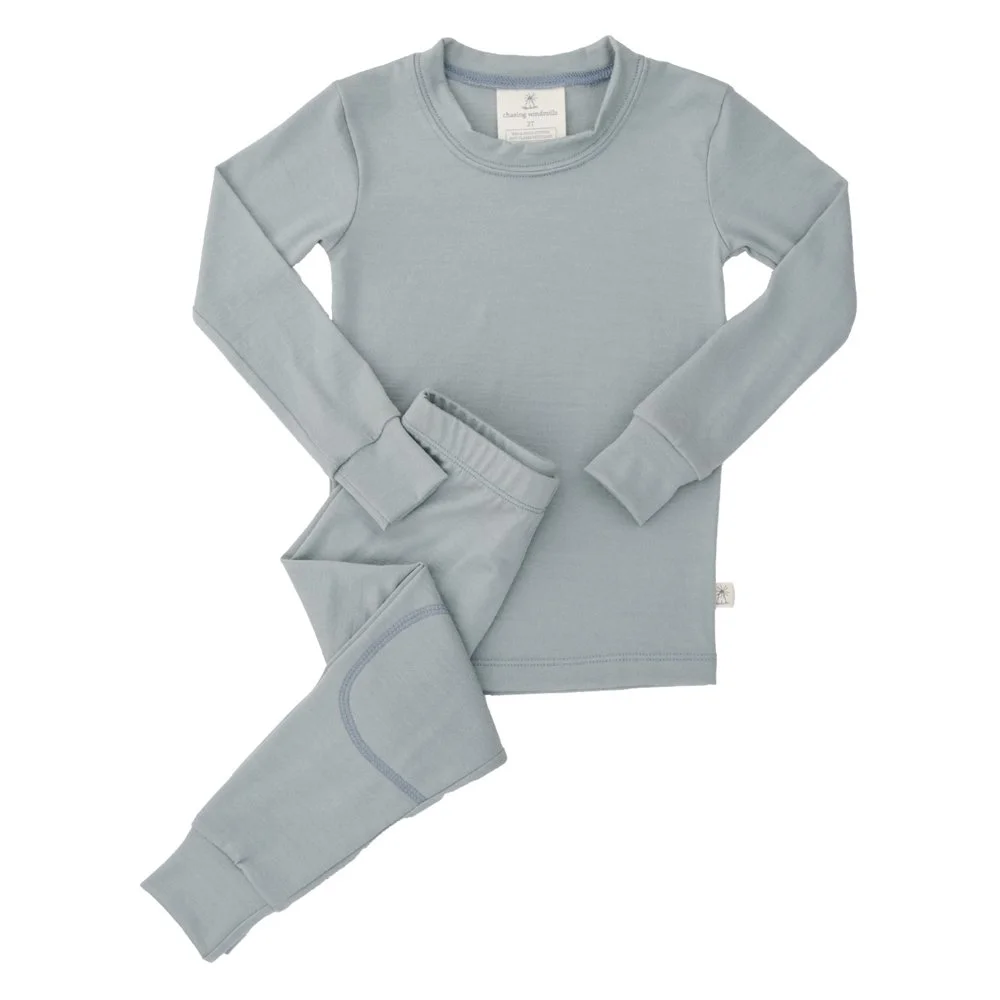
A 210 g/m² merino set with reinforced knees. Parents repeatedly praise the softness, but the US price is premium.
Best soft wool blend · researched
Reima Taitoa
Soft lyocell sits next to the skin and merino sits outside. Comfort feedback is strong; recent knee durability feedback is mixed.
Best store-brand merino · mixed evidence
MEC T2 / REI Co-op Merino
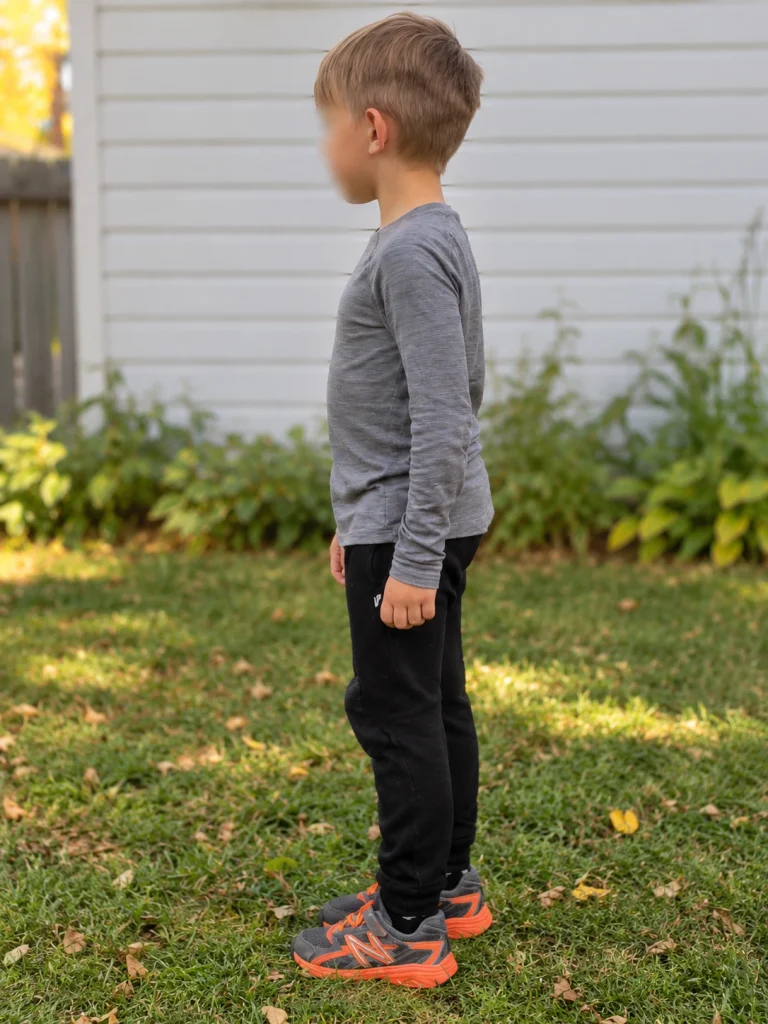
MEC is the practical Canadian option and REI fills the same role in the US. We have used both the kids and adult verisons
Best deep-cold merino · researched
Smartwool Kids’ Classic Thermal
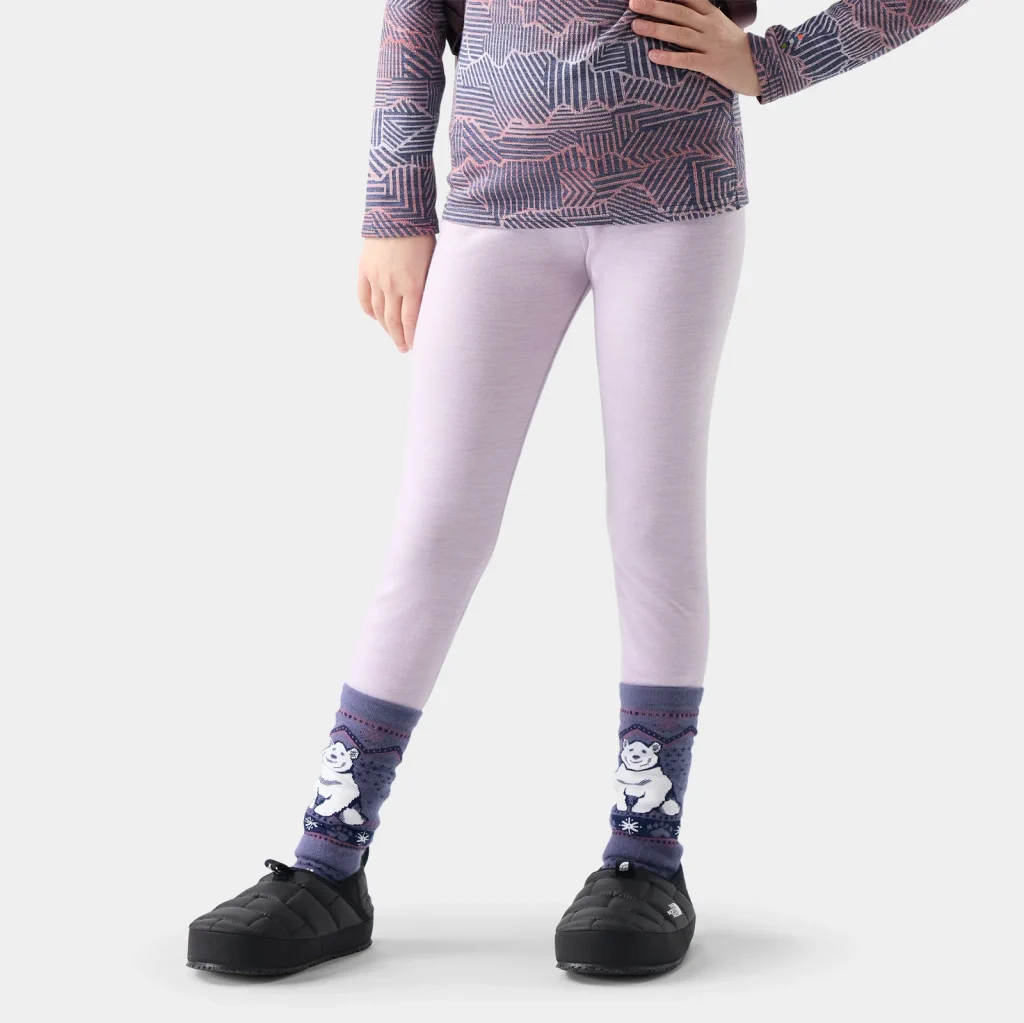
A warm 250 g/m² pure-merino system sold as separates. We own Smartwool socks, but that is not a test of these layers.
Best thin school layer · researched
Uniqlo Kids’ HEATTECH
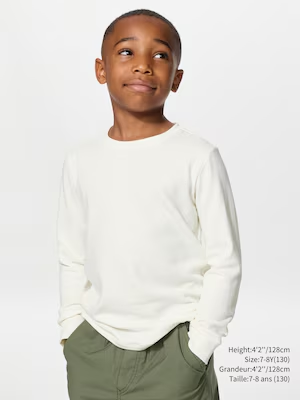
Thin, inexpensive and easy under school clothes. Better for everyday warmth than a long, sweaty day outside.
Find the right base layer for your child
Choose for the child you have, not the coldest number on the label. Skin comfort, sweat and rough knees usually matter more than brand.
The 12 best base layers for active kids
These rankings balance comfort, warmth, durability, care and price. We give more weight to a set a child will willingly wear than to a material that looks perfect on paper.
1 · Best overall · Family-used
Wee Woollies Merino Pyjamas / Base Layer Set
Best for: a child who notices scratchy fabric and will wear one premium set often.
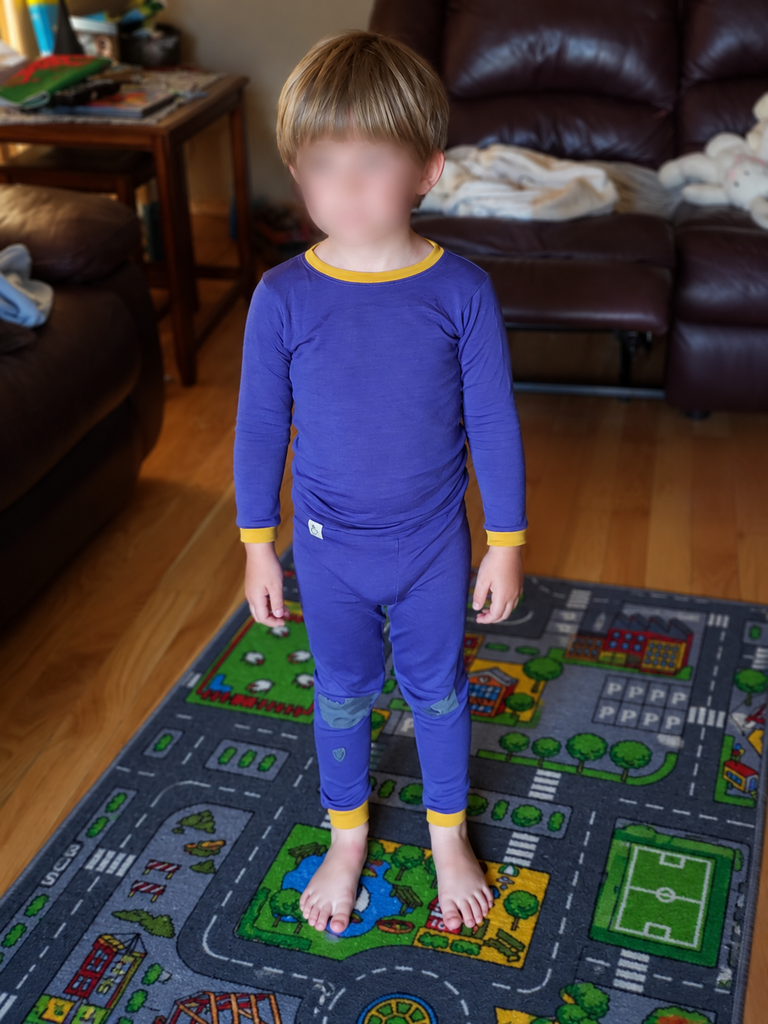
This is the set we would buy first for a child who is comfortable in wool. Our Wee Woollies felt genuinely soft, sat neatly under other clothing and worked for more than one kind of winter day. The slim fit, flat seams and gusset also make sense for children who are constantly moving.
The honest limitation is durability. Pure merino can thin or tear at high-friction spots, and we saw holes at the knees. The brand itself explains that fine merino is vulnerable and recommends mending small holes before they spread.
We still rank it first because comfort decides whether an expensive layer gets worn. It is designed and made in Canada, and the current set can also be used as pyjamas.
Is the price worth it? Yes for frequent use and sensitive children who reject rougher fabrics. No if knee damage is almost guaranteed.
2 · Best for rough knees · Researched
Helly Hansen Kids’ Merino Wool Base Layer Set
Best for: active children who need merino but usually wear through the knees first.
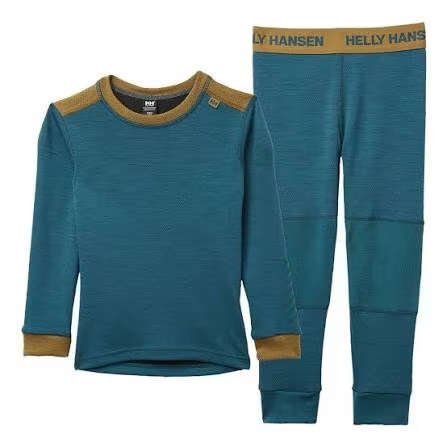
The fleece panels are the reason this set sits near the top. They protect the exact area where children often wear through fine wool. The set also has flat seams, a gusset, a crew neck and a longer back for coverage.
An owner review on Helly Hansen’s page described two years of use and said the reinforced knees held up well, although holes eventually appeared at the seat. That is one person’s experience, not a durability guarantee, but it matches the construction advantage we can see.
Is the price worth it? Potentially. Reinforcement is more useful than paying extra for a logo, but only when stock and sizing work.
3 · Best cheap spare · Family-used context
Decathlon WEDZE BL 100 Kids’ Base Layers
Best for: daycare, school cubbies, growth spurts and families who need more than one set.
Current BL 100 top + bottom
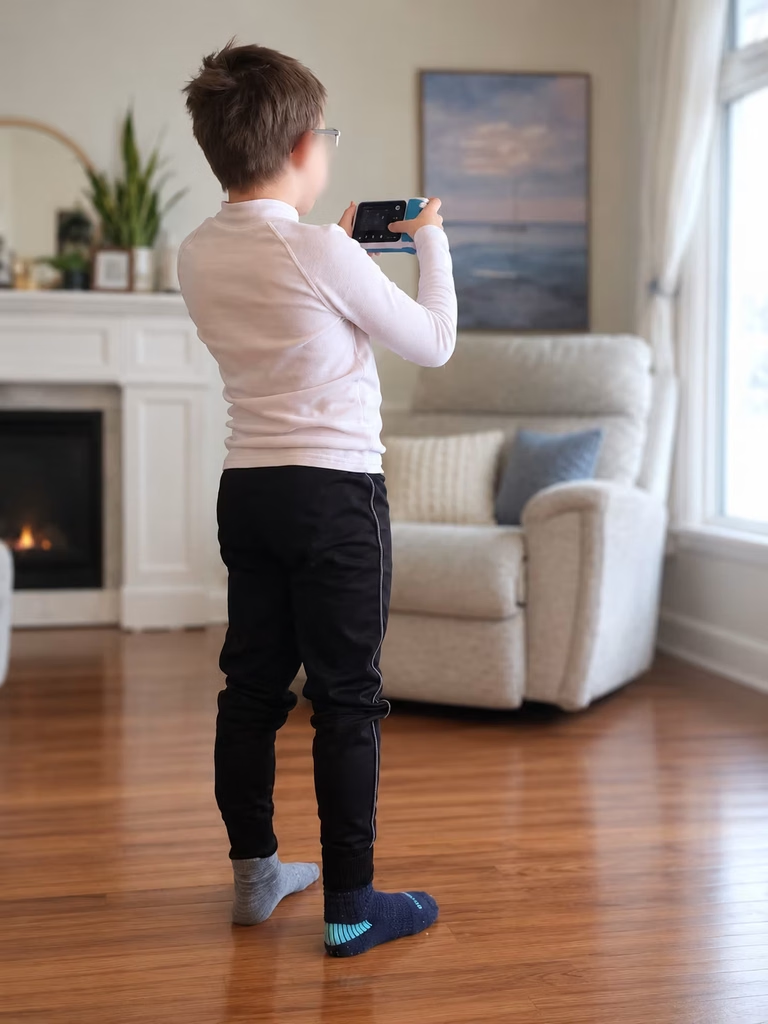
A complete set for about C$16. It can live at school, fill the laundry gap or cover a fast-growing child without making every stain feel expensive. The warmer BL 500 separates were C$17.99 each when checked if the BL 100 is too light.
Our family used the polyester set. It did the job, but it was not as soft after a few washes.
Synthetic fabric is also more likely to hold odour than merino. Wash it promptly after sweaty play and skip fabric softener, which can interfere with moisture management.
Is the price worth it? Easily, as long as expectations are realistic. This is the value pick, not the softness winner.
4 · Best Amazon merino set · Researched
Merino.tech Kids’ 250 Merino Set with Beanie
Best for: parents who want a warm pure-merino set and hat in one Amazon order.
This is the warmest all-in-one Amazon option in the list. The 250 g/m² fabric is better suited to colder, lower-output days than a very warm indoor classroom. The matching beanie adds real value if your child will use it.
It has the same tradeoff as other pure-merino leggings: softness and odour control do not guarantee tough knees. Wash cold on a gentle cycle, avoid softener and lay the set flat to dry. We have not used this set ourselves.
Amazon price, seller, stock, colour and size options can change. Confirm all five on the listing before buying.
Is the price worth it? Compare the current price with Wee Woollies and Chasing Windmills. Count the beanie only if it will actually be worn.
5 · Best Amazon synthetic pack · Researched
Spyder Kids’ Thermal Underwear Set
Best for: easy-care everyday warmth without wool.
The stretch blend should be simple to wash and easier to treat as everyday clothing than fine merino. It is a practical option for children who find wool itchy, families who need a fast laundry turnaround or anyone who wants to spend less than premium merino prices.
The current Amazon listing appeared to show four pieces when we checked, but Amazon titles, photos and variations can change independently. Do not assume every size or colour is a four-piece pack. Confirm the selected size, colour, piece count, seller and return terms before ordering.
We have not worn this set. Polyester can hold more odour than merino, so this would not be our first choice for several sweaty days between washes.
Is the price worth it? Only after checking the piece count. A low price is not a bargain if the chosen variation contains fewer pieces than expected.
Amazon price, seller, stock, colour, size and piece count can change. Verify the selected variation before checkout.
6 · Best for high-output play · Researched
Under Armour Youth ColdGear
Best for: hard outdoor play, skating or sports where a child gets warm and sweaty.
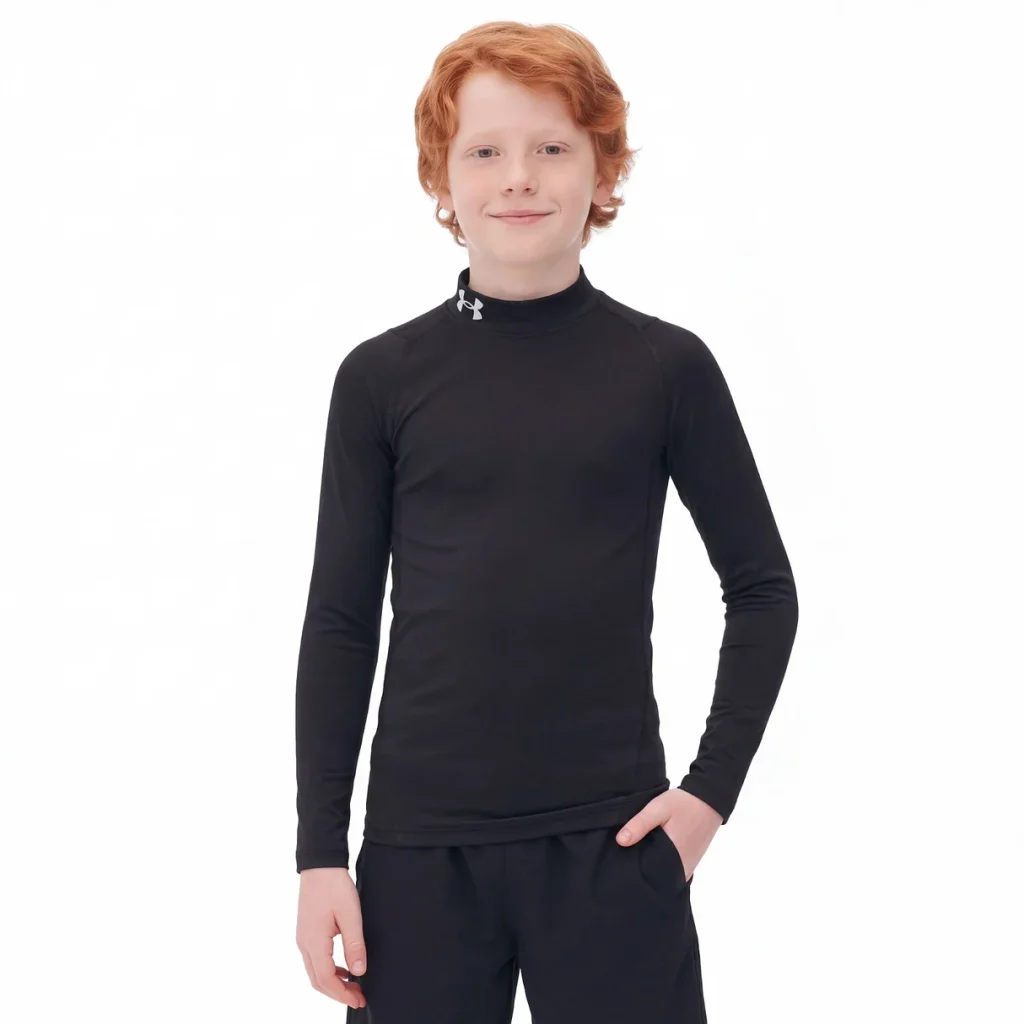
ColdGear is the performance synthetic choice. The boys’ leggings we checked use a brushed inner layer, a smoother fast-drying outer face, four-way stretch and a stretch-mesh gusset. Those details suit active children who need warmth without a thick, loose layer.
The exact fabric and construction can differ between boys’, girls’ and seasonal styles, so check both pieces instead of assuming every ColdGear item matches these specifications. Under Armour also says not to use fabric softener on the leggings we checked.
A top and bottom at roughly C$50 each puts the system near premium-set pricing. The value comes from stretch and sweat management, not wool-like odour resistance. We have used them for under hockey gear.
Is the price worth it? Yes for frequent sport or high-output use. For casual recess, Decathlon gives more warmth-per-dollar.
7 · Best sale-priced wool blend · Family-used context
Mountain Warehouse Merino II Kids’ Base Layer Set
Best for: shoppers who want some merino and can wait for a strong sale.
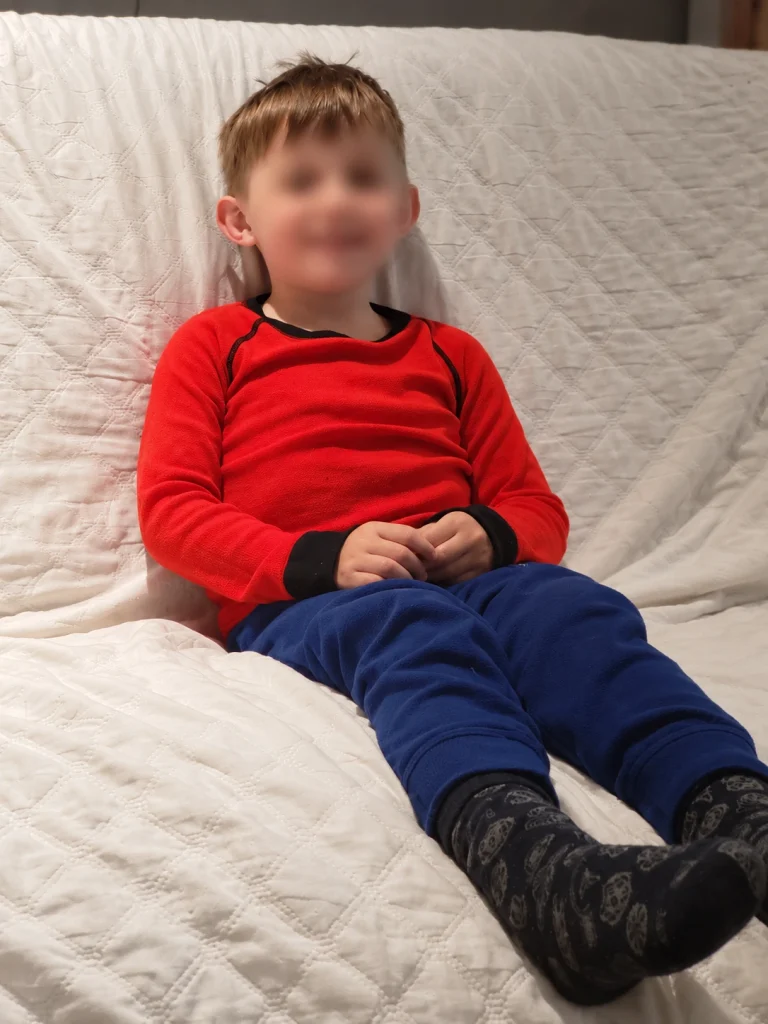
The current Merino II uses a merino-polyester blend. In theory, that trades some pure-wool feel and odour control for easier care and added resilience. At its sale price, it competes with one piece from several premium brands.
Our family owned a Mountain Warehouse merino shirt, but it may not be this current set. It pilled, felt rougher than Wee Woollies and our older MEC merino, and was not our nicest layer. Our son still wore it, which matters: imperfect and used beats premium and left in a drawer.
We would wait for a sale. At the full list price, the set is too close to softer or more carefully reinforced choices.
Is the price worth it? At roughly C$60, yes for a complete blend set. At C$119.99, we would choose differently.
8 · Best US-made premium set · Researched
Chasing Windmills Thermal Long Johns
Best for: US families who value very soft merino, domestic sewing and reinforced knees.
This is the premium set we would be most interested in trying in the US. It is made in the United States from New Zealand and Australian merino, covers sizes through 14 and reinforces the knees instead of asking a fine knit to handle every scrape alone.
In parent discussions, the recurring praise is softness. The recurring objection is price. One parent described sizing up and expecting years of use, which can improve the cost-per-wear, but buying too large can also bunch under outer clothing. Forum comments are useful experience, not controlled testing.
For a Canadian family, exchange, shipping and possible return costs make Wee Woollies easier. For a US family that will use the set constantly or pass it down, I would have bought these.
Is the price worth it? It can be for daily winter wear and realistic hand-me-down use. It is hard to justify for a few outings.
9 · Best soft wool blend · Researched
Reima Taitoa Wool Base Layer Set
Best for: children who want a soft inner face but can still wear a wool blend.
Reima puts soft lyocell toward the skin and merino toward the outside. That construction is appealing for a child who likes warmth but notices the feel of pure wool. Many owner reviews describe the set as soft, warm and comfortable.
The durability feedback needs equal space. Several recent verified reviews on Reima’s own page reported knee wear after only a few uses or within one season. Other families were happy with the set, so this is mixed evidence rather than proof that every pair fails.
Reima says this style runs about one size large. Room to grow may help value, but leggings that sag or bunch can be annoying under snow pants.
Is the price worth it? The comfort may be. The recent knee reports stop us from calling it the safest premium investment.
10 · Best store-brand merino · Mixed evidence
MEC T2 Merino / REI Co-op Merino Midweight
Best for: families who prefer a familiar outdoor retailer in Canada or the US.
MEC is the practical Canadian route. REI’s for American’s – the current kids’ Merino 185 top and bottom are 100% merino, use flat seams and are rated UPF 30. REI says they fit slightly large.
We also could not confirm the current MEC fibre blend from the accessible listing, so we have not guessed it.
REI’s page says its current pieces are not intended as sleepwear. That is a useful reminder that one merino set may be sold as pyjamas while another is not. Follow the label on the exact product.
Is the price worth it? Fair at around C$100 or US$100 for two current children’s pieces. Youth pricing needs a closer comparison with full sets.
11 · Best deep-cold premium separates · Researched
Smartwool Kids’ Classic Thermal Merino
Best for: colder, lower-output days when a warm 250 g/m² layer makes sense.
Smartwool’s kids’ Classic Thermal pieces are warm pure-merino separates with flatlock seams and a slim fit. A complete top-and-bottom system cost about C$190 when checked, making it the most expensive option here.
We own Smartwool socks and like them, but socks do not count as testing these base layers. When we chose where to spend premium money on a full set, we supported Wee Woollies instead. Its current complete set costs far less than two Smartwool thermal pieces.
Smartwool may still be the right choice when you want to replace only one piece, need this heavier fabric weight or find a strong sale.
Is the price worth it? Only for a specific need or a sale. Wee Woollies is our better-value premium set for most families.
12 · Best thin school layer · Researched
Uniqlo Kids’ HEATTECH
Best for: low-bulk warmth under ordinary school clothes.
HEATTECH is useful when the layer needs to disappear under jeans, a uniform or everyday clothing. The current leggings we checked are a thin synthetic blend with stretch and quick-drying properties. A regular top and bottom were about C$25.80 with the online promotion shown when checked; expect that price to change.
Uniqlo gives broad temperature guidance for Regular, Extra Warm and Ultra Warm, but those ranges are not a child-safety guarantee. Wind, wet clothing, time outside, activity and the rest of the outfit matter more than one label.
We see Regular HEATTECH as an everyday warmth layer, not the automatic choice for a long, sweaty day outside. Check which warmth level you are buying because the materials and thickness can differ.
Is the price worth it? Yes for discreet everyday layering. Decathlon is cheaper; merino is better between washes.
Compare all 12 kids’ base-layer options
Filter by material or show only products connected to our family experience. “Family-used” can mean an older version or one piece from the line; each full review states exactly what we owned.
Show me
12 options shown
Wee Woollies
100% merino · 195 g/m²
Softest family pick; pure-merino knee risk.
C$95 list · complete set
Helly Hansen Kids’ Merino
100% merino · fleece knee panels
Best construction for children who wear through knees.
Price and stock vary
Decathlon BL 100
Synthetic · easy care
Cheapest spare set; our older pair lost softness.
C$15.98 · complete set
Merino.tech Kids’ 250
100% merino · 250 g/m²
Amazon top, bottom and matching beanie.
Amazon price varies · 3 pieces
Spyder Kids’ Thermal Set
92% polyester / 8% spandex
Amazon synthetic pack with easy machine care.
Amazon price varies · verify pack
Under Armour Youth ColdGear
Brushed dual-layer synthetic
Best for high movement and children who avoid wool.
About C$100 · top + bottom
Mountain Warehouse Merino II
70% merino / 30% polyester · 180 g/m²
Lower-cost merino blend; our shirt pilled and roughened.
C$119.99 list · sales common
Chasing Windmills
100% merino · 210 g/m² · reinforced knees
Soft US-made premium set with room-to-grow potential.
US$85 to US$95 · complete set
Reima Taitoa
48% merino / 43% lyocell / 9% polyamide
Very soft against skin; recent knee feedback is mixed.
C$129.95 · complete set
MEC T2 / REI Co-op Merino
Canadian and US store-brand options
MEC for Canada; REI 185 g/m² in the US.
About C$99.90 / US$99.90 per set
Smartwool Classic Thermal
100% merino · 250 g/m²
Warm premium separates with a very high set price.
C$190 · top + bottom
Uniqlo Kids’ HEATTECH
Thin synthetic blend
Low-bulk everyday layer for school and errands.
About C$30 · top + leggings
Is an expensive kids’ set worth it?
A premium set makes more sense when a child wears it several days a week, the fabric is comfortable enough to stay on and the set can be repaired or passed down. It makes less sense for one ski weekend or a child who destroys every knee.
Why the knees wear out first
Merino is warm, breathable and comfortable, but it is still a fine knit worn on an active child. Crawling on floors, kneeling in the snow and wearing the fabric without snow pants can thin the knees surprisingly fast. A high price does not turn merino into armour.
What happened in our house
Wee Woollies: These felt really nice and were the easiest pure-merino set for our child to wear. They are expensive, and the knees can get holes when a child is rough on clothing. Be prepaired to patch them if you want them as hand-me-downs.
MEC: Our MEC merino felt better than the Mountain Warehouse shirt, but not as nice as the Wee Woollies. It did not pill.
Decathlon: Our polyester set was a useful budget layer. It did not feel as soft after a few washes.
Mountain Warehouse: Our son wore the merino shirt, but it pilled and felt rougher than Wee Woollies and MEC.
We have also used H&M and Under Armour base layers for hockey, both worked well if looking for a thin polyester winter base layer.
Four ways to make kids’ base layers last longer
- Keep them covered: use snow pants or durable trousers over merino when a child will kneel, crawl or slide. We let our kids wear their clothes indoors to play which would be why they had holes. We also live in a climate that is cold for longer than most places.
- Patch early: reinforce a thin patch before it becomes a run or a wide hole. Wee Woollies sells patch kits for this reason.
- Choose construction for the child: Helly Hansen and Chasing Windmills add knee reinforcement. A synthetic set can be the better value for a child who destroys fine wool.
What parents keep saying in forums and owner reviews
Forum comments helped us look for repeat problems, not award winners. They are anecdotes from different children, climates and laundry routines. We gave the most weight to themes that also made sense beside the fabric and construction.
| What parents notice | What it means when shopping | Products it affects |
|---|---|---|
| Softness decides whether the layer gets worn. | Do not buy a second premium set until the child accepts the first one against bare skin. | Wee Woollies, Chasing Windmills and Reima receive the clearest softness praise. |
| Fine merino often fails at knees or other friction points. | Look for reinforcement, use outer pants and patch thin spots early. A blend or synthetic may be smarter for a rough child. | Helly Hansen and Chasing Windmills reinforce knees; pure-merino options need more care. |
| Some families size premium sets up for extra seasons. | A little room can help value, but too much fabric bunches and does not manage moisture as well. | Especially relevant to Chasing Windmills and Reima, which has brand sizing guidance. |
| Cheap synthetics are useful even when they are not luxurious. | A school spare does not need to be the family’s nicest set. | Decathlon, Spyder and Uniqlo. |
| 100% merino is not always the longest-lasting choice. | Blends can give up some pure-wool feel or odour control in exchange for strength and easier care. | Reima and Mountain Warehouse use blends; Under Armour and Spyder are wool-free. |
In one recent discussion, a parent called Chasing Windmills a favourite for softness but said the price was difficult. Canadian parents also repeatedly mentioned Wee Woollies, MEC, Decathlon and Uniqlo. We use those comments to surface questions to ask, not to pretend that a popular comment is a lab result.
When should active kids wear a base layer?
A base layer is not only for days below -10°C. A thin layer can make sense in milder weather when a child will be outside for hours, while a heavy base can be too warm during hard play. Start with the activity, wind and wet conditions, then use the temperature as a check.
A practical temperature starting point
| Conditions | Starting base layer | Build the rest of the outfit |
|---|---|---|
| About 5°C to 15°C | Thin synthetic or lightweight wool, only if needed | Add a light midlayer or shell for wind and rain. Active children may not need both. |
| About 0°C to 5°C | Light or midweight wicking layer | Add fleece or light insulation plus weather protection based on wind and wet snow. |
| About -10°C to 0°C | Midweight wool, wool blend or brushed synthetic | Add an insulating layer and an outer layer that blocks wind and moisture. |
| Below about -10°C | Midweight or warm base layer | Use suitable insulation, cover exposed skin, shorten or break up outdoor time and check the child often. |
This is a starting point, not a safety rating. Wind chill, sun, dampness, exertion, age and the full outfit change what a child needs. The Canadian Paediatric Society advises removable layers, covered exposed skin and taking off wet clothing and boots promptly after play. Go inside if a child stays cold, becomes unusually tired or has pale, numb or painful skin.
Can children sleep in a base layer?
Follow the exact label. Wee Woollies sells its set for pyjamas and layering. REI says its current kids’ merino pieces are not intended for sleepwear. Similar-looking garments can have different testing and labelling, so do not assume every base layer is sleepwear.
How to wash, dry and repair kids’ base layers
- Read the garment label first. Fibre blends and finishes differ even within one brand.
- Wash cool or as directed. Close zippers and hook-and-loop fasteners on nearby clothing so they cannot catch the knit. A mesh bag can protect fine merino.
- Use a wool-safe detergent for merino. Skip bleach and fabric softener. Softener can coat performance fibres.
- Dry gently. We prefer laying merino flat. Follow the label if a brand allows low tumble drying, and avoid high heat.
- Air between light wears. Merino often needs less frequent washing than polyester. Wash any layer that is visibly dirty or smells.
- Mend early. A small darn or patch over a thin knee is easier than repairing a long run.
- Store wool clean and dry. Use a sealed container if clothes moths are a concern.
How we chose these kids’ base layers
Our family has used Wee Woollies sets, MEC merino, Decathlon polyester set a Mountain Warehouse merino shirt and Under Armour hockey base layers. Those experiences shaped the comfort, pilling, washing and knee-durability questions in this guide.
We ranked the products for real family decisions: whether a child will wear the fabric, how the knees are built, how much laundry care it needs, whether it suits sweaty or lower-output use and what a complete top-and-bottom system costs. We did not use star ratings as a scoring formula and no brand paid for placement.
Finish the cold-weather kit
Buying for yourself too? Our adult base-layer guide compares merino, synthetic fabrics and different warmth levels.
Kids’ base-layer questions
What is the best base layer for active kids?
Wee Woollies is our best overall pick for a child who likes merino because our sets felt soft and were easy to wear. Helly Hansen is the more practical premium option for a child who is hard on knees because it adds fleece knee panels. Decathlon BL 100 is the best cheap spare.
Is merino or synthetic better for kids?
Merino usually controls odour well and can feel comfortable across changing activity levels, but fine merino costs more and can wear through. Synthetic layers are often cheaper, tougher, faster-drying and easier to wash, but they can hold odour. The best choice is the fabric your child will wear for the activity you actually do.
Are expensive kids’ base layers worth it?
They can be when a child wears the set several times a week, accepts the fabric and can pass it down or use it as approved sleepwear. They are poor value for one trip, a fast growth spurt or a child who quickly destroys fine knits. Use the calculator above with realistic wear, not hoped-for hand-me-downs.
How many base-layer sets does a child need?
One can be enough for occasional outings if there is time to wash and dry it. Two are easier for school, weekly sports or wet winter play. A sensible mix is one comfortable main set and one cheaper synthetic backup.
How can I stop holes in merino knees?
Keep merino leggings under durable trousers or snow pants, avoid a size that stretches tightly over bent knees and reinforce thinning fabric early. A set with knee panels, such as Helly Hansen or Chasing Windmills, is a better starting point for a child who kneels and crawls often.
What temperature should kids wear a base layer?
There is no single cutoff. A thin layer may help above freezing during long outdoor days, while a hard-playing child can overheat in a heavy layer below freezing. Consider wind, wet conditions, activity, time outside and the full outfit. Removable dry layers are safer than relying on one temperature claim.
Can my child sleep in a base layer?
Only when the exact garment is labelled for sleep. Wee Woollies presents its set as pyjamas and a base layer, while REI says its current kids’ merino pieces are not intended as sleepwear. Similar materials do not mean identical safety labelling.
Sources and further reading
Specifications, prices and availability were checked on October 23, 2026. Retail pages can change. Parent discussions are anecdotal and are included to show recurring concerns, not to prove product performance.
- Wee Woollies Merino Pyjamas / Base Layer Set and the brand’s merino care and repair guidance.
- Helly Hansen Kids’ Merino Wool Base Layer Set.
- Decathlon Canada kids’ ski base layers.
- Merino.tech Kids’ Merino Thermal Set, ASIN B0DB83LZ7S.
- Spyder Kids’ Thermal Underwear listing, ASIN B0DK48GP2B.
- Under Armour Boys’ ColdGear Leggings and current youth ColdGear collections.
- Mountain Warehouse Merino II Kids’ Base Layer Set.
- Chasing Windmills Thermal Long Johns.
- Reima Taitoa Wool Base Layer Set.
- MEC kids’ products and current T2 listings.
- REI Co-op Merino Midweight Crew Top and matching bottoms.
- Smartwool Canada kids’ base layers.
- Uniqlo Canada Kids’ HEATTECH.
- Parent discussion about soft merino sets and Chasing Windmills pricing.
- Canadian parent discussion about winter-gear spending and Wee Woollies.
- Canadian parent discussion about Decathlon, Uniqlo and affordable underlayers.
- Canadian Paediatric Society winter safety advice.