Best Insoles for Running in 2026: 5 Top Picks
If the factory insoles in your running shoes feel good, keep them. Most runners do not need to replace them.
An aftermarket insole can make sense when you want a firmer or softer feel, need an arch shape that suits your foot better, or have been advised to use one as part of a treatment plan. Fit comes first. An insert that crowds your toes or presses into the wrong part of your arch is not an upgrade.
RunningGearLab may earn a commission from affiliate links on this page, at no extra cost to you. Recommendations use current product specifications, published evidence, recurring runner feedback and Justin’s experience using Superfeet Run Support in his running shoes.
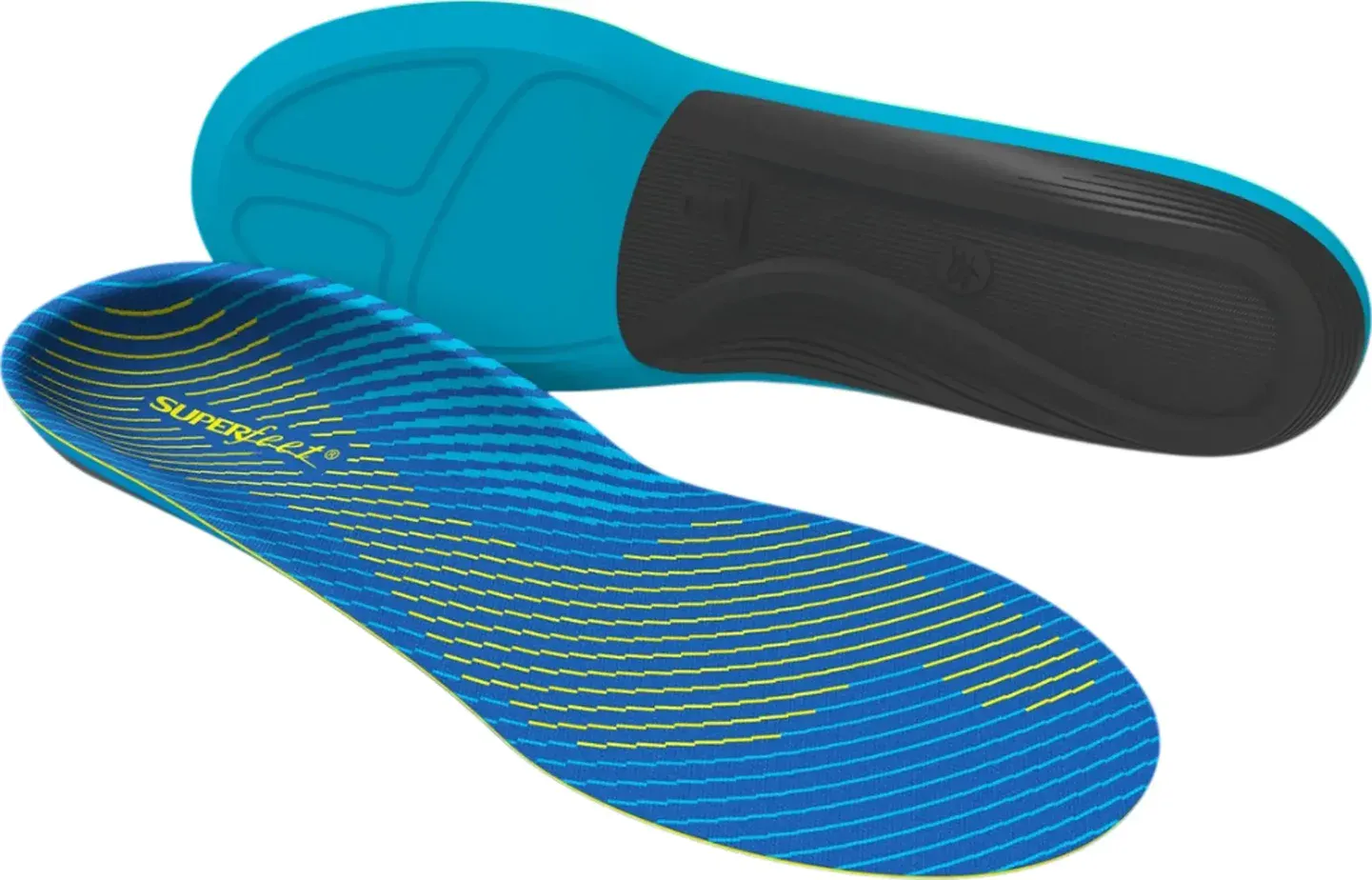
Superfeet Run Support Medium Arch
Justin previously had custom insoles from a physiotherapist. He now uses Superfeet Run Support in some of his shoes and likes them. That real use is one reason they lead this guide, but fit still matters: the firm arch and higher volume will not suit every runner or every shoe.
This is a firmer, higher-volume insert, so it is not the right choice for every shoe. Runners who want something more flexible should look at CURREX RunPro instead.
Check Superfeet Run Support optionsWhich running insole should you start with?
Choose by support feel and the amount of room inside your shoe. More structure is not automatically better.
Superfeet Run Support
Justin uses and likes these in some of his shoes.
See this pick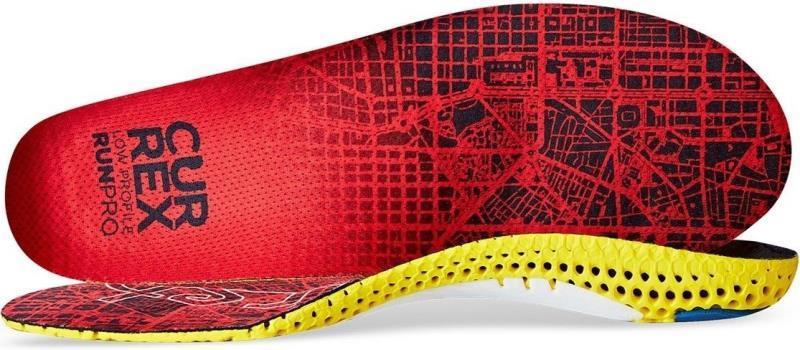
CURREX RunPro
Three arch profiles and less structure under the foot.
See this pick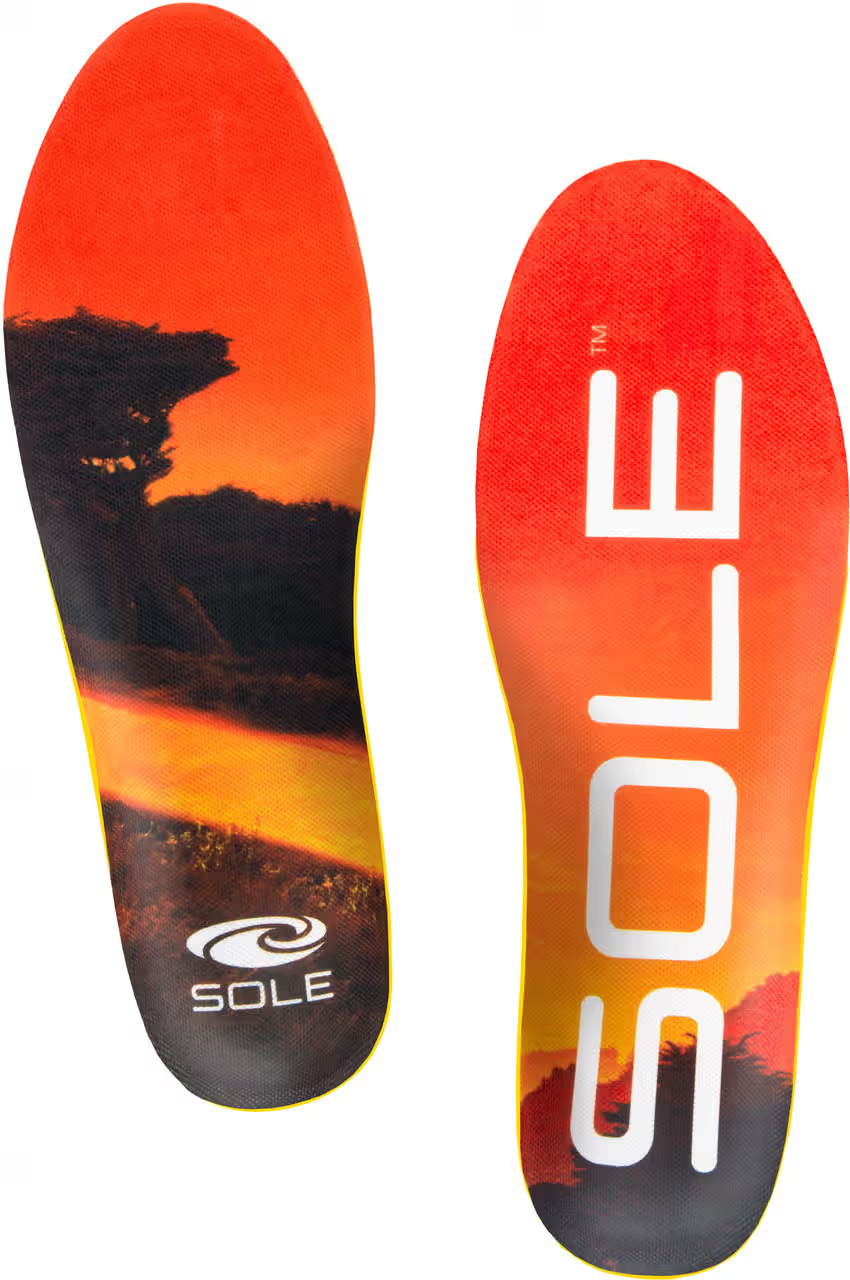
SOLE Performance Medium
Cork footbed that shapes through heat or regular wear.
See this pick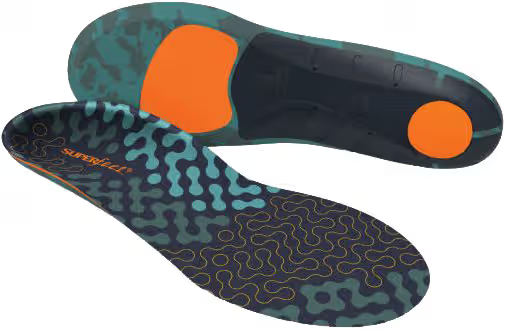
Superfeet Run Cushion High
Softer than Run Support, but still a maximum-thickness insert.
See this pickMake sure the shoe is not the problem
If your shoe feels narrow, unstable or uncomfortable before adding an insole, changing the liner may not fix it. Use the Running Shoe Finder to narrow your choices by fit, support, surface and cushioning.
Can running insoles actually help?
They can help some runners, but there is no single insole that prevents every injury or fixes every sore foot. A 2022 review of foot orthoses in runners found that they may reduce lower-leg injuries and pain. That does not mean every runner needs them.
For plantar heel pain, the 2023 plantar fasciitis clinical guideline says orthoses should not be the only treatment. They may be used alongside other care. Justin’s experience with Superfeet is useful, but it is still one runner’s preference rather than proof that the same insert will suit every foot.
How we chose these picks
Justin’s Superfeet note is the only first-hand experience in this guide. We have not personally run in every model listed. For the other picks, we checked current manufacturer specifications, intended shoe volume, arch choices, price and return policies. We also compared independent testing and recurring runner feedback. The list stays short because each recommendation should offer a meaningfully different fit or feel.
The best insoles for running in 2026
Amazon may show several versions of the same insole. Check the model name, arch profile and size before ordering.
Superfeet Run Support Medium Arch
Best for: runners who like a firm, structured insert and have a moderate-to-roomy shoe with a removable liner.
Look elsewhere if: your shoe already feels tight or you dislike a noticeable arch underfoot.
Check Superfeet Run Support optionsThe current Medium Arch model was previously called RUN Comfort Thin, but the old name is misleading now. Superfeet lists the current version as maximum thickness. It is meant to replace the removable liner in moderate-to-roomy running or walking shoes.
The EVOLyte carbon fibre and polymer cap gives it a firmer feel than CURREX. It supports the heel and arch, but it does not lock the foot in place or guarantee that plantar fasciitis will settle. The arch also needs to land in the right spot. If it presses into the front or back of your arch, try another profile.
Why it leads the list
- Justin uses and likes them
- Comfortable, structured support
- Separate low, medium and high models
- Made for running and training
Before you buy
- Maximum thickness needs enough shoe volume
- Firmer than the other options here
- Arch placement is very personal
- Not a stand-alone treatment for heel pain
CURREX RunPro
If Superfeet sounds too firm, CURREX is the better place to start. Its arch plate flexes with the foot, so the insert changes the character of the shoe less than a more rigid shell.
Check CURREX RunPro optionsRunPro comes in low, medium and high profiles. It also has a zero-drop shape, which means the heel and forefoot stay level inside the insert. That helps preserve the shoe’s existing heel-to-toe offset.
Runner feedback often describes RunPro as less intrusive than Superfeet or PowerStep. That is useful if you mainly want more contour and cushioning. The tradeoff is simple: runners who want a strong arch may find it too flexible.
The catch
RunPro is relatively slim, but it is not invisible. It still takes up more room than many factory liners and may add noticeable weight to a light shoe. Remove the original liner, check your toe space and follow the CURREX profile and trimming guide.
SOLE Performance Medium
SOLE takes a different approach. Instead of choosing a low, medium or high profile, you let the footbed shape to your foot through regular wear or careful heat moulding.
The medium thickness is meant for average-volume footwear, including many running shoes. Slim racing shoes may need a thinner insert, while wide natural-splay shoes may work better with SOLE’s wide version.
Check SOLE Performance Medium optionsWhy choose it
The cork base gradually shapes to the foot, and the zero-drop design avoids adding extra heel lift. It also carries a 90-day brand guarantee.
What takes more work
It can feel firm at first. Some shoes may also squeak against the cork. Read the official fitting and heat-moulding instructions before using an oven.
Superfeet Run Cushion High Arch
Want the Superfeet shape without the firmer Run Support feel? Run Cushion High Arch uses a more flexible structure and softer cushioning. It is still a maximum-thickness insole, so the shoe needs enough room.
Buy it for the high arch profile and softer feel, not because your outsole happens to wear along the outside edge. A high arch and underpronation can occur together, but one does not prove the other.
Check Superfeet Run Cushion optionsSuperfeet says this model can fit zero-drop running shoes. That does not guarantee a good match in every pair. Check that your heel stays seated and your toes still have room after the swap. If you are choosing footwear because you think you supinate, the underpronation guide explains why comfort and fit matter more than reading shoe wear alone.
How to choose the right running insole
Start with the reason you want one
If your current shoes are comfortable and you are running without foot problems, save your money. If the shoe itself is too narrow or unstable, change the shoe rather than trying to repair it with an insert. The arch-support running shoe guide compares current shoes with support built into the platform.
Match the insert to the space inside the shoe
Remove the factory liner first. Your toes should still move freely, your heel should stay seated and the upper should not press down on your foot.
Choose a support feel, not the biggest promise
Superfeet Run Support feels firm. CURREX is more flexible. SOLE shapes over time. Run Cushion High is softer but takes up more space.
Do not diagnose your gait from arch height
Flat feet, high arches and outsole wear are clues, not a full assessment. Two runners with similar arch heights may prefer very different support, and your two feet may not match exactly. If you already know you prefer guided footwear, compare the current stability running shoes and their built-in support.
Try it gradually
Walk indoors first, then use the insole on a short, easy run. Stop if it causes numbness, rubbing, sharp pressure or a new ache.
How to fit an insole in a running shoe
- Remove the factory liner if it is designed to come out.
- Line up the heels of the old and new insoles before trimming.
- Follow the brand’s instructions and trim only the forefoot. Cut a little at a time.
- Place the insert flat inside the shoe with no curling at the toe.
- Check heel hold, arch pressure and toe space while walking.
- Use a short, easy run for the first test.
Do not stack a full-length aftermarket insole on top of the factory liner unless the manufacturer specifically says to do so. Stacking changes the fit and can lift your heel too high.
Running insole FAQ
Do all runners need insoles?
No. If your current shoes are comfortable and you are running without foot problems, the factory liners may be all you need.
Can insoles help plantar fasciitis?
They may help some people as one part of a broader plan. Current clinical guidance does not recommend using orthoses as the only treatment for plantar heel pain.
Will an insole change how my running shoe fits?
Usually. Even a fairly thin insert can reduce interior space, change where the arch sits and lift the heel. Remove the factory liner, then recheck toe room and heel hold.
Can I use an insole in a zero-drop shoe?
Yes, if the shape and volume fit. A zero-drop insert such as CURREX RunPro or SOLE will preserve the shoe’s heel-to-forefoot offset more closely. Superfeet also lists Run Cushion High Arch for zero-drop running shoes, but it is a maximum-thickness model.
How long do running insoles last?
There is no universal mileage. CURREX says RunPro may last about 400 to 600 miles depending on use, while Superfeet gives model-specific guidance that can reach 12 months or 500 miles. Replace an insert sooner if the top cover wears through, the foam stays compressed, the shape changes or it stops feeling right. That visual check matters because iRunFar reported earlier-than-expected wear in some CURREX and Superfeet test pairs.
Can store bought insoles replace custom orthotics?
Not automatically. A custom orthotic is made or prescribed for a specific need, while an over the counter insole provides a standard shape. If you were given custom orthotics for pain, an injury or a structural concern, ask your physiotherapist, podiatrist or other clinician before replacing them. You may also find that a store bought insert works in some shoes but not others.
Check the shoe before adding more support
If the entire shoe feels wrong, start with the RunningGearLab shoe hub to compare shoes by fit, support, surface and budget. A shoe that fits properly without an aftermarket fix is usually the simpler choice.
Use the Running Shoe FinderProduct specifications, intended use, prices and internal links were checked September 2, 2026. Retail prices and Amazon results can change.