Best Running Shoes for Underpronation (Supination) 2026

The Overlooked Gait Problem Most Runners Don’t Even Know They Have

Most of the running world is laser focused on overpronation. Walk into any running store and the first question is usually about whether your foot rolls in. That makes sense, because overpronation is much more common. But the runner who rolls outward, the underpronator, tends to get handed a neutral shoe and sent on their way without much of an explanation. I’ve coached runners for years and the ones who underpronate significantly and don’t know it are usually the same ones dealing with recurring shin splints, lateral ankle issues, or stress fractures that they can’t figure out the root cause of.

Underpronation, which most people in the running world call supination, means your foot rolls outward when it lands rather than inward. The problem is that your arch is built to flatten slightly on each footstrike and absorb shock like a natural spring. When the foot supinates, that spring mechanism doesn’t fully engage. The landing force travels straight up the lateral side of your foot and into your ankle, shin, and knee without much built-in cushioning to slow it down. Over a long run or a high training week, that adds up fast.

The good news is that this is a manageable problem with the right shoe, and in some cases a bit of strengthening work. The right shoe for an underpronator is not a specialty shoe. There is no such thing as a “supination correction” shoe. What you need is a well-cushioned neutral trainer with a flexible midsole that lets your foot move naturally while absorbing the extra impact your arch isn’t handling. This guide covers the five shoes that do that best right now along with everything you need to know to make the right call for your specific situation.

Quick check: Look at the bottom of your current running shoes. If the outer heel and the edge below your little toe are worn significantly more than the rest of the sole, you very likely underpronate. That uneven wear pattern is one of the most reliable early signs. For a more accurate picture, a gait analysis at a running store takes about ten minutes and is worth every one of them.

Jump to Your Pick

What Underpronation Actually Means

When your foot lands on the ground during a run, it’s supposed to roll slightly inward through the midstance phase. That inward roll, called pronation, is how your foot distributes impact across the entire foot and protects your joints. A neutral runner rolls in about 15 degrees. An overpronator rolls in too much. An underpronator doesn’t roll in enough, and in some cases rolls outward instead. That outward roll is supination.

Most underpronators have high, rigid arches. Because the arch doesn’t flatten out, the foot can’t spread the load the way it’s supposed to. That means the outer edge of the foot, specifically the heel and the ball of the foot under the little toe, takes the brunt of every landing. Over time that leads to the kinds of injuries that underpronators deal with most often: lateral ankle sprains from the instability, stress fractures in the small bones of the metatarsals, IT band problems from the hip compensating for the lateral load, and shin splints that don’t quite match what’s happening with their training volume.

If you deal with any of those things on a recurring basis and nobody has ever pointed at your gait as a potential cause, it’s worth getting looked at. The Shoe Finder is a good starting point for figuring out what category of shoe is right for you, and if the results point you toward neutral cushioned options that’s a strong signal.

Wet foot test at home: Wet your feet and step on a paper bag or a piece of cardboard. A high arch leaves a thin strip of print along the outer edge with almost no imprint in the middle. A flat foot leaves a wide, full imprint. Most underpronators will see a narrow, crescent-shaped print that shows very little contact through the arch. This is a quick rough guide but a running store gait analysis is far more accurate.

What Underpronators Should Look For in a Running Shoe

Cushioning That Does the Work Your Arch Won’t

The most important feature in a shoe for underpronators is cushioning, but not just any cushioning. You want foam that’s soft enough to absorb the impact your arch isn’t taking, but firm enough to give you stability and not feel like you’re running on a wobbly surface. A stack height of 30mm or more is a good starting point. The shoes on this list all sit above that, with most running between 37mm and 43mm in the heel. The key distinction is that the foam should be cushioned without being mushy, which is why the midsole technology matters more than the stack height alone.

Neutral Construction with No Medial Post

This is the rule that matters most for underpronators and the one most often misunderstood. Stability shoes are built with a denser foam wedge on the inner side of the midsole to stop the foot from rolling in. If you already supinate, that wedge acts like a ramp that pushes your foot further to the outside. You need a shoe with a symmetrical midsole that supports the foot evenly from side to side. Every shoe on this list is fully neutral in construction.

Flexible Midsole

A rigid midsole can amplify the problem for supinators because it prevents the foot from loading naturally through the gait cycle. A flexible shoe bends with your foot and lets you move through each stride without fighting the midsole. This is less about stack height and more about how the shoe is constructed. Generally speaking, shoes with more segmented outsole patterns and fewer rigid structural elements flex better underfoot.

Wide Base for Lateral Stability

Because underpronators spend more time on the outer edge of the shoe, a wider base provides a bit of extra structure where you need it most. Several of the shoes on this list, particularly the Hoka Bondi and the ASICS Novablast, have noticeably wide bases that keep you from feeling unstable even when landing on the outside of your foot.

Durable Lateral Outsole

The outer edge of your shoe is going to wear faster than it does for most runners. Look for shoes with blown rubber or carbon rubber coverage along the lateral heel and forefoot. If the outsole protection is only on the heel, you’ll wear through to the midsole foam faster than you’d like. Check the wear pattern on your shoes every 300 miles or so. When the heel starts leaning outward visibly when you set the shoe on a flat surface, the foam is gone and it’s time to replace them regardless of how many miles are on the clock.

The 5 Best Running Shoes for Underpronation

Every shoe on this list is a neutral trainer with strong cushioning and no stability features that would work against a supinating foot. They range from a $140 daily workhorse to the most cushioned shoe Hoka makes. All five have been well tested by the running community and reviewed extensively by independent reviewers.

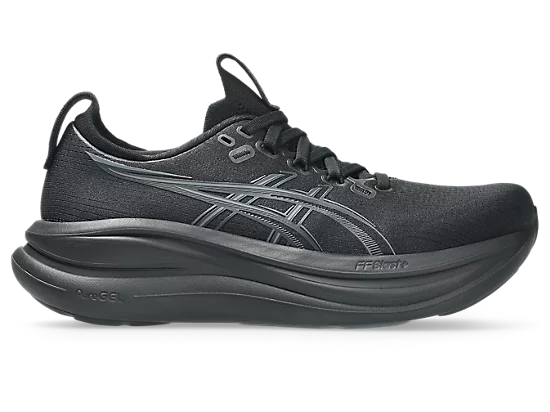
Asics Novablast Running Shoe

#1: ASICS Novablast 5 — Best Overall for Underpronators

Weight: 9.0 oz (254g) Drop: 8mm Stack: 41.5mm heel / 33.5mm forefoot Foam: FF Blast MAX Price: ~$140

The ASICS Novablast 5 sits at the top of this list because it hits the exact combination of qualities that underpronators need and almost nothing they don’t. It’s a neutral shoe with generous cushioning, a wide and stable base, a responsive midsole that doesn’t feel sluggish, and at 9.0 ounces it’s lighter than most cushioned trainers at this stack height. That last point matters more than people realize. When a max-cushion shoe is also genuinely light it means you can run in it day after day without your legs fatiguing from carrying the shoe itself.

The FF Blast MAX midsole is the biggest update from the Novablast 4. ASICS redesigned it to be 17 percent softer than average while somehow keeping the energy return high. The trampoline geometry of the outsole helps drive a smooth, bouncy toe-off that feels more alive than most cushioned trainers in this category. What you get underfoot is a ride that absorbs impact well but still has some snap to it, which means it works for easy days and for tempo runs without feeling like two completely different shoes.

For underpronators specifically, the wide platform is a big part of why this shoe works so well. The base is wide enough to keep you from tipping to the outside during landing even when your natural tendency is to do exactly that. The upper also improved significantly from the previous version with a structured jacquard mesh that holds the midfoot more securely, which is helpful for runners whose foot wants to slide laterally inside the shoe.

Check Price on Amazon

What I Like

  • Wide base provides lateral stability right where underpronators need it
  • FF Blast MAX is soft without feeling mushy or unstable
  • Only 9.0 oz despite 41.5mm heel stack — genuinely impressive
  • Works across easy runs, long runs, and tempo efforts
  • Structured upper keeps the foot from sliding laterally
  • Available in 2E wide width
  • Strong outsole durability, typically 400 to 500 miles

What to Watch

  • Traction on wet roads is below average — take it easy on rainy days
  • Foam gets noticeably firmer in very cold temperatures
  • Heel collar material downgraded slightly from previous version
  • Not the right pick if you want a pure recovery shoe with no response
Brooks Glycerin 22 Running Shoe

#2: Brooks Glycerin 22 — Best for Heel Strikers Who Underpronate

Weight: 10.2 oz (289g) Drop: 10mm Stack: 38mm heel / 28mm forefoot Foam: DNA Tuned Price: ~$165

Brooks has been putting out the Glycerin for a long time and for most of that run it was a reliable but unexciting shoe. The version 22 is the first one that genuinely surprised me. The switch to DNA Tuned foam changed the character of the shoe completely. Where the Glycerin used to feel like a dependable but slightly boring cushioned trainer, the 22 has a dual-density midsole that gives you a noticeably softer heel landing and a more responsive, snappier forefoot. That combination is unusual and it works particularly well for underpronators who are heel strikers, which describes a lot of people running in this kind of shoe.

Brooks uses two different foam cell sizes in the midsole. Larger cells sit in the heel and midfoot where softness and shock absorption matter most. Smaller, denser cells in the forefoot provide more response at toe-off. Because supinators tend to load the heel and lateral forefoot harder than neutral runners, having genuinely soft foam in the heel makes a real difference in terms of how the shoe handles that impact. The 10mm drop is comfortable for traditional heel strikers and the 38mm heel stack gives the foam room to do its job.

The one honest caveat with the Glycerin 22 is weight. At 10.2 ounces it’s the heaviest shoe on this list. If you’re doing most of your miles at an easy or moderate pace that’s not going to bother you much. But if you’re trying to use a single shoe for everything from long runs to faster workouts the Novablast is a better fit. Where the Glycerin shines is for runners who do a lot of easy and long training miles and want a shoe that feels genuinely comfortable from the first mile to the last.

Check Price on Amazon

What I Like

  • DNA Tuned dual-density foam is a genuine upgrade over previous versions
  • Soft heel absorption is excellent for heel-striking underpronators
  • 10mm drop is accessible and familiar for most runners
  • Available in 2E and 4E widths
  • Very breathable upper with a structured, secure hold
  • Durable enough for consistent 400 to 500 mile lifespan

What to Watch

  • Heaviest shoe on this list at 10.2 oz
  • Outsole is slightly stiffer than previous versions
  • Not the right pick for speed work or tempo efforts
  • $165 is at the higher end for a daily trainer
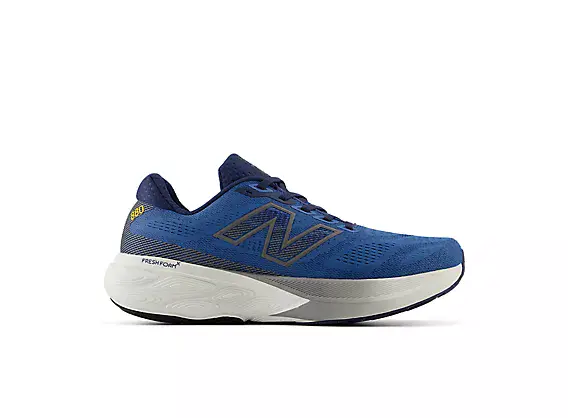
New Balance Fresh Foam 1080 Running Shoe

#3: New Balance Fresh Foam X 1080v14 — Softest Ride on This List

Weight: 10.5 oz (298g) Drop: 6mm Stack: 39mm heel / 33mm forefoot Foam: Fresh Foam X Price: ~$165

If you’ve ever asked a running friend what the softest shoe they’ve ever worn is, there’s a reasonable chance they said the New Balance 1080. The v14 is more refined than the v13 was, slightly firmer and more stable underfoot while keeping the same cloud-like feeling that made the 1080 famous. For underpronators who need a shoe focused purely on protective cushioning and are less concerned with responsiveness or pace, this is the one to look at.

What makes the 1080v14 particularly appropriate for supinators is what it doesn’t have. There are no raised midsole edges, no prescriptive geometry trying to guide your foot, and no medial support features working against your natural gait. Independent reviewers consistently note that the Fresh Foam midsole encourages the foot to roll inward naturally on each stride, which is exactly the right direction for an underpronator. It’s not corrective. It’s just not working against you either.

The 6mm drop is lower than the Glycerin and most traditional trainers, so if you’re currently in a 10mm or 12mm shoe you’ll want to ease into it. A week or two of shorter runs before using it as your main shoe is all it takes. The fit is roomy through the toe box and the upper is soft enough that there’s virtually no break-in period. For long runs and recovery days this shoe is excellent. For anything involving a faster pace, the foam is a bit soft and slow to respond and you’ll probably want something else.

Check Price on Amazon

What I Like

  • Non-prescriptive midsole lets the foot roll inward naturally
  • Softest foam on this list — excellent for high-impact underpronators
  • Roomy toe box prevents the cramping that lateral loading can cause
  • Available in narrow, standard, wide, and extra-wide versions
  • Firmer and more stable than the v13 while keeping the plush feel
  • Strong all-day comfort for runners dealing with foot soreness

What to Watch

  • Too soft for speed work or tempo runs
  • 6mm drop requires a transition period from higher drop shoes
  • Heavier at 10.5 oz than the Novablast or Triumph
  • Outsole traction is below average on loose or wet surfaces
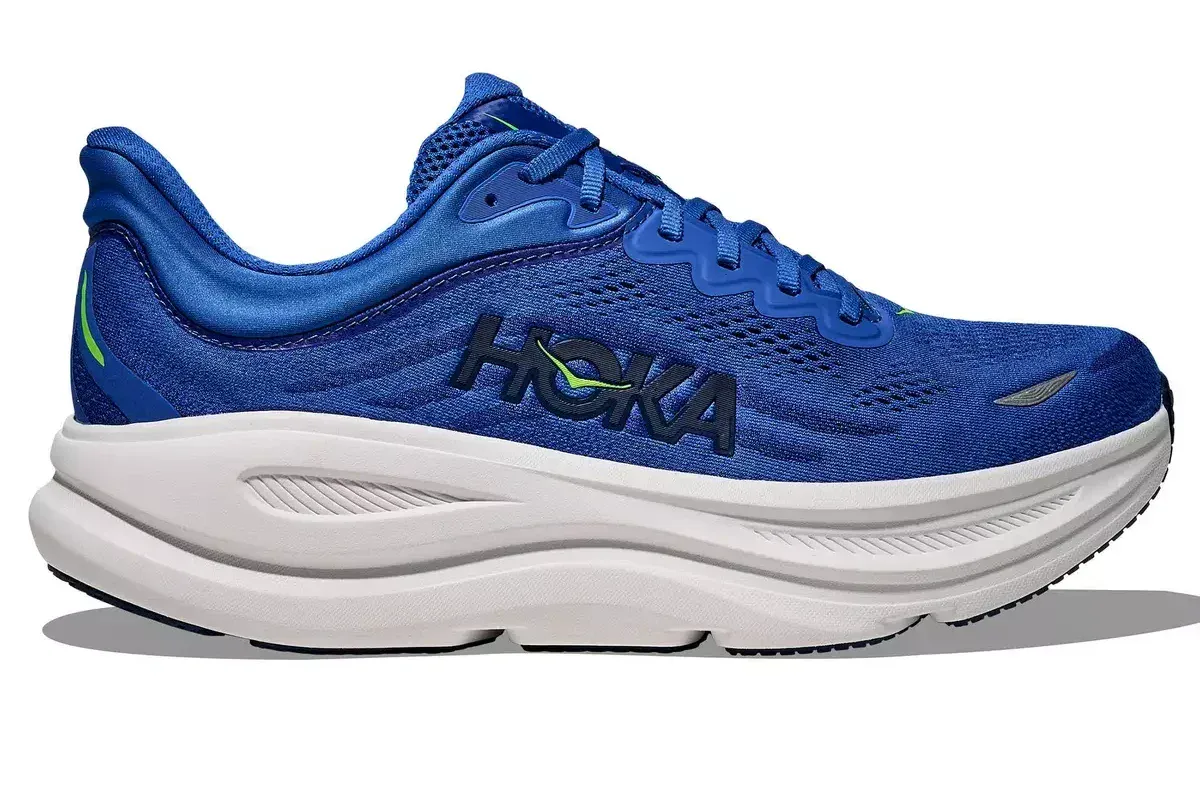
Hoka Bondi 9 Running Shoe

#4: Hoka Bondi 9 — Maximum Cushioning for High-Impact Underpronators

Weight: 10.5 oz (297g) Drop: 5mm Stack: 43mm heel / 38mm forefoot Foam: Supercritical EVA Price: ~$170–175

The Hoka Bondi 9 has the biggest stack height on this list by a meaningful margin. At 43mm in the heel, it has more foam between your foot and the ground than almost anything else on the market right now. For a runner who supinates significantly and is dealing with impact-related injuries like stress fractures or severe shin splints, that extra stack is not just a comfort feature. It’s a functional one. The midsole absorbs what the foot and arch aren’t, and for some runners that makes a real difference in whether they can train consistently or not.

The Bondi 9 is a big improvement over the Bondi 8, which many runners found too firm for a shoe with that much cushion. The updated supercritical EVA foam is softer and more responsive, and the famous MetaRocker geometry guides you through each stride with a smooth rolling motion that reduces the work your ankle has to do during the gait cycle. The wide base and high midsole sidewalls create inherent stability despite all that foam, so despite the tall stack it doesn’t feel wobbly or unpredictable underfoot.

The honest tradeoffs are the price and the 5mm drop. At $170 to $175 it’s the most expensive shoe on this list. And the low drop, while great for balancing weight across the foot, requires some adaptation if you’re coming from a traditional trainer. The Bondi isn’t a speed shoe and it isn’t meant to be. It’s a protective daily trainer and recovery shoe that does exactly what it sets out to do at a high level. If the Novablast or Glycerin aren’t providing enough cushioning for you, this is the natural next step.

Check Price on Amazon

What I Like

  • 43mm heel stack is the most protective cushioning on this list
  • MetaRocker reduces ankle and shin workload during each stride
  • Wide base with high sidewalls gives excellent lateral stability
  • Supercritical EVA foam is softer and more responsive than Bondi 8
  • Available in wide and extra-wide for both men and women
  • Effective for both running and all-day standing or walking

What to Watch

  • Most expensive shoe on this list at $170 to $175
  • 5mm drop requires a transition period from higher drop shoes
  • Too heavy and slow for tempo or workout efforts
  • Bulkier feel than other shoes — takes some getting used to
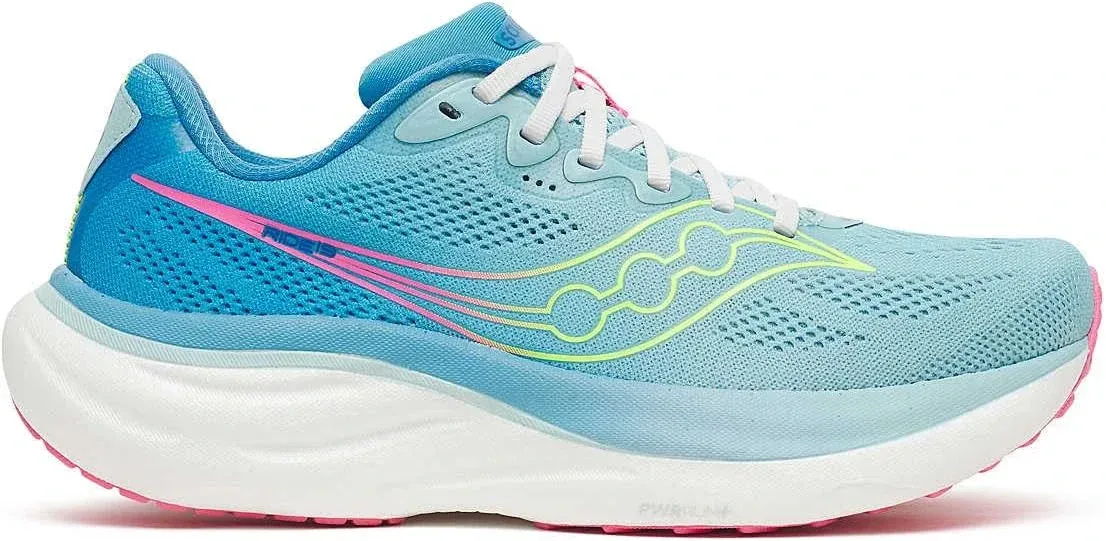
Saucony Triumph 22 Running Shoe

#5: Saucony Triumph 22 — Best for Long Runs and Versatile Miles

Weight: 9.6 oz (272g) Drop: 10mm Stack: 37mm heel / 27mm forefoot Foam: PWRRUN PB Price: ~$160

The Saucony Triumph 22 is the most versatile shoe on this list. Where the Bondi and the 1080 are very much cushioning-first shoes that don’t do much else at a high level, the Triumph can handle easy days, long runs, and even moderate tempo efforts without feeling out of place. That versatility comes from the PWRRUN PB foam, which is a high-energy bead foam that provides both cushioning and bounce. The 10mm drop makes it immediately familiar for runners coming from traditional trainers, and the wide base gives it the side-to-side stability that underpronators need.

For long runs specifically, the Triumph 22 is outstanding. Multiple long-distance runners who underpronate have told me this is the shoe they reach for when the mileage gets high. The foam absorbs impact well over two to three hours of running without compressing flat, and the rocker geometry keeps transitions smooth even when the legs are getting tired and form starts to break down. The upper is also notably well fitted, with a gusseted tongue and good heel lock that keeps the foot from moving around inside the shoe — important when you’re logging 15 to 20-mile training runs.

At $160 and 9.6 ounces it sits comfortably between the lighter, more responsive Novablast and the heavier, more protective Bondi. If you’re training for a half or full marathon and need one shoe that can cover most of your training days without specializing in any single thing, the Triumph 22 is the most sensible pick on this list. For more ideas on structuring your training around the right shoes, the Training Hub has plans and guides that pair well with whatever shoe you land on.

Check Price on Amazon

What I Like

  • PWRRUN PB foam provides cushioning and energy return together
  • Most versatile shoe on this list — works across all training paces
  • 10mm drop is immediately comfortable for most heel strikers
  • Excellent for long run distances where foam durability matters
  • Good heel lockdown prevents lateral foot movement
  • Strong outsole durability with carbon rubber in key zones

What to Watch

  • Slightly less cushion than the Bondi or 1080 for severe supinators
  • Forefoot stack height at 27mm is lower than competitors
  • Outsole can be slippery on variable terrain like gravel paths
  • Not as lightweight as the Novablast for its cushioning level

Quick Comparison

ShoePriceWeightDropHeel StackBest ForBuy
ASICS Novablast 5 Top Pick~$1409.0 oz8mm41.5mmBest all-aroundAmazon
Brooks Glycerin 22~$16510.2 oz10mm38mmHeel strikersAmazon
NB Fresh Foam X 1080v14~$16510.5 oz6mm39mmSoftest rideAmazon
Hoka Bondi 9~$170–17510.5 oz5mm43mmMax cushioningAmazon
Saucony Triumph 22~$1609.6 oz10mm37mmLong runs and versatilityAmazon

Not sure which of these fits your situation?

Find Your Match in 90 Seconds

The five shoes above cover different foot types, running styles, and mileage levels. If you want a recommendation that accounts for your specific arch height, weekly mileage, and where you tend to get injured, answer 7 quick questions and the Shoe Finder will point you in the right direction.

Take the Shoe Finder →

Free to use. No account or email needed.

What Underpronators Should Avoid

Stability and Motion Control Shoes

This is the one rule that matters more than anything else on this page. Stability shoes are designed to resist inward rolling. They have a medial post, which is a denser foam or plastic wedge on the inner side of the midsole, specifically to push back against overpronation. If you underpronate, that medial post becomes a ramp that angles your foot further to the outside on every landing. Using a stability shoe as an underpronator increases your risk of lateral ankle injuries significantly. If you’re in doubt, check the shoe’s description. Phrases like “GuideRails,” “medial post,” “motion control,” or “support shoe” are all signals to look elsewhere. Compare this to what you need when looking at shoes for flat feet, where stability is actually the goal.

Very Minimal or Barefoot-Style Shoes

Zero-drop minimalist shoes put all the impact absorption responsibility on your foot, your arch, and the soft tissues of your lower leg. For an underpronator with a rigid high arch, that’s asking a foot that already doesn’t absorb shock well to absorb even more. Minimalist shoes have their place but only after a very long transition period and ideally with input from a physical therapist who knows your gait. Until then, cushion is your friend.

Excessively Stiff Midsoles

Some premium shoes, especially older-generation plated shoes or firmer road racers, have rigid midsole constructions that resist bending. For a supinators, a stiff midsole can lock the foot into a laterally loaded position rather than allowing it to roll through naturally. The shoes on this list are all constructed to flex with the foot rather than fight it.

If you run trails: The stability and cushioning needs for underpronators apply on trails too, but trail-specific compounds and lugged outsoles become important. Check out the Running Guides section for trail-specific content, or explore all the tools in the Runner’s Toolkit to help plan and adapt your training.

Exercises That Help Underpronators

The right shoe does most of the work but it doesn’t do all of it. Underpronators tend to have tight calves, weak peroneals, and limited ankle mobility, all of which contribute to how severe the supination is. Building strength in those areas can reduce the amount of work the shoe has to do and lower your injury risk meaningfully over time.

Calf Stretching (Daily)

Tight calves and a tight Achilles limit ankle dorsiflexion, which forces more load to the outer foot during landing. A consistent daily calf stretch, both straight-leg for the gastrocnemius and bent-knee for the soleus, done for 30 seconds on each side makes a bigger difference than most people expect over a few weeks of consistency.

Peroneal Strengthening (3 times per week)

The peroneal muscles run along the outer lower leg and are responsible for eversion, which is the inward roll the supinating foot lacks. Resistance band exercises where you pull the foot inward against resistance are the most direct way to build this. Ankle circles with a band are another good option. Start light and build slowly since these muscles are often underdeveloped in runners who have supinated for years.

Single Leg Balance Work (3 times per week)

Standing on one foot for 30 to 60 seconds on a firm surface, then progressing to a foam pad or wobble board, builds the proprioceptive awareness that helps your foot land more centrally. This is simple but it’s genuinely effective and it doesn’t take much time.

Arch Strengthening

Short foot exercises, where you scrunch the arch upward without curling your toes, strengthen the intrinsic foot muscles and can help the arch become more responsive over time. These are particularly helpful for runners with high, rigid arches who feel like their foot has no give on landing.

FAQ

What is underpronation and how do I know if I have it?

Underpronation, also called supination, means your foot rolls outward when it hits the ground instead of rolling inward slightly the way a neutral foot does. The easiest way to check is to look at the wear pattern on an old pair of shoes. If the outer edge of the sole wears out first, especially along the little toe side of the heel and forefoot, you very likely underpronate. A gait analysis at a running store takes about ten minutes and tells you exactly what your foot is doing.

Should underpronators wear stability or neutral shoes?

Always neutral. Stability shoes are built with a medial post designed to stop the foot from rolling inward. If you already underpronate, that post pushes your foot even further to the outside, which increases your risk of lateral ankle sprains and stress fractures. Stick with cushioned neutral shoes. If you want to understand the difference in detail, see the comparison between stability shoes and neutral shoes.

What injuries are underpronators most at risk for?

Lateral ankle sprains, stress fractures in the small bones of the foot, shin splints, IT band syndrome, and plantar fasciitis are the most common. The underlying cause is that the foot stays rigid and doesn’t absorb shock the way a neutral foot does, so impact travels up through the ankle, shin, and knee. Good cushioning is the first line of defense, and the strengthening exercises above help significantly over time.

Do high arches cause underpronation?

Often yes. High, rigid arches limit the foot’s ability to flatten and absorb impact, which tends to push the landing pattern to the outer edge of the foot. Not every runner with high arches underpronates severely, and not every underpronator has high arches. The wear pattern on your shoes is a quick and reliable starting point. You can also try the Shoe Finder which factors in arch height as part of its recommendations.

How much cushioning do underpronators actually need?

More than average. Because the foot doesn’t compress through the arch the way a neutral foot does, the midsole has to absorb more of the impact. A stack height of 30mm or more in the heel is a reasonable starting point. That said, maximum cushioning isn’t always the answer. Excessively soft foam can make underpronation feel less controlled and more unstable. What you want is a shoe that’s soft enough to absorb impact while still offering some structure and lateral stability.

Can orthotics help with underpronation?

They can, particularly if a podiatrist recommends a neutral or slightly lateral wedge to guide the foot into a more centered position. Orthotics work best as a complement to a good cushioned neutral shoe rather than a replacement for one. If you’re having recurring injuries related to underpronation it’s worth seeing a sports podiatrist or physical therapist for a proper assessment before investing in custom orthotics.

How often should underpronators replace their shoes?

Plan for 300 to 450 miles. Because underpronators land heavily on the outer edge, the lateral outsole wears unevenly and faster than it would on a neutral runner. Set your shoe on a flat surface and look at it from behind every few hundred miles. When the heel tilts noticeably to the outside, the foam has compressed and the shoe is no longer protecting you properly.

Are the same shoes recommended for men and women who underpronate?

The same models are generally recommended for both. Most major brands offer gender-specific versions with slightly different geometry in the upper and sometimes a softer midsole tuning in the women’s version. The most important thing is finding the right fit and cushioning level for your foot shape and your training volume. All five shoes on this list are available in both men’s and women’s versions.

Quick Answer

If You Only Have Time to Read One Thing

For most runners with underpronation or supination, start with the ASICS Novablast 5. It’s a neutral cushioned trainer with a wide stable base, a genuinely soft and bouncy midsole, and a light enough build that you can run in it across easy days, long runs, and moderate tempo efforts without feeling like it’s holding you back. At $140 it’s also the most affordable option on this list.

If you need something more protective because you’ve been dealing with stress fractures or significant impact-related pain, move up to the Hoka Bondi 9. The extra stack height and wider base make a real difference for high-impact underpronators and it’s the most recovery-focused shoe on this list. If you’re preparing for a marathon and want one shoe that covers your whole training block well, the Saucony Triumph 22 is the most versatile option here.

Whatever shoe you pick, just make sure it’s neutral. No stability features, no medial post, no GuideRails. That’s the one rule that matters more than anything else for supinators.

See ASICS Novablast 5 on Amazon →

Similar Posts