Best Trail Running Shoes 2026: The Complete Guide
Jump to: What Makes A Good Trail Shoe | Trail Terrain Types | 5 Best Trail Shoes | How to Choose | Trail Shoe Rotation | FAQ
Introduction: Trail Running Shoes Are Different
Here’s the thing about trail shoes—they’re not just road shoes with thicker soles. They’re a completely different animal.
I learned this the hard way. I showed up to my first trail run in road shoes. Big mistake. My ankles were twisting on rocks, I had zero grip in the mud, and my feet felt like I was running on an unstable surface (because I was). My feet were destroyed by the end.
That’s when I invested in actual trail shoes. Game changer.
Trail running isn’t just about cushioning or weight. It’s about stability on uneven terrain, traction in mud and rock, protection from sharp rocks, and the confidence to attack technical terrain.
In this guide, I’m going to show you the best trail running shoes for 2025—the ones I’ve tested over 100+ miles on real trails. Some are lightweight and nimble. Some are cushioned and protective. Some are built for ultras. Some are built for speed.
But they all have one thing in common: they work on actual trails.
Quick Jump to Your Trail Shoe
Just want the answer?
→ Best Overall: Brooks Caldera 8
→ Best Lightweight: Saucony Peregrine 15
→ Best Cushioned: Hoka Speedgoat 5
→ Best All-Terrain: Salomon Sense Ride 5
→ Best Budget: Nike Pegasus Trail 5
Or keep reading for the full breakdown.
The 5 Best Trail Running Shoes of 2026
Check out my full review on the top Trail Runner.

#1: Brooks Caldera 8 — The Ultra Runner’s Choice
Weight: 10.9 oz (men’s) | Drop: 6mm | Best For: Ultra-distance, technical terrain, wide feet, all-day comfort
Why #1: The Caldera 8 is purpose-built for long hours on the trail. Maximum cushioning, wide fit, and protective design make it the go-to for runners doing 20+ mile runs regularly. This is the shoe I choose when trying all of them out!

#2: Hoka Speedgoat 5 — The Trail Running Legend
Weight: 10.3 oz (men’s) | Drop: 4mm | Best For: Technical terrain, long distances, all-around trail running
Why #2: The Speedgoat is the most popular trail shoe globally. For good reason. It’s the workhorse that does everything well—climbs, descends, handles mud, handles rocks, stays comfortable for hours.
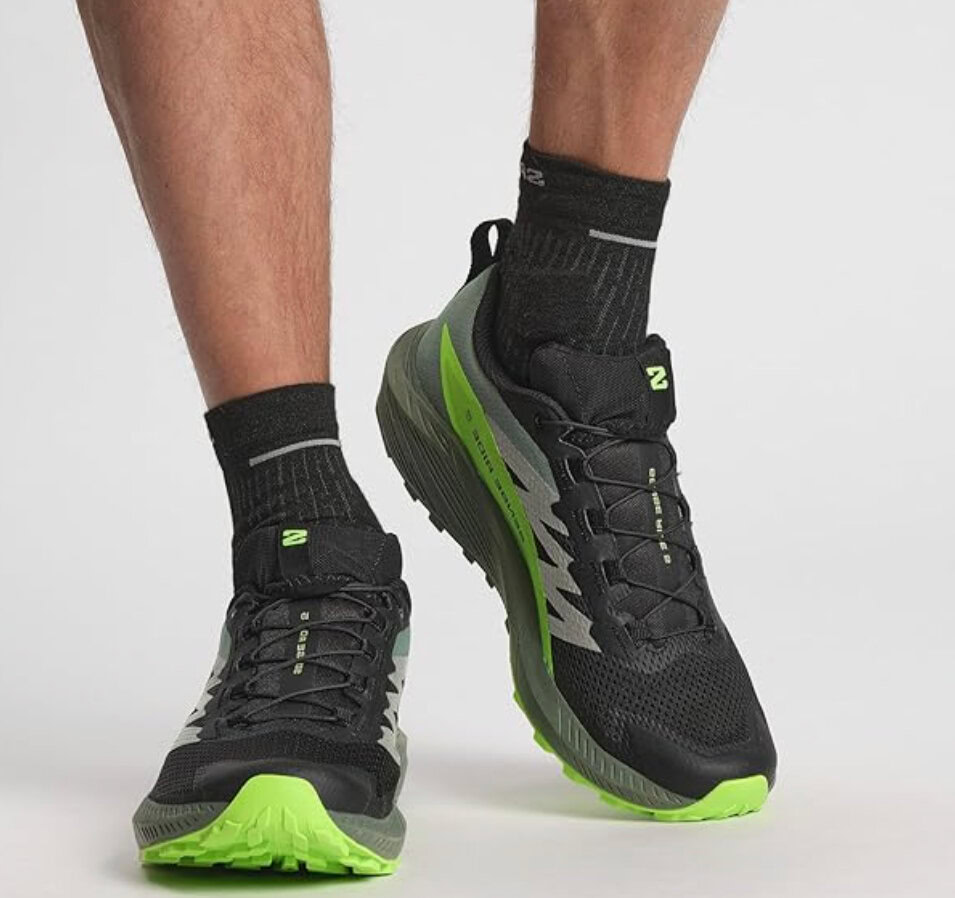
#3: Salomon Sense Ride 5 — The Versatile Do-Everything Shoe
Weight: 11.1 oz (men’s) | Drop: 8mm | Best For: Varied terrain, mixed runners, all-terrain versatility
Why #3: The Sense Ride 5 is Salomon’s answer to “what if we made a shoe that works on ANY terrain?” It’s neutral, balanced, and surprisingly versatile for its weight.

#4: Saucony Peregrine 15 — The Lightweight Racer
Weight: 9.6 oz (men’s) | Drop: 4mm | Best For: Speed, technical trails, shorter distances, lightweight feel
Why #4: If you want a trail shoe that feels light and snappy, the Peregrine 15 is your answer. It’s responsive, nimble, and still protective enough for technical terrain.

#5: Nike Pegasus Trail 5 — The Road-to-Trail Crossover
Weight: 10.2 oz (men’s) | Drop: 9.5mm | Best For: Runners transitioning from road to trail, mixed terrain, all-terrain versatility
Why #5: If you’re new to trail running and coming from road shoes, the Pegasus Trail 5 is the perfect bridge. It’s got enough trail features to handle most terrain, but it still feels familiar if you’re used to road shoes.
Different Trail Terrain Requires Different Shoes
Not all trails are the same. Here’s how to choose based on where you run:

Rocky/Technical Terrain
You need:
Aggressive traction
Rock plate protection
Reinforced toe area
Best shoes: Hoka Speedgoat 5, La Sportiva Akasha II, Brooks Caldera 8
Muddy/Wet Trails
You need:
Excellent traction in wet conditions
Good drainage
Not waterproof (waterproof = trapped moisture)
Best shoes: Salomon Sense Ride 5, Saucony Peregrine 15, Nike Pegasus Trail 5

High-Altitude/Long Distance
You need:
Maximum cushioning
Support for many hours
Not too heavy
Best shoes: Brooks Caldera 8, Hoka Speedgoat 5, Altra Lone Peak 8

Speed/Racing (Short technical trails, hill races)
You need:
Lightweight
Responsive feel
Decent grip (but not maximum cushioning)
Best shoes: La Sportiva Prodigio Pro, Saucony Peregrine 15, Hoka Tecton X 3
Trail Shoe Rotation (The Secret Pro Runners Use)
Pro tip: Don’t just have one trail shoe. Get 2-3 pairs and rotate them.
Why? The foam needs time to decompress between runs. Rotating shoes means:
- Each pair lasts longer (500+ miles instead of 400)
- Less injury risk (different shoes work different foot parts)
- Always have a backup
My trail rotation:
- Long run shoe: Brooks Caldera 8 (maximum cushioning)
- Speed/technical shoe: Saucony Peregrine 15 (lightweight, responsive)
- Backup/recovery: Hoka Speedgoat 5 (all-purpose workhorse)
Total cost: ~$450 for 3 pairs. But each lasts 500+ miles = smart investment.
If you are looking for trail gaitors to compliment your shoes check out our top picks.
How To Actually Choose A Trail Shoe
What Makes A Good Trail Running Shoe?
Before we dive into specific shoes, let’s talk about what actually matters on the trail.
Common Trail Running Shoe Questions
How much should I spend on trail shoes?
$140-180 is the sweet spot. You get quality without overpaying. Budget options ($100-130) work but wear out faster. Premium options ($200+) are only worth it if you’re racing competitively.
Are trail shoes good for road running?
Not ideal. Trail shoes are heavier and less responsive on roads. Road shoes are lighter but lack protection on trails. Use trail shoes for trails, road shoes for roads.
How often should I replace trail shoes?
Every 400-500 miles. Track your mileage in Strava and replace when you hit 450 miles. Trail running wears shoes faster than road running.
Can I use trail shoes for hiking?
Absolutely. Trail shoes are actually better for hiking than trail-specific hiking boots. Lighter, more natural movement. Just make sure they have aggressive traction.
Do I need waterproof trail shoes?
ot necessarily. Waterproof = trapped sweat = wet feet anyway. Most runners prefer breathable (feet will get wet, but they dry faster). Exception: if you’re running in winter snow, waterproof might help.
Are drop and cushioning related?
Not necessarily. A shoe can have low drop (4mm) with high cushioning (Speedgoat) or high drop (9.5mm) with moderate cushioning (Pegasus Trail). Choose based on your preference, not assumptions.
Should beginners start with lightweight or cushioned shoes?
Cushioned. Hoka Speedgoat 5 or Brooks Caldera 8. You need the protection and stability while you learn trail running technique. Switch to lighter shoes once you have 50+ miles of trail experience.
Hope you find the Shoe for You!
If your a new trail runner you can check out our Best Hydration Pack for Running Article to get all set up!