HOKA Rocket X 2 Review After 100 KM: Fast, but Watch the Heel
This article contains affiliate links. If you buy through one of them, RunningGearLab may earn a commission at no extra cost to you. This pair was purchased for personal use.
HOKA Rocket X 2 Review
The Rocket X 2 was my first carbon plated running shoe. I bought it because I wanted something faster for tempo and threshold work. The ride was exactly what I hoped for. The heel was not.
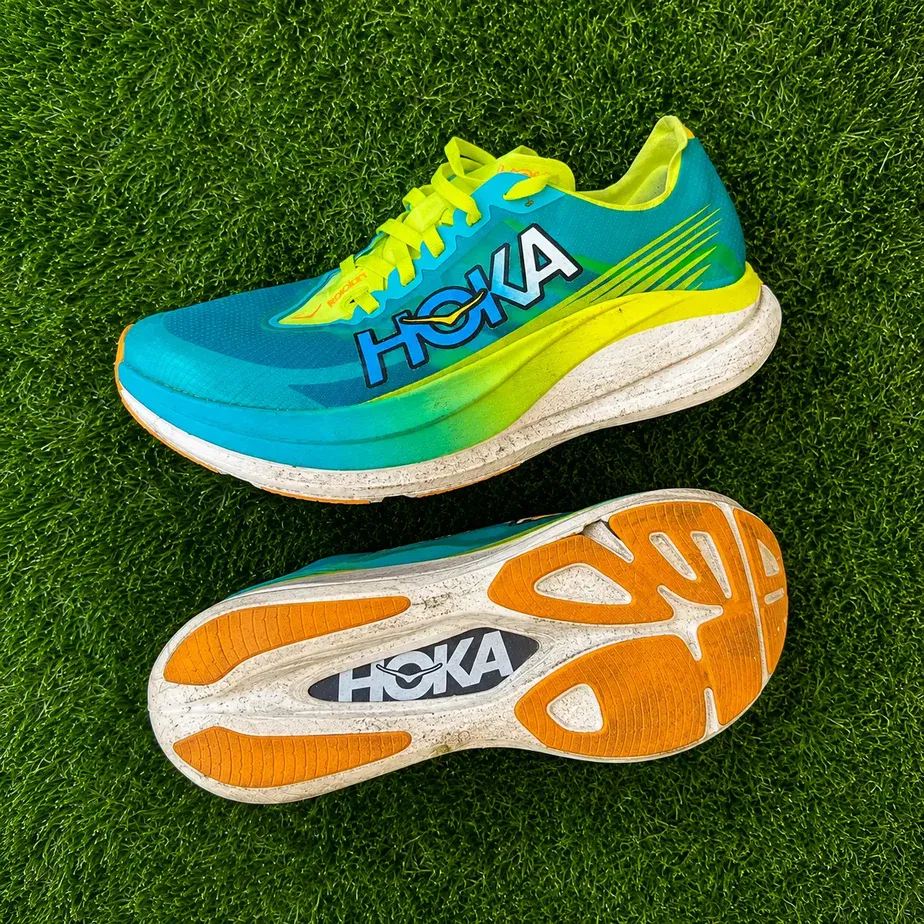
Fast and fun, but test the heel first
I still like the Rocket X 2 after roughly 100 kilometres. It feels much more responsive than my regular trainers when I pick up the pace, and it works especially well for tempo and threshold sessions.
The problem is the heel collar. It rubbed near my Achilles badly enough to open a blister on my first long workout. KT Tape solved the problem for me, but I would not ignore that fit issue if you are considering this shoe.
Why I bought the Rocket X 2
I had been training more seriously for about a year and wanted to know what a carbon plated shoe actually felt like. My workouts were starting to include more tempo and threshold running, so it seemed like a good time to add a faster shoe instead of doing everything in a daily trainer.
I tried a few plated shoes at a local running store. The Rocket X 2 felt best on my foot. I had also run in HOKA before without problems, so I felt fairly confident about the fit.
It was light. It looked like a race shoe. More importantly, it felt quick as soon as I ran in it.
My first run went from great to painful
My first run was a long workout with tempo and threshold sections. That was a mistake. I should have started with something shorter.
During a 20 minute tempo block, the Rocket X 2 felt smooth and bouncy. Faster running felt easier than it did in my normal shoes. I understood the appeal of plated racers almost immediately.
Then the back of the shoe started rubbing near my Achilles. I kept running because everything else felt so good.
Around 12 to 13 km, I moved from roughly 4:30 per kilometre toward threshold work closer to 4:00 per kilometre. The blister opened up. I ended up hobbling home, dealing with the blister and finishing the rest of the run in another pair of shoes.
KT Tape fixed the problem for me
Once the blisters had mostly healed, I tried the Rocket X 2 again with KT Tape over the spots where the collar had rubbed.
The difference was huge. I ran 24 km with a faster tempo section and finished without the same heel problem. After that, the Rocket X 2 became a shoe I could actually enjoy.
I have now put roughly 100 kilometres into the pair, mostly during tempo and threshold sessions. I choose to save it for faster running rather than use it for everyday mileage.
The tape solution worked for my feet. I would not assume everyone will have the same result. If the collar hits your Achilles in the wrong place, pay attention to it early.
What I like and what I would watch
What I like
- Feels noticeably quicker than a normal daily trainer.
- PEBA foam has plenty of bounce at faster paces.
- The carbon plate feels smooth rather than harsh once I am moving.
- Light enough to feel like a proper race shoe.
- Still feels lively after about 100 kilometres of my use.
What I would watch
- The heel collar caused significant rubbing for me.
- The race fit is less forgiving than a daily trainer.
- It is not the shoe I reach for when I am running easy.
- Availability is limited now that the Rocket X 3 is the current model.
- I would test the fit before trusting it for a marathon.
How the Rocket X 2 feels at different paces
This shoe makes the most sense once I start running with purpose. At an easy pace, it is fine. At tempo pace, it comes alive.
Fit: the heel matters more than the size chart
The Rocket X 2 feels like a race shoe. The upper is thin, the midfoot locks down closely and the toe box is not especially roomy.
The overall length worked for me. My issue was entirely at the back. The collar sat against my Achilles in a spot that became painful once the run got longer and faster.
| Length | True to size for me. |
|---|---|
| Toe box | More fitted than a typical daily trainer. |
| Midfoot | Secure and race focused. |
| Heel | The main problem for me. It rubbed near my Achilles on the first long workout. |
| My advice | Do a short test run before committing to a long workout or race. |
HOKA Rocket X 2 specs
| Category | Neutral carbon plated road racing shoe |
|---|---|
| Listed weight | 236 g / 8.3 oz |
| Heel to toe drop | 5 mm |
| Midsole | PROFLY X construction with highly resilient PEBA foam |
| Plate | Carbon fibre plate |
| Upper | Technical synthetic mesh with a gusseted tongue and internal midfoot cage |
| Outsole | Zonal Durabrasion rubber |
| Best use for me | Tempo and threshold workouts |
Weight can vary by shoe size. Product construction and listed specifications were checked against HOKA’s Rocket X 2 product information.
Rocket X 2 vs Rocket X 3
I have not tested the Rocket X 3, so I would not pretend this is a head to head review. The comparison below is based on HOKA’s current specifications.
The most interesting update for me is the heel. HOKA says the Rocket X 3 uses a redesigned stitch and turn collar intended to help reduce blisters. Considering the heel rubbing I had in the Rocket X 2, that is the first change I would want to test.
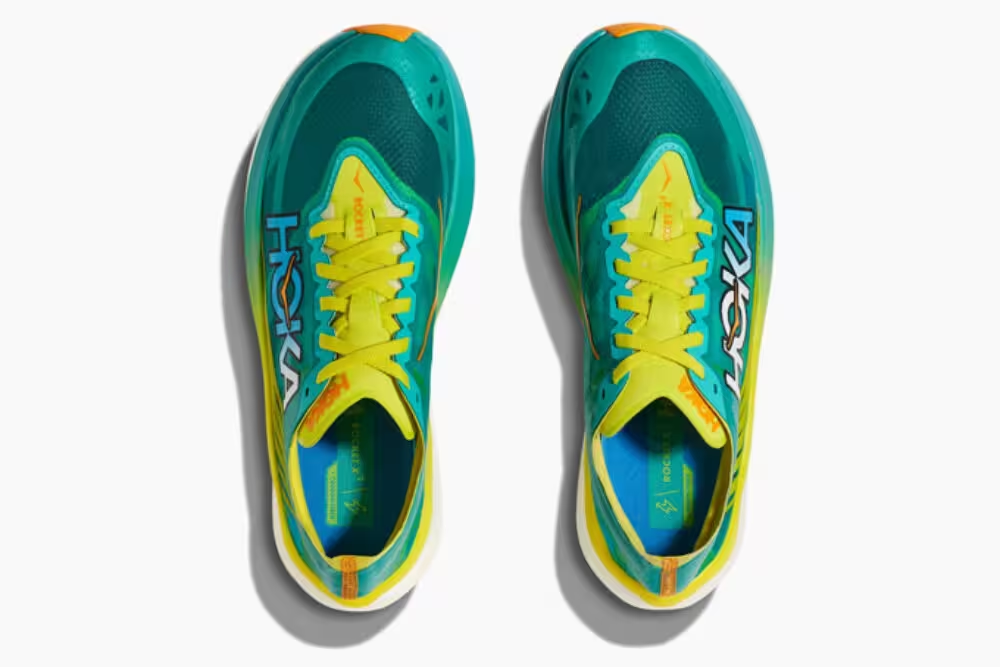

| Feature | Rocket X 2 | Rocket X 3 |
|---|---|---|
| Drop | 5 mm | 7 mm |
| Listed weight | 236 g | 227 g |
| Foam | PEBA | Dual density PEBA |
| Plate | Carbon fibre | Updated carbon fibre plate with winglets |
| Upper | Technical synthetic mesh | Single layer warp knit |
| Heel update | The collar rubbed my Achilles | HOKA says the redesigned collar is intended to help mitigate blisters |
| Outsole | Durabrasion rubber | Sticky rubber |
If the Rocket X 2 already fits you well and you find it heavily discounted, I still think it can make sense. If you are prone to heel rubbing, the Rocket X 3 is the one I would try first because HOKA specifically changed that part of the shoe.
Who should still buy the Rocket X 2?
It still makes sense if
- You find it at a good sale price.
- You want a plated shoe mainly for faster road workouts.
- You already know HOKA race shoes fit your heel well.
- You do not care about owning the newest model.
- You want a responsive shoe for tempo, threshold or racing.
I would look elsewhere if
- You regularly struggle with Achilles or heel collar rubbing.
- You want one shoe to handle nearly all of your weekly running.
- You prefer a roomy, relaxed fit.
- The Rocket X 2 is priced close to the newer Rocket X 3.
- You cannot test the fit before an important race.
Is the Rocket X 2 still worth buying?
Yes, at the right price.
After about 100 kilometres, I still notice a clear difference when I switch into the Rocket X 2 for faster running. It is bouncier and more responsive than my regular trainers, and I enjoy using it for workouts.
I would not pay close to Rocket X 3 money for it now. The X3 is newer and HOKA changed the exact part of the upper that caused my biggest problem.
If you find the X2 on sale and the heel works for you, though, there is still a very good race shoe here.