6 Best Running Shoes for Men Beginners 2026: Start Right, Stay Injury Free

The Mistake Every New Runner Makes Before Mile One

Most men who start running for the first time make the same mistake: they grab a pair of gym shoes they already own, head outside, and come back three weeks later with shin splints, a sore knee, or a blister that has ended the whole experiment before it started. The shoes they were wearing were not made for running. They were made for looking decent at the gym, and those are two very different engineering briefs.

The right first running shoe will not make you faster. It will not transform your stride or unlock some hidden athletic potential. What it will do is protect joints that are not yet adapted to the repetitive impact of running, fit correctly without causing blisters, and make enough miles comfortable enough that you actually build the habit. That is what beginners actually need, and that is exactly what this guide is built around. Every shoe here has been researched across independent lab tests, physiotherapy reviews, and real beginner feedback from 2025 and 2026. No carbon plates. No racing foam. Just the six best shoes for men who are just getting started.

This article contains affiliate links. If you buy through one of our links, we may earn a small commission at no extra cost to you. We only recommend gear we would put on our own feet.
Saucony Ride 18 best beginner running shoe men 2026
Our Top Pick for Beginners

Saucony Ride 18

The most consistently recommended first running shoe from OutdoorGearLab, Treeline Review, and Solereview. Lighter than every previous version, a PWRRUN+ foam that is both durable and bouncy, and a fit so intuitive that most first-time wearers forget they are wearing it after mile one.

~$140 · 9.1 oz men’s size 9 · 8mm drop · Available in wide
Check Price on Amazon

Jump to Your Pick

Beginner Guide

What a New Runner Actually Needs From a Shoe

Cushioning That Protects Unadapted Joints

Every running stride sends two to three times your body weight through your foot, knee, and hip. The bones, tendons, and connective tissue that absorb that load need weeks and months to adapt to running stress. A well cushioned midsole buys those structures more time to strengthen by absorbing some of the impact before it reaches them. This is the single most important feature for a beginner. Look for a heel stack height of at least 30 millimeters and a midsole foam that springs back after being compressed rather than packing out flat. The Saucony Ride 18, ASICS Novablast 5, and HOKA Clifton 10 all meet this standard with foam that still functions after hundreds of miles of use.

A Heel Drop Between 8 and 12 Millimeters

Heel drop is the difference in height between the heel and forefoot of the shoe. Most new runners strike the ground with their heel first, and a shoe with 8 to 12 millimeters of drop is engineered specifically to accommodate that. A lower drop, such as the 4 millimeters found in minimalist shoes, requires the Achilles tendon and calf to absorb significantly more load with each stride. This is appropriate for experienced runners who have spent years building that tissue strength. For a beginner, it is an injury waiting to happen. Every shoe on this list sits between 6 and 12 millimeters of heel drop, which is the safe range for building your first training base.

A Fit That Leaves Room to Breathe

Running shoes should have a thumb’s width of space between your longest toe and the end of the shoe. Feet swell during running, so a shoe that fits like a dress shoe in the store will compress your toes painfully after two miles. The toe box should be wide enough that your toes can lie flat without curling. The midfoot and heel should feel secure without pinching. If anything rubs or causes pressure during the first five minutes of wearing a shoe in a store, it will cause a blister after twenty minutes on the road. None of that gets better with breaking in.

No Break In Period

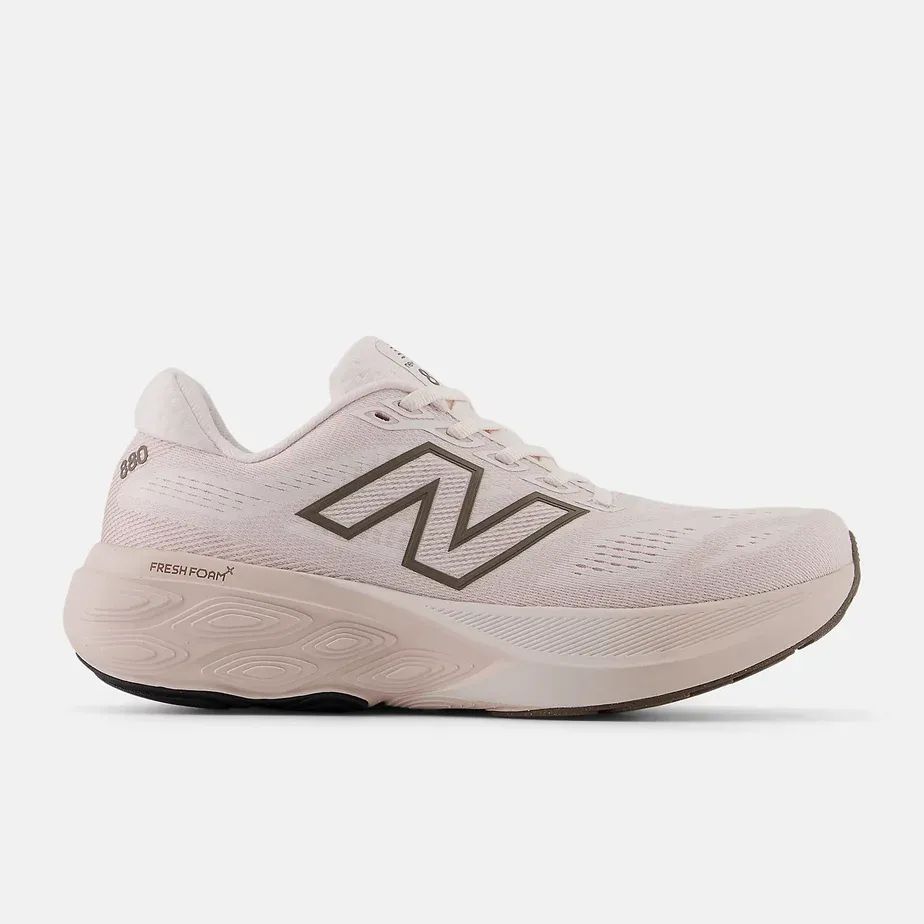
A beginner’s shoe should feel comfortable from the first mile. You do not have the training foundation or the gait efficiency to push through a shoe that needs weeks of wear before it softens. iRunFar’s professional gear reviewer specifically praised the HOKA Clifton 10 for being one of the few shoes they could take out of the box and run ten miles in immediately with zero issues. The Saucony Ride 18, Brooks Ghost 16, and New Balance 880v15 have all drawn similar feedback. If a shoe needs a break in period, it is not the right first shoe.

Three Things Beginners Should Avoid

Do not buy carbon plated racing shoes as your first pair. Shoes like the Nike Vaporfly or Adidas Adizero Adios Pro are engineered for experienced runners who need to shave seconds off a race time they have spent years building toward. The stiff carbon plate requires a specific heel to toe transition that new runners have not yet developed. Running in them before your body is ready often causes calf overload and Achilles strain. Save the racing shoes for when you have a race to run in them.
Avoid zero drop or minimalist shoes in your first year. Shoes with very low heel drop such as Vivos, New Balance Minimus, or Vibram FiveFingers dramatically increase the load on the Achilles tendon and calf. Transitioning to low drop shoes requires a slow, deliberate process of shortening runs and rebuilding over months. Beginning runners who start in zero drop shoes are at significantly higher risk of Achilles tendinopathy, plantar fasciitis, and stress fractures in the foot. Stick with 8 to 12 millimeter drop for your first season.

The third thing to avoid is buying a shoe based on how it looks rather than how it fits. Many beginners choose a shoe in a color they like, a brand they recognize from advertising, or a model a friend recommended for a completely different body type and running gait. Visit a specialty running store for your first pair. A trained fitter will measure both feet (most people have one foot slightly larger), check your arch shape, and watch you walk across the floor to spot obvious patterns. That fifteen minutes of fitting will save you months of avoidable soreness.

How we picked these: We cross referenced beginner specific testing data from OutdoorGearLab (600 pairs tested since 2011), Treeline Review (30 pairs tested across Colorado and Arizona), RunRepeat (lab measurements across 30 parameters including shock absorption and energy return), Doctors of Running (reviewed by board certified physical therapists), Solereview (no free samples, all shoes purchased at retail), and iRunFar, Amazon and website reviews. We specifically weighted each shoe’s suitability for new runners with no established training base, forgiving fit, comfort from mile one, and availability at $160 or under in 2026.
Top 6 Reviews

The 6 Best Running Shoes for Men Beginners in 2026

#1
Best Overall for Beginners · Daily Training · All Paces

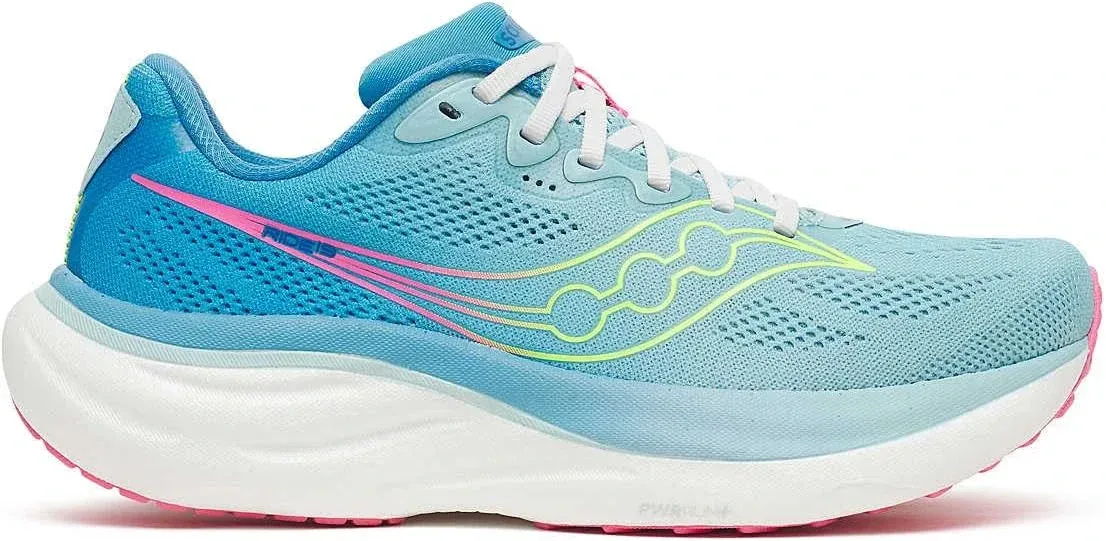
Saucony Ride 18

Saucony Ride 18 men running shoe 2026
Weight: 9.1 oz (men’s size 9) Drop: 8mm Stack: 37mm heel / 29mm forefoot Midsole: PWRRUN+ (beaded TPU) Outsole: Carbon rubber at high wear zones Widths: Standard and Wide Price: ~$140

The Saucony Ride 18 is the shoe that OutdoorGearLab, Treeline Review, and Solereview all independently land on when they are asked to recommend a first running shoe. The reason is simple: it does every single job a beginner needs done without requiring you to understand running shoe technology to get value from it. You lace it up, you run, and it works. That sounds like a low bar but it is genuinely rare in a category full of shoes engineered to look impressive on a spec sheet rather than feel good after forty minutes on asphalt.

The Ride 18 is significantly lighter than its predecessor, dropping from 10.2 ounces to 9.1 ounces in a men’s size 9. That eleven percent weight reduction makes it noticeably quicker on the foot, which matters for beginners because a heavy, clunky shoe amplifies the effort of every stride at the slow paces where new runners spend their first months. The PWRRUN+ midsole uses a beaded thermoplastic polyurethane construction that is both more durable and more responsive than basic EVA foam. RunRepeat’s lab measured shock absorption of 141 SA in the heel, one of the highest scores they have recorded for a shoe in this price range, which translates directly to better joint protection on every landing.

Doctors of Running’s board certified physical therapists noted an extremely comfortable upper with minimal seams and generous heel collar padding that prevents the early blisters that derail many new runners. The 8mm drop suits the heel striking gait that most untrained men naturally use. The shoe lasts up to 500 miles according to multiple testers, which at fifteen miles per week gives a new runner over eight months of protection from a single pair. Treeline Review named it Best Affordable in their best men’s road running shoes guide for 2026. For a first shoe, there is nothing better at this price.

Check Price on Amazon

What Works

  • 11 percent lighter than the previous version at only 9.1 oz
  • PWRRUN+ foam delivers both durability and bounce at this price point
  • Comfortable from the very first mile with zero break in period
  • 8mm drop suits the natural heel strike of most beginning runners
  • Up to 500 miles of lifespan gives beginners real long term value
  • Available in standard and wide widths for different foot shapes
  • Best Affordable pick from multiple independent testing sources in 2026

Watch Out For

  • Foam feel is firm rather than plush — not ideal if you want cloud like softness
  • Toe box runs slightly narrow for very wide footed runners — check wide version
  • No rocker geometry so transitions feel more traditional than rockered options
  • Not designed for speed work or racing at any level
#2
Best Pure Cushioning · Heel Strikers · Easy Runs

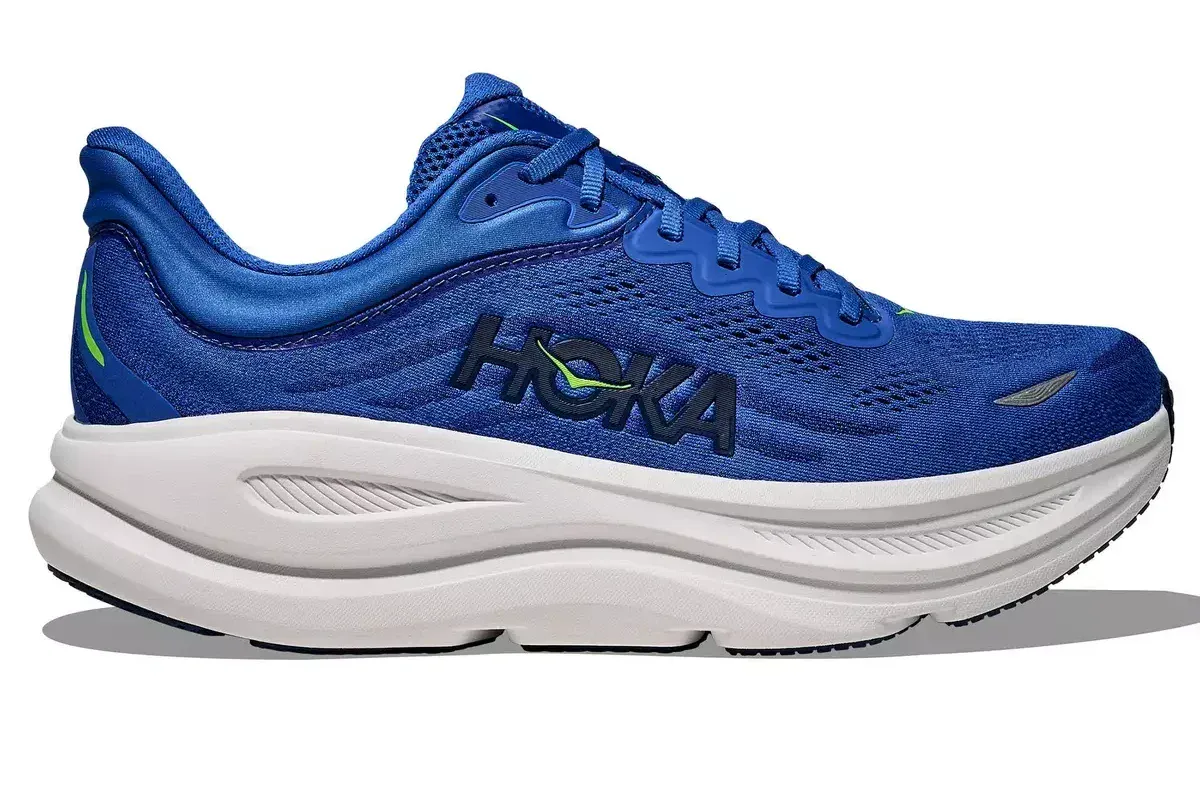
HOKA Clifton 10

HOKA Clifton 10 men running shoe 2026
Weight: 9.8 oz (men’s size 10) Drop: 8mm (up from 5mm in Clifton 9) Stack: ~42mm heel / ~32mm forefoot Midsole: Compression molded EVA with Meta Rocker geometry Outsole: Durabrasion rubber at high wear zones Widths: Standard, Wide, and Extra Wide APMA: American Podiatric Medical Association Seal of Acceptance Price: ~$150

The HOKA Clifton 10 is the shoe iRunFar’s professional reviewer described as their comfort shoe: a pair they can lace up and forget about, getting lost in the joy of running without ever thinking critically about the footwear. That description maps perfectly onto what a beginner needs. The Clifton 10 holds the American Podiatric Medical Association Seal of Acceptance, which recognizes it as beneficial to foot health, and it carries an updated heel drop of 8mm up from 5mm in the previous version, which makes it better suited to the heel striking gait most beginners use.

The most significant change in the Clifton 10 is the dramatically increased stack height, measuring approximately 42mm in the heel in RunRepeat’s lab, which makes it one of the most cushioned daily trainers available at any price. That maximum cushioning serves beginning runners especially well because it absorbs impact stress on joints that have not yet built the strength and density to handle repetitive running load on their own. Fleet Feet’s reviewer called it the Goldilocks shoe: not too soft, not too firm, and the Meta Rocker geometry that curves the sole encourages a natural forward rolling motion that is exactly the transition mechanics coaches teach new runners to develop.

The Clifton 10 widens the toe box compared to the Clifton 9, addressing the main complaint about the previous version, and the jacquard knit upper with double lace lock prevents tongue migration during runs. It is available in standard, wide, and extra wide sizing, which makes it accessible to a broader range of foot shapes than most competitors. Multiple reviewers confirmed it fits true to size and requires no break in period at all. The one honest limitation is the foam: RunRepeat’s lab identified it as compression molded EVA rather than the newer supercritical foams used in more expensive shoes, which means it lacks energy return but still provides excellent protection.

Check Price on Amazon

What Works

  • Maximum cushioning at approximately 42mm stack height protects new runners’ joints
  • American Podiatric Medical Association Seal of Acceptance
  • Meta Rocker geometry teaches and reinforces good forward rolling stride mechanics
  • 8mm drop now better suited to heel strikers than previous Clifton versions
  • Available in standard, wide, and extra wide for diverse foot shapes
  • True to size and comfortable with zero break in period
  • Widened toe box corrects the main complaint from the previous version

Watch Out For

  • Compression molded EVA foam lacks the energy return of newer foam compounds
  • At 9.8 oz slightly heavier than the Saucony Ride 18 and ASICS Novablast 5
  • Outsole traction is poor on wet surfaces according to multiple lab testers
  • Upper volume slightly lower than previous Clifton versions — may feel snug initially
#3
Best Bouncy Energetic Ride · Fun Daily Trainer · Versatile

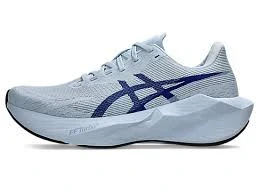
ASICS Novablast 5

ASICS Novablast 5 men running shoe 2026
Weight: 9 oz (men’s size 9) Drop: 8mm Stack: 41.5mm heel / 33.5mm forefoot Midsole: FF Blast Max (POE foam) Outsole: AHAR Lo rubber Widths: Standard and Wide Price: ~$140

The ASICS Novablast 5 is the most fun shoe on this list to run in, and that matters more for beginners than any other category of runner. When you are in the early weeks of building a running habit, enjoying the physical sensation of running is what keeps you going back. The Novablast 5’s FF Blast Max midsole uses a polyolefin elastomer foam that RunRepeat’s lab confirmed is both softer and bouncier than the previous version, with energy return jumping from 51 percent to over 60 percent in testing. The result is a slight but noticeable spring at toe off that makes each stride feel a bit more rewarding than a flat, firm training shoe.

OutdoorGearLab awarded the Novablast 5 their best daily trainer pick in 2026, noting it performs at or above many shoes with higher price tags. Running Shoes Guru called it the new default recommendation for a beginner neutral daily trainer, a title the Nike Pegasus held for decades before the Novablast line earned it through consistently better cushioning and lighter weight at the same price. The Run Testers put four testers in the shoe and all four confirmed it works well for beginners, citing the stable wide base that provides inherent stability without motion control devices, and a plush toe box that gives enough room for feet to swell naturally during longer runs.

At 9 ounces for a men’s size 9 with 41.5mm of stack height, the Novablast 5 is genuinely impressive from a weight to cushioning ratio standpoint. Doctors of Running’s team noted it is at its best on easy runs, long runs, and moderate tempo efforts, which covers the entire range of paces a beginner will use in their first season. The outsole traction on wet surfaces has been a consistent criticism across multiple reviews, so exercise caution in rain. If your runs happen primarily on dry roads, this is one of the strongest recommendations on this entire list.

Check Price on Amazon

What Works

  • FF Blast Max foam is softer and bouncier than any previous Novablast version
  • OutdoorGearLab best daily trainer pick for 2026
  • 9 oz weight is impressively light for 41.5mm of stack height
  • Wide stable base provides inherent stability without motion control devices
  • Consistent 8mm drop for comfortable heel striker transitions
  • Fun springy ride encourages beginners to enjoy the running experience
  • $140 price matches the Ghost 16 and Ride 18 at comparable quality

Watch Out For

  • Wet surface traction is a consistent weakness across multiple independent reviews
  • Softer foam is not ideal for runners who prefer a firm, road like feel
  • Rocker geometry is subtle but may feel unusual for first time wearers initially
  • Not suitable for fast speed work or racing where control is more important than bounce
#4
Best Traditional Feel · Most Forgiving · Reliable

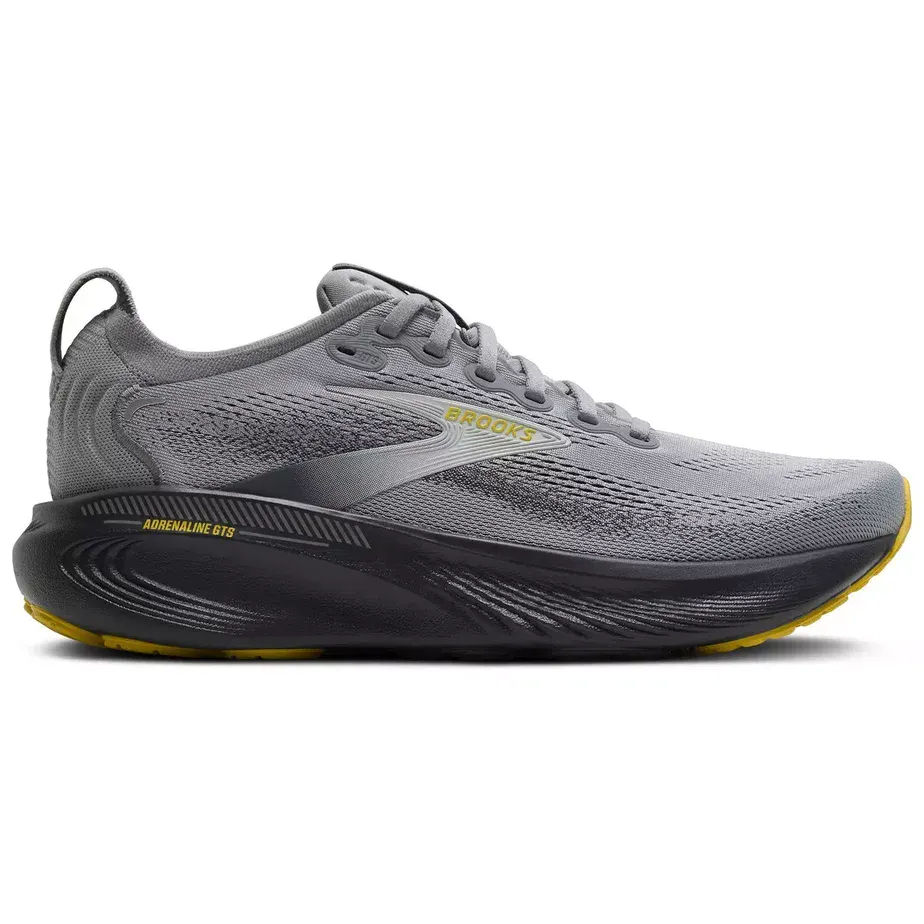
Brooks Ghost 16

Brooks Ghost 16 men running shoe 2026
Weight: 9.5 oz (men’s size 9) Drop: 12mm Stack: 36mm heel / 24mm forefoot Midsole: DNA Loft v3 (nitrogen infused) Outsole: RoadTack rubber (recycled silica compound) Widths: Narrow, Standard, Wide, Extra Wide Certification: CarbonNeutral product Price: ~$140

The Brooks Ghost is the most consistently purchased beginner running shoe in the history of the category. Running stores have recommended it to new runners for fifteen consecutive years because it has never let them down. The Ghost 16 receives the most significant midsole upgrade in recent memory with the introduction of DNA Loft v3, a nitrogen infused foam that is lighter and more responsive than the v2 used in the Ghost 15. The nitrogen infusion creates microscopic bubbles in the foam structure that improve energy return while reducing weight, and the result is a Ghost that finally feels alive underfoot rather than simply serviceable.

Fleet Feet’s entire testing team described the Ghost 16 as a safe, familiar feel: like your childhood bedroom, or a scoop of vanilla ice cream. That is not a backhanded compliment. It is precisely what a new runner needs: a shoe with no surprises, no demanding geometry, and no features that require understanding before they work correctly. The Segmented Crash Pad outsole promotes a smooth heel to toe transition without any pronounced rocking or active propulsion that could feel uncontrolled to someone running their first miles. The RoadTack rubber outsole, a new compound for the Ghost 16 using recycled silica, is one of the most durable outsoles tested by WearTesters in recent years.

The 12mm drop is the highest on this list and will feel very comfortable to men who have spent years in traditional dress shoes or work boots. It puts more cushion between the heel and the ground while reducing Achilles load on every landing. The shoe is available in four widths including extra wide, which makes it the most inclusive fit option on this entire list. If you have struggled to find shoes that fit your foot width in the past, the Ghost 16 is almost certainly available in a width that will work. One honest caution: the narrower forefoot profile may feel slightly snug initially on runners with wide forefeet. Check sizing carefully and try the wide version if needed.

Check Price on Amazon

What Works

  • Fifteen years of proven beginner recommendation from running stores worldwide
  • DNA Loft v3 nitrogen foam is the most significant midsole upgrade in the Ghost line
  • 12mm drop ideal for men transitioning from dress shoes or work boots
  • Available in four widths including extra wide for diverse foot shapes
  • RoadTack rubber outsole is among the most durable tested by WearTesters in 2024
  • CarbonNeutral certified product with high recycled material content
  • No surprises geometry makes every run a predictable, comfortable experience

Watch Out For

  • Forefoot profile runs narrower than some competitors — wide footed runners should check fit
  • 12mm drop may feel unusual if transitioning from lower drop shoes
  • Lower stack height at 36mm provides less cushioning than the Clifton 10 or Novablast 5
  • No rocker or propulsive geometry means less forward momentum assistance
#5
Best Known Name · Versatile Pace Range · Reflective Safety

Nike Dri-FIT Pegasus 41

Nike Pegasus 41 men running shoe 2026
Weight: ~9.2 oz (men’s size 9) Drop: 10mm Stack: 37mm heel / 27mm forefoot Midsole: ReactX foam with Air Zoom units heel and forefoot Outsole: Waffle rubber traction Widths: Standard and Wide (select colorways) Sizing: Standard to 3X (extended sizes available) Price: ~$140

The Nike Pegasus has been a continuous running shoe model since 1983, which makes it both the most recognizable name in the category and the most pressure tested. The Pegasus 41 adds a new ReactX foam midsole with Air Zoom cushioning units in both the heel and forefoot, which creates a noticeably bouncy feel compared to the flatter previous versions. RunRepeat called it a standout update and specifically recommended it for beginners seeking a reliable versatile daily trainer for short, medium, and even long runs. Treeline Review also named the Pegasus 41 as one of their tested favorites for beginner road runners in 2026.

The Pegasus earns its place on this list largely because of the recognition factor. Many men starting to run will feel more confident in a brand they know and trust from years of seeing it on athletes and in advertising. That psychological comfort is not nothing: if a shoe makes you feel like a runner before you have had enough training to feel like one, it contributes to the habit. The waffle rubber outsole grips wet pavement reliably and the upper fit is one of the most comfortable in any version of the Pegasus the RunningShoeGuru reviewer has worn, noting it hugged the foot well with no hotspots or adjustment needed mid run.

The honest limitation is that the Pegasus 41 does not match the cushioning depth of the HOKA Clifton 10 or the ASICS Novablast 5, and at 10mm of drop it asks slightly more from the Achilles than the 8mm options above. For easy runs under 10 miles, it is perfectly adequate. For men who plan to build toward half marathon training and want a shoe that will serve them well beyond the beginner phase, the Saucony Ride 18 or ASICS Novablast 5 offer better long run cushioning at the same price. The Pegasus 41 is available in extended sizing up to 3X for some colorways, making it more inclusive than many competitors.

Check Price on Amazon

What Works

  • ReactX foam plus Air Zoom units in heel and forefoot create genuine bounce
  • Most recognizable running shoe name in the world — great psychological starting point
  • Versatile pace range handles easy jogs through moderate tempo efforts
  • Waffle rubber outsole grips wet pavement confidently
  • Available in extended sizing up to 3X for some colorways
  • 41 versions of refinement means no obvious design flaws or surprises

Watch Out For

  • Cushioning depth is lower than the Clifton 10 and Novablast 5 at equivalent price
  • 10mm drop asks more of the Achilles than 8mm competitors over longer distances
  • Heavier than the Ride 18 and Novablast 5 at the same price point
  • No rocker geometry means transitions feel flat for runners who prefer momentum assist
#6
Best for Heavier Runners · Max Stack at Budget Price

New Balance Fresh Foam X 880v15

New Balance Fresh Foam X 880v15 men running shoe 2026
Weight: ~10.2 oz (men’s size 9) Drop: 6mm (down from 8mm in v14) Stack: 40.5mm heel / 34.5mm forefoot Midsole: Fresh Foam X (firmer than 1080 variant) Outsole: Durable rubber compound running vertically Widths: Standard, Wide, Extra Wide Price: ~$150

The New Balance Fresh Foam X 880v15 is the right shoe for beginner men who are on the heavier side, or who want the most cushioning possible at a price that does not exceed $160. In the 880v15, New Balance significantly increased the stack height to 40.5mm at the heel while reducing the heel drop to 6mm, which moves this shoe closer to max cushion territory than any previous version of the 880. Believe in the Run’s Thomas, who called the 880v14 the Toyota Camry of running shoes for years, tried the v15 and found it had carved out a unique identity of its own: a nimble, versatile daily trainer that no longer feels like a budget alternative to the 1080 but a legitimate standalone choice.

For beginners who are carrying more body weight, the extra foam depth at 40.5mm provides meaningfully more joint protection on every landing than the lower stack options on this list. RunRepeat’s lab confirmed the cushioning boost is significant between v14 and v15. The outsole rubber compound on the 880v15 tests exceptionally well for grip according to multiple testers, with Believe in the Run specifically calling it almost sticky on road surfaces. That traction confidence matters early in a running journey when a new runner is less sure footed than an experienced athlete. The gusseted tongue with foam padding and the heel collar create a secure, comfortable fit from the first wear.

The tradeoff is weight: at approximately 10.2 ounces, the 880v15 is the heaviest shoe on this list following the stack height increase. For a beginning runner covering easy miles at comfortable paces, that weight difference versus the Saucony Ride 18 will not be noticeable. But if you graduate to faster training within your first year, the extra weight becomes more apparent during interval or tempo sessions. Available in standard, wide, and extra wide sizing at $150, it represents excellent value for the cushioning depth it provides.

Check Price on Amazon

What Works

  • 40.5mm stack height delivers max cushion protection for heavier beginning runners
  • Outsole rubber is among the grippiest tested on dry road surfaces
  • Gusseted foam padded tongue and heel collar create secure comfortable fit
  • Available in standard, wide, and extra wide sizing for diverse foot shapes
  • $150 price provides 1080 level stack height at a lower cost
  • 6mm drop accommodates a wide variety of footstrike patterns

Watch Out For

  • Heaviest shoe on this list at approximately 10.2 oz due to increased stack
  • Reduced rubber outsole coverage compared to v14 raises longer term durability questions
  • 6mm drop is lower than the rest of the list and may feel unusual transitioning from higher drop shoes
  • Firmer feel than expected despite high stack height — not as plush as the HOKA Clifton 10
At a Glance

Quick Comparison: All 6 Picks

ShoePriceWeightDropStack (heel)FoamBest ForBuy
Saucony Ride 18 Top Pick~$1409.1 oz8mm37mmPWRRUN+ TPUBest overall beginnersAmazon
HOKA Clifton 10~$1509.8 oz8mm42mmCompression EVAMaximum cushioningAmazon
ASICS Novablast 5~$1409.0 oz8mm41.5mmFF Blast Max POEBouncy energetic rideAmazon
Brooks Ghost 16~$1409.5 oz12mm36mmDNA Loft v3Traditional familiar feelAmazon
Nike Pegasus 41~$140~9.2 oz10mm37mmReactX + Air ZoomVersatile, recognized nameAmazon
NB Fresh Foam X 880v15~$150~10.2 oz6mm40.5mmFresh Foam XHeavier runners, max stackAmazon
Already have your first shoe and building toward your first race? Once you have three to four weeks of comfortable running under your belt, the Runner’s Toolkit has the training plans and gear guides to take you from beginner miles to race day. And when the time comes to pick shoes for race day, the Shoe Finder will match you to the right model for your new pace and foot type.

Not sure which shoe matches your foot type?

Find Your Right Running Shoe in 60 Seconds

The right shoe depends on more than brand preference. Answer 7 quick questions about your foot shape, weekly mileage goals, and terrain and the Shoe Finder will match you to the right model for your training.

Take the Shoe Finder →

Free to use. No account or email needed.

Beginner Tips

How to Make Your First Running Shoes Last

Track Your Mileage From Day One

Running shoes do not look worn out when their foam stops protecting you. The outsole rubber can look nearly new while the midsole has completely packed out and lost its cushioning. Keep a note on your phone with the date you first wore the shoes and a rough weekly mileage estimate. Most shoes on this list last 400 to 500 miles. At 15 miles per week, that is six to eight months. When you start noticing more soreness than usual after similar runs, it is almost always the shoe and not your legs.

Rotate Two Pairs If You Can

Running shoe foam compresses during a run and takes 24 to 48 hours to decompress and recover its full cushioning properties. Running in the same pair every day without rest shortens its lifespan significantly. If budget allows, buying a second pair of the same shoe or an alternate option and rotating them adds roughly 20 percent more life to both pairs. It also reduces injury risk because slight differences in shoe geometry mean slightly different load distribution, which prevents overuse stress from accumulating in exactly the same spot every day. Our running socks guide pairs well with this if you are building out your first complete kit.

Pair Your Shoes With the Right Socks

Even the best running shoe will cause blisters if paired with cotton socks. Cotton retains moisture, which softens the skin and increases friction. Use synthetic or merino wool running socks that wick moisture and maintain their shape over the full distance. Most blisters that new runners blame on the shoe are actually caused by poor sock choice. Pair your new shoes with technical running socks from your first run. See our guide to the best running socks to find the right pair for your mileage and conditions.

Common Questions

FAQ

What should I look for in my first pair of running shoes?
As a beginner, prioritize three things: cushioning, fit, and a heel drop between 8 and 12 millimeters. More cushioning protects joints that are not yet adapted to running impact. A proper fit means a thumb’s width of space at the toe box and no pinching anywhere on the foot. A heel drop in the 8 to 12 millimeter range suits most beginner heel strikers without requiring any adjustment period. Avoid carbon plated racing shoes, zero drop minimalist shoes, and anything marketed as a stability shoe unless a specialist has assessed your gait and confirmed you need motion control.
How much should I spend on beginner running shoes?
The sweet spot for beginner running shoes is between $130 and $160. Below $100 the cushioning materials are typically cheap EVA that compresses quickly and loses protective qualities within two or three months of regular use. Above $160 you are paying for carbon plates and racing foam compounds designed for experienced runners chasing personal bests. The Saucony Ride 18 at $140, the ASICS Novablast 5 at $140, the Brooks Ghost 16 at $140, and the HOKA Clifton 10 at $150 are all excellent examples of what this price range delivers in 2026.
Do I need stability shoes as a beginner?
Not necessarily. Many runners are told they need stability shoes based on a brief visual gait assessment. But research published in sports medicine journals has consistently found that running in a comfortable neutral shoe produces fewer injuries for most runners than being prescribed motion control footwear based on arch shape alone. If a podiatrist or sports physiotherapist has diagnosed you with severe overpronation causing pain, a stability shoe may help. If you are a beginner with no current pain, start with a neutral shoe like the ones on this list and let your body adapt naturally before making changes.
How long do beginner running shoes last?
Most quality running shoes last between 400 and 500 miles. For a beginner covering 15 to 20 miles per week, that translates to six to nine months of use before the cushioning starts breaking down. The foam does not look worn out from the outside when it reaches the end of its useful life, so track your mileage rather than relying on appearance. Signs that your shoes need replacing include increased soreness after runs, feeling the ground more than usual, and visible compression lines in the midsole.
Should I go to a running store or buy online as a beginner?
Going to a specialty running store first is strongly recommended for your initial purchase. A trained fitter will measure both feet, assess your arch, and watch you walk or jog to check for obvious gait patterns. They will bring out multiple options in your correct size and let you move in them before committing. That experience is valuable and free. Once you know your size, foot width, and the type of shoe that felt best, buying future pairs online is perfectly fine. Many online retailers offer free returns, which makes it safer to experiment.
How often should a beginner replace running shoes?
Track your mileage and plan to replace your shoes every 400 to 500 miles. The midsole foam, which is the most important part of a running shoe for injury prevention, compresses and loses shock absorption long before the outsole rubber looks visibly worn. Running three times per week at four miles per run means roughly 50 miles per month, so your shoes will be ready to replace in eight to ten months. When you start noticing more soreness than usual after similar runs, your foam is likely past its prime.
Can I run in regular sneakers as a beginner?
For very short distances, lifestyle sneakers will not cause immediate injury. But they are not engineered for the repetitive impact of running, which sends three to four times your body weight through your foot with every stride. Regular sneakers lack the heel cushioning, midsole foam density, and toe box room that running shoes are specifically built to provide. Running even a few miles per week in lifestyle shoes significantly increases your risk of shin splints, plantar fasciitis, and knee pain. Dedicated running shoes are the most important investment a new runner can make.

Quick Answer

If We Had to Pick One Shoe for Every Man Just Starting to Run

Start with the Saucony Ride 18. It is the most consistently recommended beginner running shoe across independent testing sources in 2026, it is eleven percent lighter than its predecessor, its PWRRUN+ foam protects joints without feeling dead underfoot, and it lasts up to 500 miles. That is the entire first year of running covered in one purchase.

If you want more cushioning and a rocker geometry that encourages good forward rolling mechanics, the HOKA Clifton 10 is the right step up. If you want something fun and energetic that makes the run feel rewarding from the start, the ASICS Novablast 5 earns that role. And if you are a heavier runner who needs maximum foam depth at a reasonable price, the New Balance Fresh Foam X 880v15 delivers more stack than anything else on this list at $150.

Whatever you choose: visit a running store first for sizing, pair your new shoes with technical running socks, track your mileage, and replace the shoes before the cushioning gives out. Get those four things right and the shoe choice becomes almost secondary. Use the Shoe Finder to confirm your match and the Runner’s Toolkit when you are ready to build toward your first goal race.

See Saucony Ride 18 on Amazon →

Similar Posts