Best Running Backpacks 2026: 7 Picks for Long Runs
Most runners can get surprisingly far with pockets and a small hydration vest. Then the run gets longer, the weather gets unpredictable, or you decide to run home from work and suddenly you need somewhere to put an actual jacket.
That is where a running backpack makes sense. The packs in this guide have proper rear storage for layers, food and gear, but they are still designed to stay close when you run. Some borrow ideas from running vests, especially wide shoulder straps and front pockets, but these are backpacks, not seven-litre race vests dressed up with a new name.
If hydration is your main problem and you only need space for water, gels, a phone and a light shell, go to our best hydration packs for running. This guide starts where those smaller options begin to feel cramped.
Ultimate Direction Fastpack 20
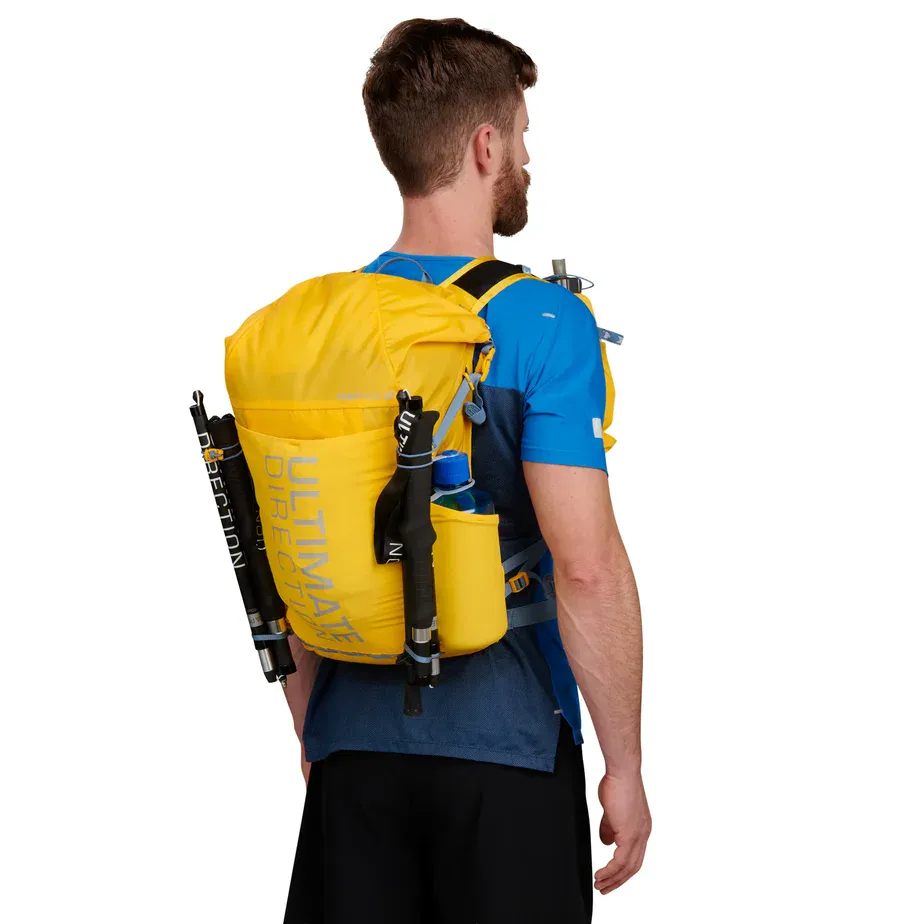
If you want one running backpack that can cover long trail days, self-supported adventures and the occasional run commute, the Fastpack 20 is the easiest place to start. It gives you real backpack capacity without feeling like you strapped a hiking daypack to your shoulders and hoped for the best.
Check Current PriceMain tradeoff: the name says 20, but Ultimate Direction lists the current capacity at 23.4 litres. That is useful on big days and unnecessary on light ones. If you usually carry less, the Black Diamond Distance 15 or Deuter Ascender 13 will feel tidier.
The 7 Running Backpacks I Would Compare First
The right pack depends more on what you carry than how far you run. A three-hour mountain run in changing weather can require more gear than a flat five-hour route with fountains and stores along the way.
Running Backpack Comparison
| Pack | Capacity | Weight | Load Support | Best For | Main Tradeoff |
|---|---|---|---|---|---|
| UD Fastpack 20 | 23.4L | 590 g | Vest-style harness + stabilizing waist strap | Best overall | Large for lighter runs |
| Black Diamond Distance 15 | 15L | 330 g | Vest-inspired suspension, no padded hipbelt | Fast mountain running | Less support for heavy loads |
| Osprey Talon Velocity 20 | 20L S/M, 22L L/XL | 870 to 920 g | Framesheet + padded BioStretch hipbelt | Heavier loads and mixed terrain | Heaviest pack here |
| Rab Veil XP 20 | 20L | 476 g size M | Body-hugging harness + light hipbelt | Wet weather and mountain running | More technical than most road runners need |
| Deuter Ascender 13 | 13L | 340 g | Close vest-style straps + compression | Compact long-run carry | Not for big gear lists |
| Salomon Trailblazer 20 | 20L | 434 g | Padded daypack-style back system | Run commuting and mixed use | Less stable than running-specific packs |
| UD Fastpack 30 | 31.7L | 690 g | Vest-style harness + removable waistbelt | Fastpacking and overnight gear | Too much pack for normal long runs |
What Size Running Backpack Do You Need?
Do not buy for the biggest adventure you can imagine. Buy for what you will carry most weeks. An oversized pack is harder to stabilize, and all that empty room does nothing for you except move around.
Water, food, phone, weather layer and basic safety gear. This is the best range when a hydration vest has become too small.
More food, extra layers, work clothes or a bigger water carry. This is the useful middle ground for runners who want one versatile pack.
Buy this much space because your kit requires it, not because bigger sounds safer.
If you are carrying only water, gels and a shell, stop here and look at the running hydration pack guide. A smaller pack will usually feel better.
What Makes a Backpack Good for Running?
A running backpack does not need to look like a race vest. It does need to stay controlled once you start moving.
- It should sit close. The farther the load hangs from your back, the more leverage it has to move with every stride.
- You should be able to shrink the load. Compression matters because water and food disappear as the day goes on.
- Frequently used gear should be reachable. Phone, food, poles and water should not require a complete unpack every hour.
- The support should match the weight. A 330 g mountain pack is great with a light kit. Add enough water and layers and a padded hipbelt starts looking much more appealing.
- It should solve a real problem. The seven picks below are intentionally different. There is no point recommending seven nearly identical black backpacks with slightly different logos.
Specifications and current model status were checked against manufacturer pages in August 2026. Where RunningGearLab has not personally used a current version, the copy below explains what the design and verified specifications suggest rather than presenting research as hands-on testing.
The 7 Best Running Backpacks for Long Runs in 2026
Ultimate Direction Fastpack 20
The Fastpack 20 stays at the top because it gets the balance right. There is enough room for a genuinely long day, but the things you need while moving still sit up front where you can reach them.
The current pack is actually 23.4 litres, despite the name. That makes it bigger than the typical 12 to 15 litre trail-running pack. You can fit extra layers, food, first-aid basics and a larger water setup without playing Tetris every time the weather changes.
I also like the two-way access. The roll top is simple and lets you compress the bag as the load shrinks, while the full side zipper gives you a way into the middle of the pack without emptying everything onto the trail.
The downside is obvious. If your long run is two hours and you carry one jacket, this is a lot of backpack. The Fastpack earns its place when your running life includes full trail days, run commuting, travel or fastpacking, not because every runner needs 23 litres.
- Real capacity without a hiking-pack feel
- Excellent front storage for water, phone and food
- Roll top compresses changing loads
- Full side zip makes the main compartment easier to use
- Versatile enough to justify owning one larger pack
- You usually carry less than 12 to 15 litres
- You want a substantial padded hipbelt
- Low pack weight matters more than capacity
Black Diamond Distance 15
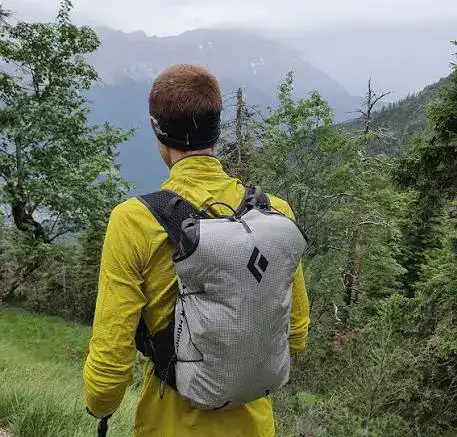
The current Distance 15 is exactly the kind of product that belongs on this page. Black Diamond calls it a backpack, gives it 15 litres of rear storage, then borrows a vest-inspired suspension system to stop the whole thing from feeling like a traditional daypack once you run.
At 330 grams, it is easily one of the lightest backpacks here. That matters on long mountain days when the gear itself is already adding weight. You also get two front soft-flask pockets, additional shoulder storage, side stash pockets and dedicated Z-Pole sleeves.
This is not a pack I would choose for a heavy water carry. There is no padded hipbelt, and the whole design is aimed at moving fast with a disciplined kit. Load it like a hiking backpack and you are missing the point.
For trail runners who want enough room for weather and safety gear without jumping to 20 litres, though, the Distance 15 is one of the cleanest choices in the current market.
- Very light at 330 g
- Real 15L backpack compartment
- Front flask and small-item pockets
- Built-in pole storage
- Designed specifically for the running/scrambling overlap
- You carry a lot of water or dense gear
- You want a padded hipbelt
- You need work or travel organization
Osprey Talon Velocity 20
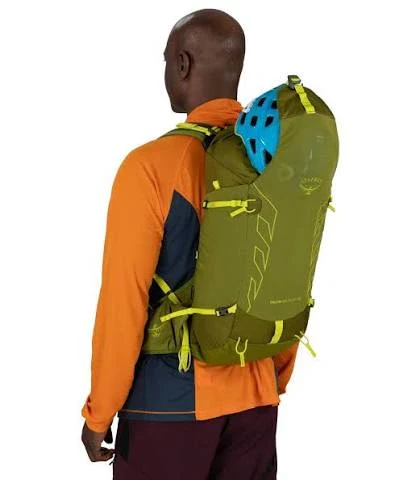
The Talon Velocity 20 is the answer for runners who like the idea of a running harness but do not want to give up the support of a proper backpack.
Osprey builds it around an AirScape back panel with a framesheet, then adds a padded BioStretch hipbelt and a running-inspired shoulder harness with 500 ml soft-flask pockets. That is a much more substantial carrying system than the Black Diamond or Deuter.
The result is heavier. The S/M version weighs 870 grams, more than twice the Distance 15. But that weight is doing something. If your long day includes a lot of water, colder-weather layers or awkward gear, the frame and hipbelt help control a load that would start feeling tiring on a minimal pack.
It is also a strong choice if your weekends are not neatly divided into “running” and “not running.” Osprey designed the Velocity for fast multi-sport movement, so hiking, biking and winter use fit naturally too.
- Padded hipbelt transfers more load away from the shoulders
- Supportive framesheet without a rigid hiking feel
- Front soft-flask compatible pockets
- External hydration sleeve
- Adjustable torso fit
- You want an ultralight pack
- Your normal load is small
- You mainly run road routes with minimal gear
Rab Veil XP 20
Waterproofing is one of those features that sounds unnecessary right up until the spare layer you packed for safety is already wet when you finally need it.
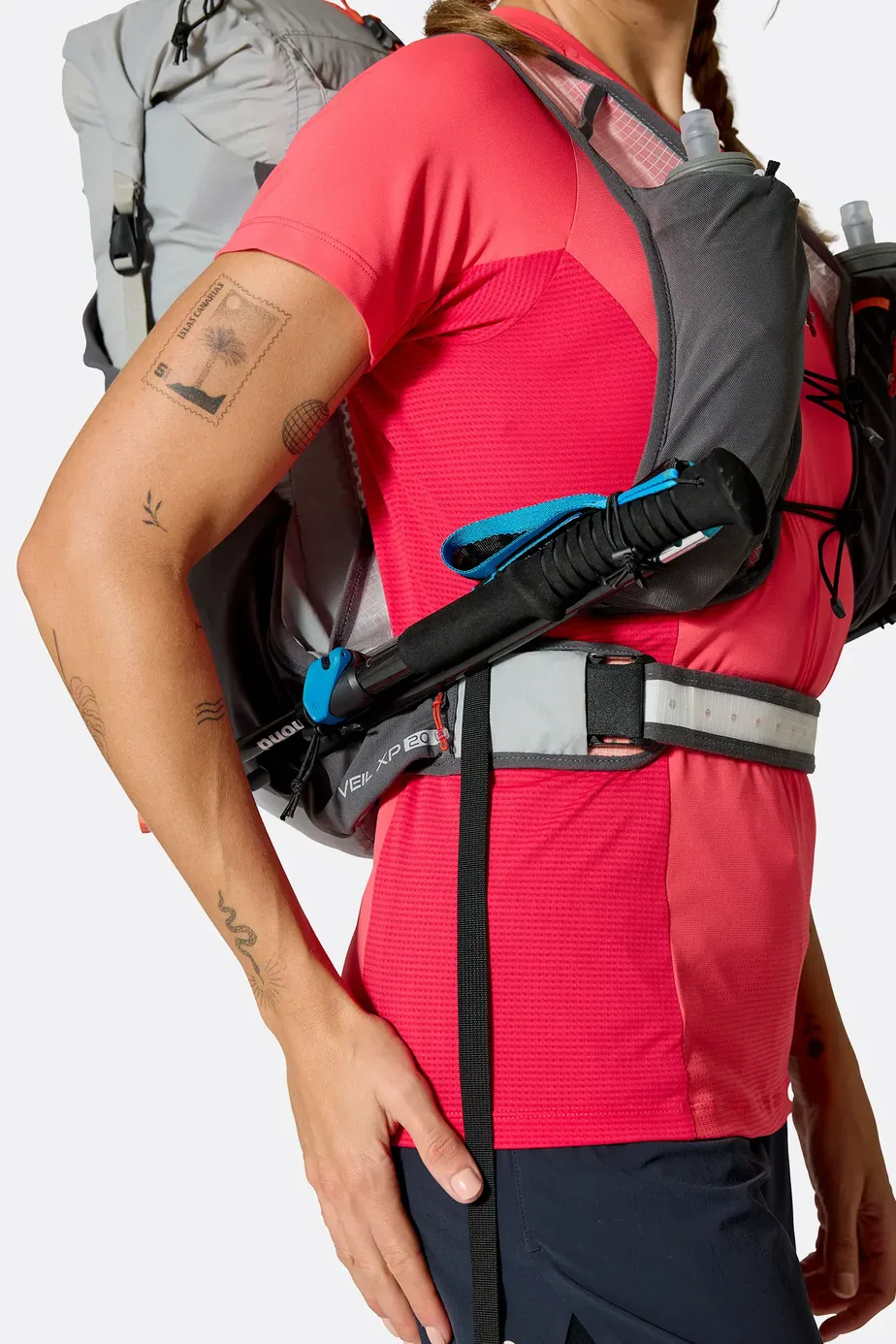
The Veil XP 20 is built specifically around that problem. Rab uses waterproof fabric, taped seams and a roll-top closure, and the finished pack is IPX4 tested. It weighs 476 grams in a size medium, so you are not paying hiking-pack weight for the weather protection.
It is also clearly designed for moving rather than standing around. The body-hugging harness, light hipbelt, front storage, pole carry and hydration options are all aimed at long mountain days. Rab specifically positions it for adventurous runners, fast hikers and mountain marathons.
For an urban long run or dry summer trail, this is more pack than you need. For wet shoulder seasons, remote mountain routes or places where rain is part of the plan rather than a surprise, the waterproof construction becomes much easier to justify.
- Waterproof fabric with taped seams
- 20L capacity at a relatively low weight
- Roll top adjusts to changing loads
- Front, side and hipbelt storage
- Built for running and fast mountain travel
- You mostly run in dry conditions
- You want a conventional padded backpack harness
- Budget matters more than waterproofing
Deuter Ascender 13
Thirteen litres is a useful size that gets overlooked. It is enough room for a jacket, food, safety gear and hydration, but it does not tempt you to bring half the closet because there happens to be space.
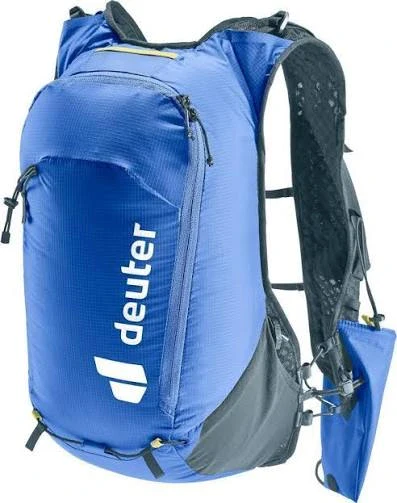
Deuter lists the Ascender under its trail-running backpacks, and the design shows why. Wide shoulder straps sit close to the body, side compression helps control the load, and there are front pockets for soft flasks and quick-access items.
At 340 grams, it is only slightly heavier than the Black Diamond Distance 15. The main difference is the feel and layout. Deuter gives you a compact backpack compartment plus compatibility with up to a three-litre hydration system, which is useful for runners who prefer a bladder on longer self-supported routes.
This is the pack I would look at if the Fastpack 20 sounds useful but simply too big. You give up room for big winter layers or overnight gear, but gain a pack that is easier to keep full and stable on normal long runs.
- Compact 13L size
- Low 340 g weight
- Close-fitting running-specific harness
- Soft-flask and reservoir options
- Side compression helps control partial loads
- You need work clothes plus running gear
- You carry bulky winter layers
- You want a load-bearing padded hipbelt
Salomon Trailblazer 20
The Trailblazer 20 stays, but for a different reason than the technical packs above. Salomon markets it as a hiking bag for day hikes and urban exploration. That makes it a weaker choice for technical trail running and a better choice for real life.
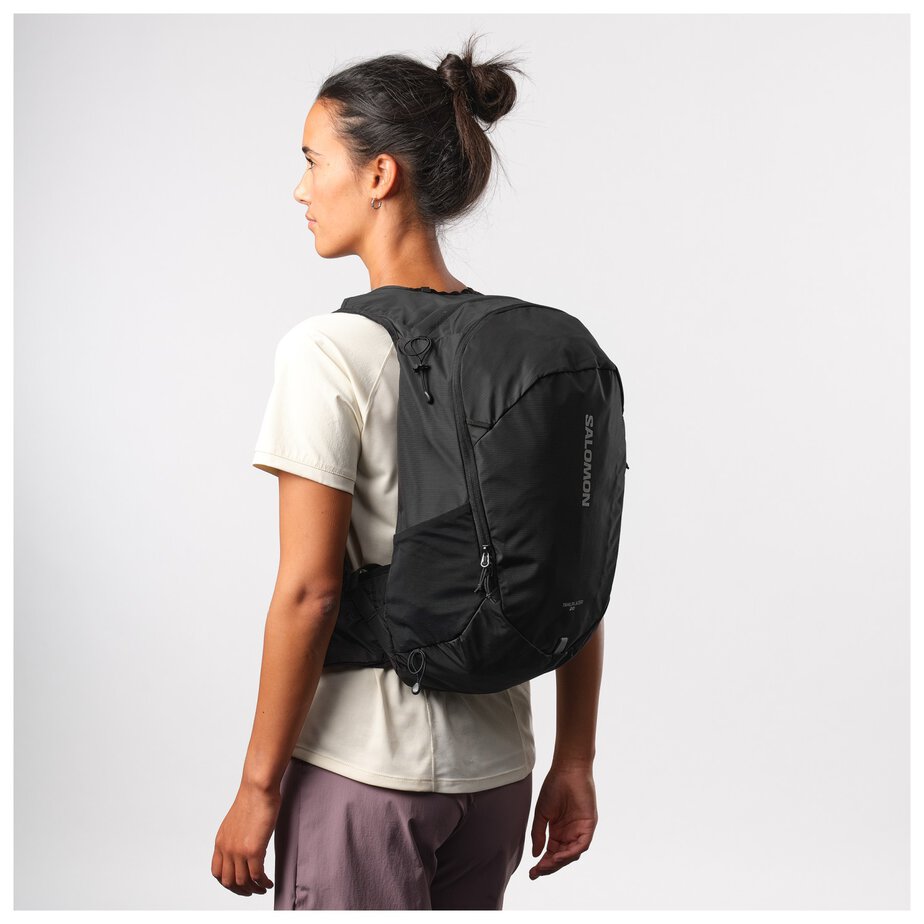
If your week includes a run club, a run home from work, transit, travel and weekend hikes, a pure race-style pack can be oddly inconvenient once the run is over. The Trailblazer looks and functions more like a normal backpack while still staying fairly light at 434 grams.
You get a padded back system, belt, hydration compatibility and 20 litres of usable space. What you do not get is the deep front food and bottle storage that makes the Fastpack or Distance easier to use without stopping.
That tradeoff is fine if this is your everyday bag that also runs. It is less fine if you are trying to eat every 30 minutes during an ultra and do not want to take the pack off.
- Good price for 20L
- Works for commuting and travel too
- Light for a conventional daypack design
- Padded back system
- Hydration compatible
- You need constant access to food and flasks
- You want a body-hugging running harness
- Your main use is technical trail running
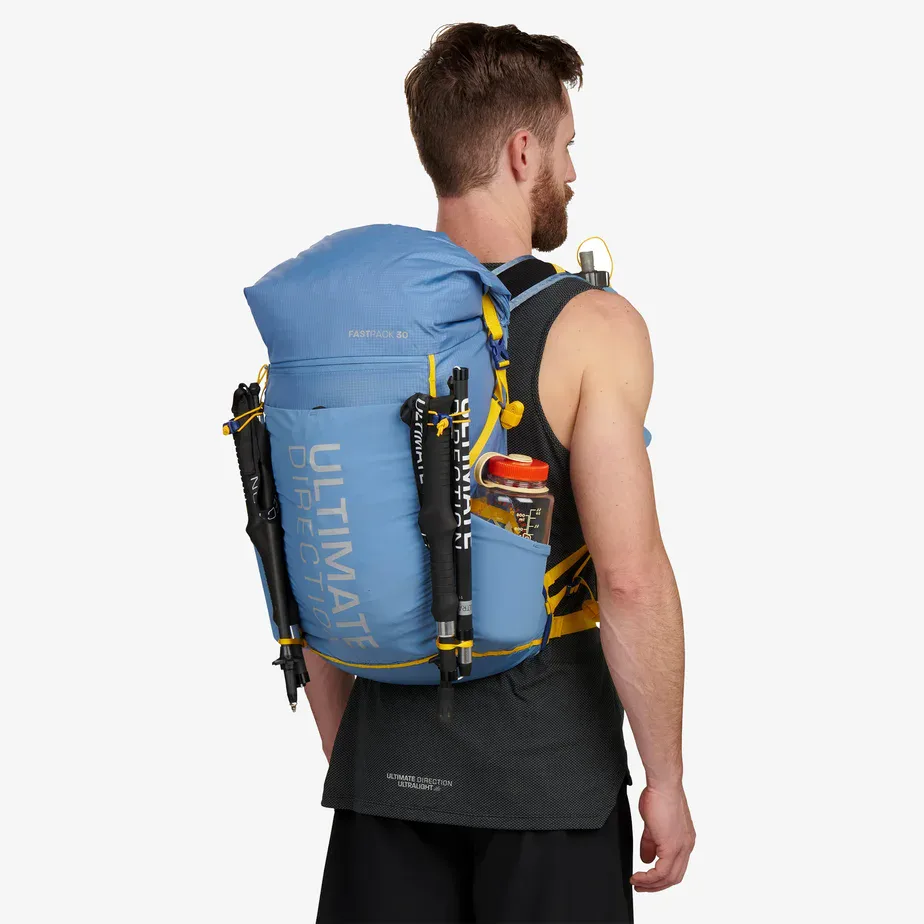
Ultimate Direction Fastpack 30
The Fastpack 30 is where this list stops being about ordinary long runs and starts being about carrying a real kit.
Ultimate Direction lists the current pack at 31.7 litres and 690 grams. That is enough room for light overnight gear, big mandatory-kit lists and shoulder-season clothing without switching to a traditional framed backpack.
It keeps the useful Fastpack features: water and food storage up front, a roll top that compresses the load, and a full side zipper. The waistbelt is removable and height adjustable. It is a T-hook waistbelt, not the padded hiking-style hipbelt the old version of this article described.
Thirty-plus litres is not “future proofing” for a normal runner. If your current gear comfortably fits in 15 litres, buy a 15 litre backpack. The Fastpack 30 makes sense when overnight gear or a mandatory equipment list is already part of the plan.
- Real fastpacking capacity
- Front food, phone and bottle access
- Roll top handles changing loads well
- Full side zip simplifies packing
- Removable waistbelt adds stability
- You are shopping for normal marathon long runs
- You rarely carry more than 15 to 20 litres
- You want a framed backpack for truly heavy loads
Which Running Backpack Fits Your Actual Week?
This is the part product roundups often miss. A backpack does not disappear after the run. If you are carrying it to work, onto a bus or into a coffee shop after run club, that matters too.
| If This Sounds Like You | Start Here | Why |
|---|---|---|
| You want one larger running pack for almost everything | UD Fastpack 20 | Enough storage for big trail days without moving to an overnight pack |
| You run light and fast in the mountains | Black Diamond Distance 15 | 330 g with a genuinely running-focused suspension |
| Your pack regularly gets heavy | Osprey Talon Velocity 20 | Framesheet and padded hipbelt manage load better |
| You run in wet mountain weather | Rab Veil XP 20 | Waterproof fabric and taped seams protect spare gear |
| You want the smallest true backpack here | Deuter Ascender 13 | Enough rear capacity without carrying extra empty space |
| You run home from work or use one bag all week | Salomon Trailblazer 20 | Less technical, more useful when you are not running |
| You carry overnight gear | UD Fastpack 30 | 31.7L of real fastpacking capacity |
Running With a Backpack Is Not Just a Trail Thing
One reason backpacks make more sense now is that running is becoming part of the rest of the day. You might meet a run club after work, take transit to a route, run home instead of driving, or turn a weekend trip into an excuse to explore somewhere on foot.
That changes what “best” means. A pack that is brilliant for a six-hour trail day may be awkward if you also need to carry clean clothes, earbuds, a charger and whatever else normally lives in your bag.
For that kind of mixed use, I would lean toward the Salomon Trailblazer 20 if everyday practicality matters most, or the Ultimate Direction Fastpack 20 if running performance matters more and you still want enough space for the rest of the day.
If you are specifically running to work with a laptop, measure the device before buying. Most true running backpacks prioritize hydration and flexible gear over padded laptop sleeves. A laptop also adds dense weight, which makes fit and load control more important.
How to Stop a Running Backpack From Bouncing
Before returning a pack because it moves, spend five minutes on the load and fit. Even an excellent running backpack can bounce when it is packed badly.
- Keep heavy items close to your back. Water and dense gear should not sit at the far edge of the pack.
- Tighten compression as the load shrinks. Half-empty packs need more compression than full ones.
- Snug the sternum straps without restricting breathing. You should still be able to take a full breath comfortably.
- Use the hipbelt when the pack has one. It should stabilize the load, not squeeze your stomach.
- Balance front and rear weight. Full soft flasks up front can help counter a loaded rear compartment.
- Do not buy too big. The easiest way to stop 10 litres of gear moving around a 30 litre pack is to use a smaller pack.
Soft Flasks or a Hydration Bladder?
Soft flasks are easier to monitor and refill, and they put some weight on the front of your body instead of all of it behind you. They also make it easy to carry plain water in one bottle and drink mix in the other.
A bladder is better when you need a larger volume of water without filling your front pockets. The downside is that it is harder to see what is left, and refilling usually means taking the pack off.
There is no rule saying you have to pick one. On very long unsupported days, using a bladder for bulk water and a flask up front for drink mix can work well.
If water is the main thing you need to carry, you are probably still shopping in the wrong article. The hydration pack guide focuses on smaller options built around drinking on the move.
Build the Rest of Your Long-Run Setup
A bigger backpack usually means the run itself is getting bigger too. These guides fit naturally with it.
Running Backpack FAQ
What is the difference between a running backpack and a hydration vest?
What size backpack is best for long-distance running?
Can I use a normal backpack for running?
Can I run a marathon with a backpack?
Is 20 litres too big for a running backpack?
What is the best backpack for running to work?
Should a running backpack have a hipbelt?
The Short Version
Start with the Ultimate Direction Fastpack 20 if you want one proper running backpack for long trail days and bigger loads. It has enough space to be useful beyond a hydration vest, but the front storage and harness still make sense once you start running.
Go with the Black Diamond Distance 15 if keeping weight low matters more than carrying capacity. Pick the Osprey Talon Velocity 20 if you regularly carry enough weight to benefit from a padded hipbelt. For wet mountain running, the Rab Veil XP 20 is the specialist choice.
And if the pack needs to follow you to work, transit, travel and run club, the Salomon Trailblazer 20 is less specialized in a way that can actually make it more useful.
Check Fastpack 20 Price