7 Best Winter Running Vests for Cold Weather (2026)
Cold-weather running vest guide
Quick answer: Choose the Craft SubZ if cold wind hits your chest but a jacket makes you sweat. The KIPRUN Warm Run 500 gives most of that idea for C$50. Patagonia Nano-Air Light is the premium pick for hard efforts. For a warm Amazon option with a hood and more everyday coverage, start with the BALEAF women’s vest.
A vest is a gap-filler, not a tiny jacket. It warms and protects your core while your arms release heat. For steady rain, wet snow, strong wind or very cold easy runs, start with our winter running jacket guide.
Shop the best winter running vests
Best overall
Craft SubZ Vest
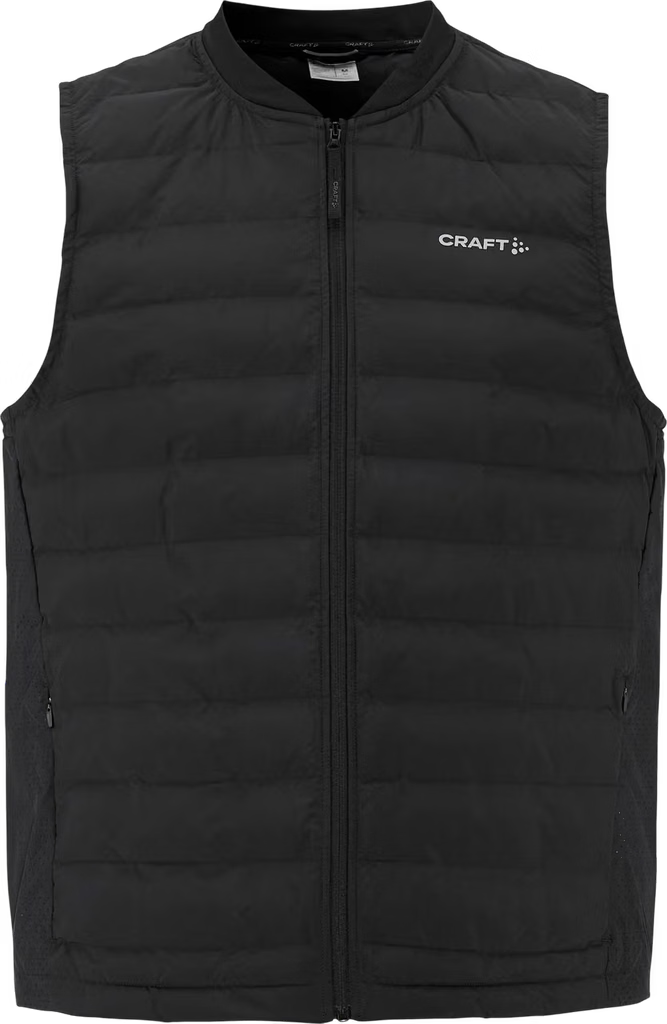
Light insulation where wind hits, perforated panels where heat needs to escape, and pockets made for training.
Best value
KIPRUN Warm Run 500
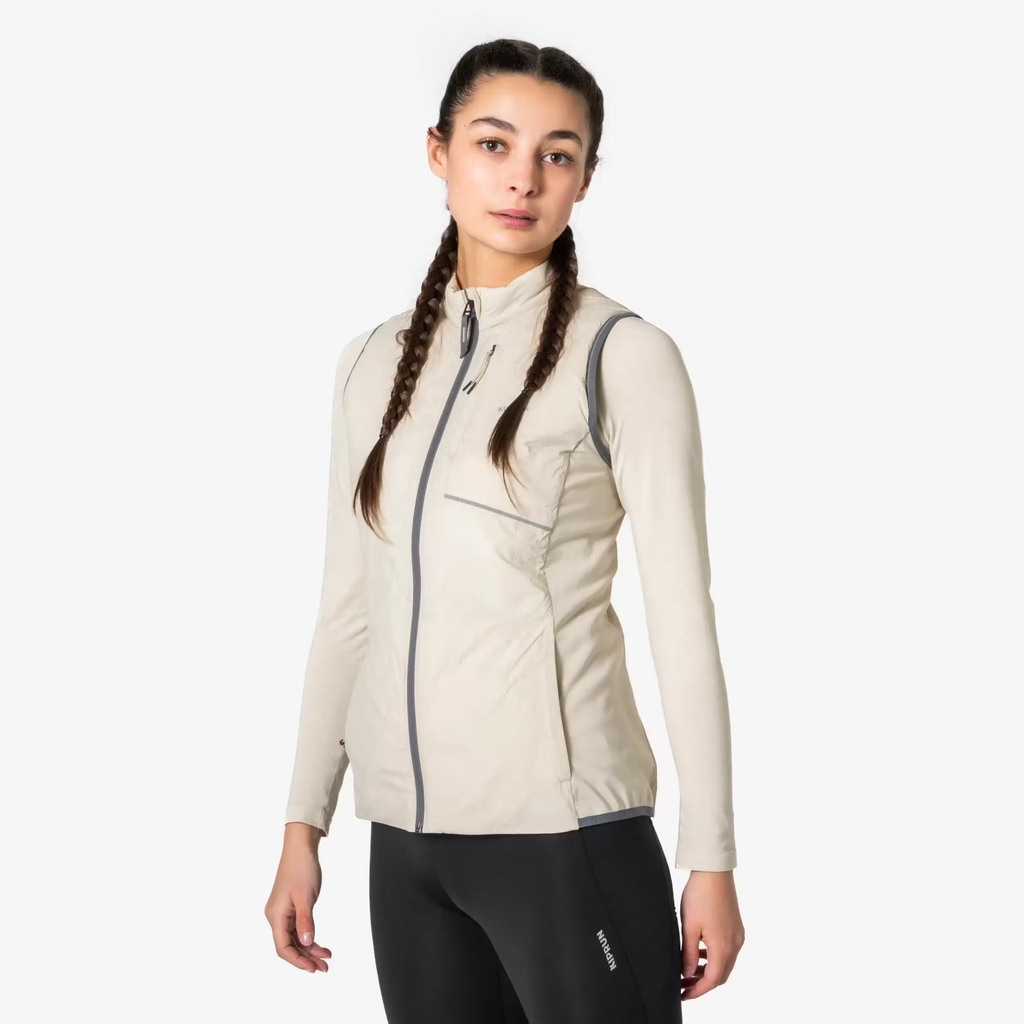
A padded running vest with a high collar and three secure pockets at a price that is easy to justify.
Best premium active insulation
Patagonia Nano-Air Light
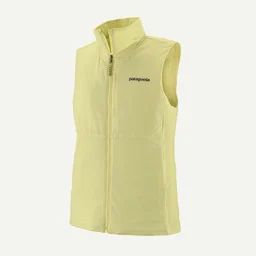
Stretchy, air-permeable insulation for hard runs and start-stop days when a traditional puffer feels clammy.
Best if you run cold

Smartwool Smartloft
Wool-blend insulation, a wind-resistant front and stretch panels for colder runners and easier efforts.
Best packable women’s pick
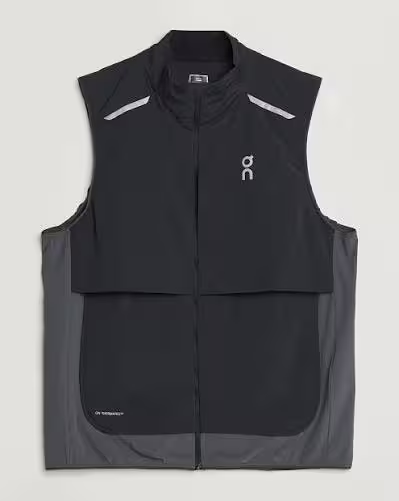
On Weather Vest
PrimaLoft Silver warmth, a breathable back and a self-packing pocket in a polished women’s running vest.
Best uninsulated wind vest
KIPRUN Windproof Run 500
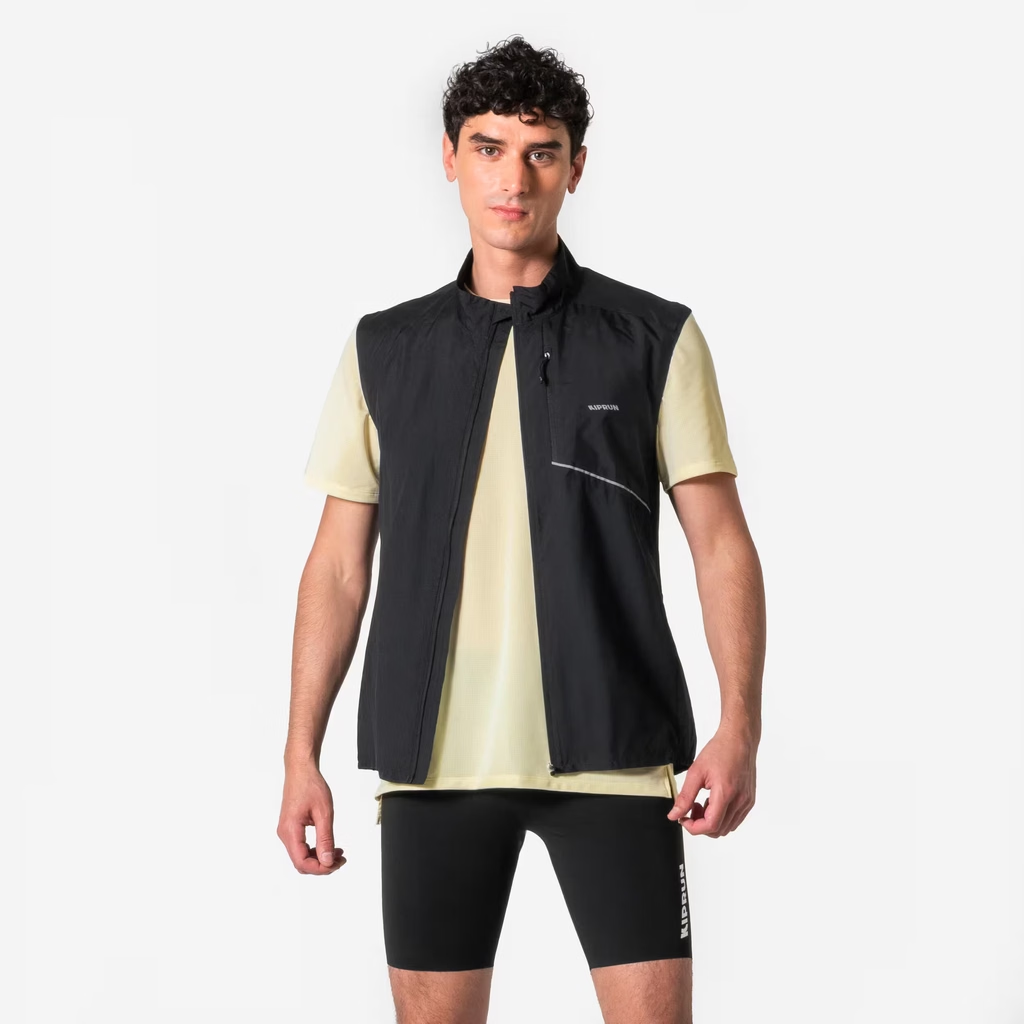
Front and shoulder wind protection with a mesh back for fast runs, mild cold and runners who overheat.
Best Amazon pick for cold easy runs

BALEAF Women’s Hooded Winter Vest
A fleece-lined, hooded option for cold easy runs and walking. It offers more coverage than a thin wind vest, but less venting for hard workouts.
Looking for a pack that carries water? This page is about sleeveless clothing layers. Compare bottles, storage and bounce in our running hydration vest guide.
Find your vest in 30 seconds
Choose the answers that sound most like your run. The result is a starting point, not a safety rule. Wind, dampness, pace and how warm you run matter more than one temperature number.
The 7 best winter running vests
1 · Best overall
Craft SubZ Vest 5 Women / Vest 4 Men
Best for: cold, windy runs when a full jacket holds too much heat.
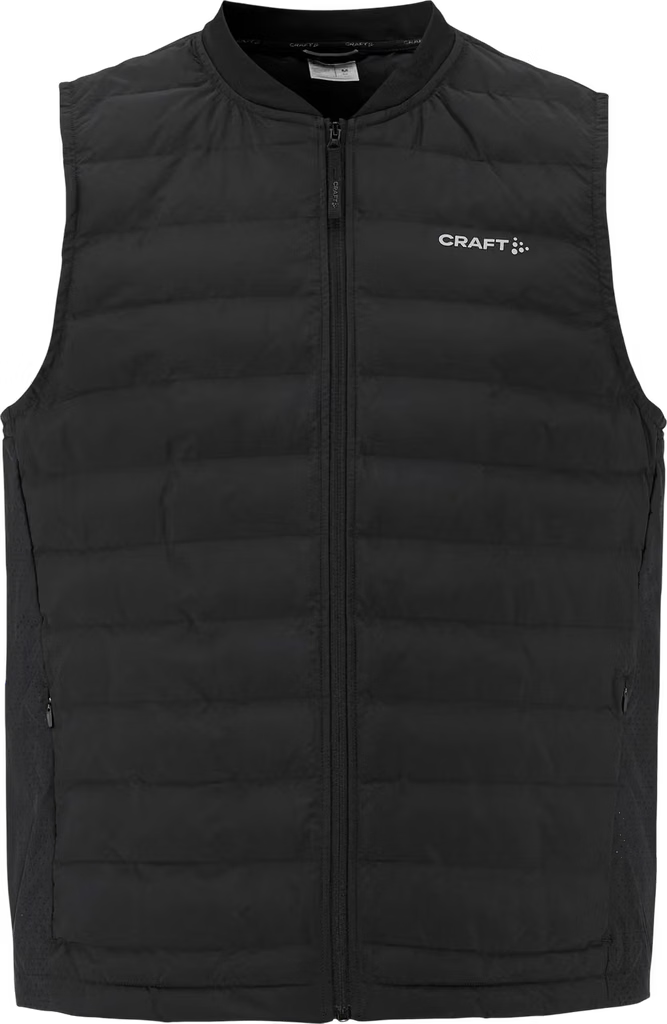
Craft puts a wind-protective three-layer construction with light insulation across the front and upper back. Perforated wind- and water-repellent fabric covers the sides and lower back, where trapped heat is more likely to become a problem.
The current Canadian product naming needs care. The women’s version is Vest 5 with a cropped, half-zip design. The men’s page still sells Vest 4 with a regular fit and full zip. Both cost C$130 at our check and share the same basic mapped-protection idea, but they are not identical garments.
One runner on Reddit described an earlier SubZ as thin, athletic fitting, highly wind resistant and warmer than it looked, while still letting heat escape at the arms. That is an owner report, not a lab test, but it matches the construction and the reason this family ranks first.
Is the price worth it? Yes for frequent cold-wind training. At C$130 it is meaningfully more specialized than KIPRUN but still far below the C$200 to C$250 premium picks.
2 · Best value
KIPRUN Warm Running Vest Run 500
Best for: runners who want useful insulation and pockets without turning a vest into a C$200 purchase.
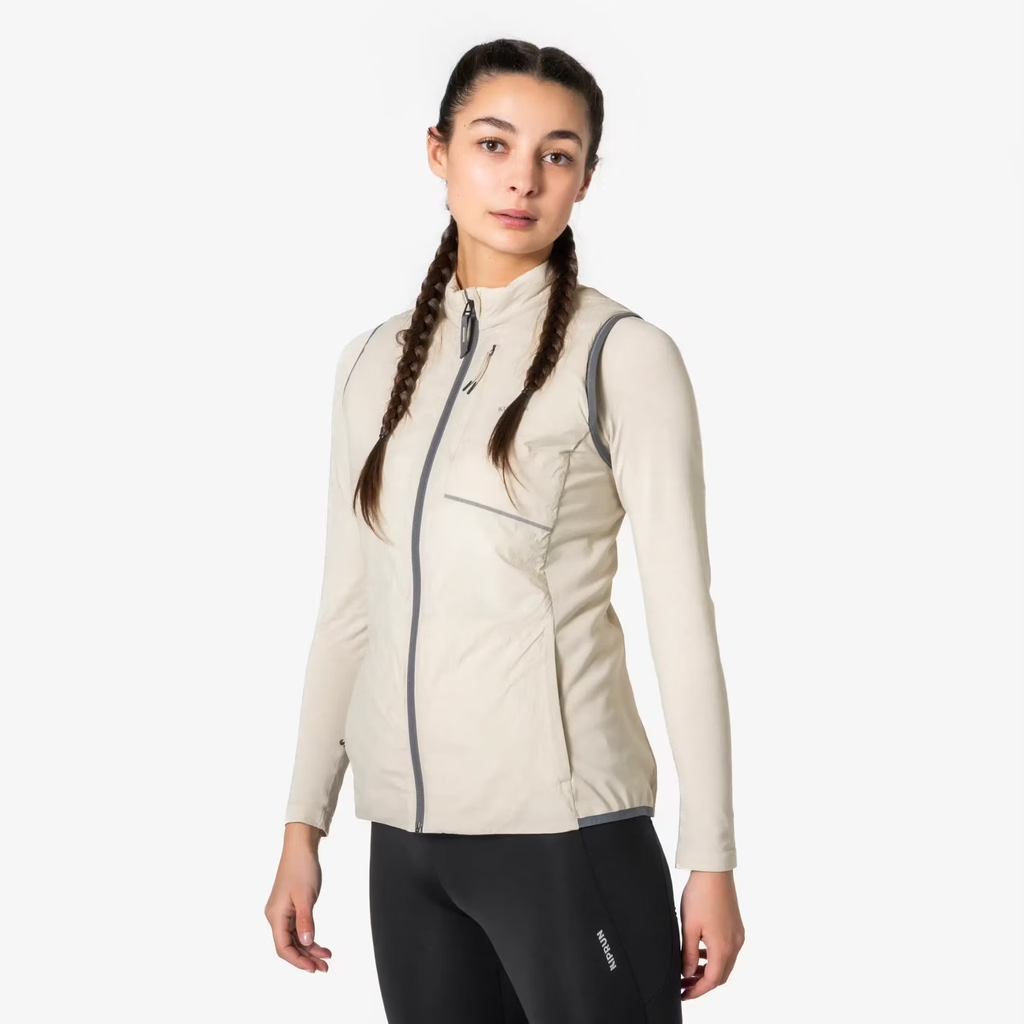
The Run 500 has padded front and back sections, a high collar and three secure pockets. That last detail matters more than it sounds. Two hand pockets and a chest pocket give gloves, keys and a phone somewhere to go when you warm up.
Decathlon lists both the men’s and women’s versions at C$49.99. The women’s size small is listed at 184 g. Neither version is a waterproof shell, and the product page wording around wind protection is not perfectly consistent, so buy it for core warmth and useful coverage rather than a technical windproof rating.
This is the sensible first purchase when you do not yet know how often a vest will replace your jacket. It also works for warm-up, recovery and everyday use, which improves the value even if your ideal running temperature window is narrow.
Is the price worth it? This is the easiest yes in the guide. The premium choices need to feel noticeably better on your body to justify costing four or five times as much.
3 · Best premium active insulation
Patagonia Nano-Air Light Vest
Best for: frequent high-output use, changing effort and runners who hate the plastic-bag feeling of less breathable insulation.
The Nano-Air Light uses 40 g FullRange insulation with air-permeable stretch shell and lining fabrics. The goal is not maximum wind blocking. It is to stay on through hard movement, slower sections and short stops without constant layer changes.
The men’s vest weighs 213 g and the women’s 195 g. Both self-stuff into a pocket, have three zippered pockets and use a water-repellent finish for light moisture. The finish does not make the vest waterproof.
This is the vest for someone who already knows why a normal puffer fails them. It is not the automatic upgrade from KIPRUN. The premium buys softer movement, low bulk and better heat release, not five times the warmth.
Is the price worth it? For a frequent user who values breathability across several sports, it can be. For a one-season experiment, no. Use the calculator above with a conservative number of runs.
4 · Best if you run cold
Smartwool Smartloft Vest
Best for: easy runs, run-walk sessions and people who want one warm vest for training and daily life.
Smartwool uses 60 g insulation made with 50% recycled wool, a wind-resistant front with a non-PFC water-repellent finish, stretch panels at movement zones and a merino-blend interior. The men’s model has two hand pockets and a chest pocket; the women’s lists two secure exterior pockets.
A runner in the XXRunning community described a Smartwool vest as expensive but warm without being bulky, with useful pockets and enough versatility for daily wear. That is the clearest reason to choose it over a cheaper running-only vest.
This is warmer than the Nano-Air approach and likely too much for hard workouts near freezing. It makes more sense for slower runners, cold starts and anyone who will keep wearing it after the run.
Is the price worth it? Only if the everyday role matters or wool-blend insulation solves a comfort problem for you. For running alone, Craft and KIPRUN are better values.
Amazon link uses tracking ID rgl-winter-20. Confirm the page still says “Smartwool Men’s Smartloft Vest” before publishing or buying.
5 · Best packable women’s pick
On Women’s Weather Vest
Best for: runners who want light insulated warmth, useful storage and a vest that packs into itself.
On uses ThermaTec insulation with PrimaLoft Silver, a breathable back, reflective details and brushed fabric inside the collar. Two side pockets carry essentials, while the chest pocket uses a double-sided zipper so the vest can pack into itself.
The current Canadian page is a women’s model and listed C$200 at our check. A current men’s match was not consistently available, so this is not presented as a unisex family. Men looking for the same job should compare Craft SubZ or Patagonia Nano-Air instead.
The On is a clean answer for travel and changing weather because it packs down without needing a separate stuff sack. The downside is value. KIPRUN has more warmth per dollar, while Nano-Air has a clearer case for very high-output use.
Is the price worth it? It can be for someone who will use the packable design often. If it will stay in the closet except for winter runs, KIPRUN is the more rational purchase.
6 · Best uninsulated wind vest
KIPRUN Windproof Running Vest Run 500
Best for: faster sessions, shoulder seasons and runners who need wind protection without built-in warmth.
This is a different product from the Warm Run 500. The front and shoulders block wind, while the back is mesh. There is no insulated fill. That makes it useful when moving air is the problem but added warmth would turn into sweat.
Both versions have two secure pockets, one at the side and one at the chest. The regular Canadian price is C$34.99. Clearance prices were lower at our check, but sizes were limited, so we use the regular price for comparison.
A thin wind vest is often more versatile than an insulated one for runners who naturally run hot. Change the long sleeve underneath as the temperature falls. The vest handles the headwind without sealing your entire upper body.
Is the price worth it? Yes. It is the lowest-risk way to learn whether protecting your core while venting your arms works for you.
7 · Best Amazon pick for cold easy runs
BALEAF Women’s Hooded Winter Running Vest
Best for: cold easy runs, walking
Women’s hooded vest

Men’s separate puffer design
The women’s listing describes a 100% nylon shell, synthetic fill made with 70% polyester and 30% Sorona, a fleece lining and four pockets. The hood adds coverage around the head and neck. The listing calls the vest water resistant, which is useful for brief light moisture but does not make it a rain shell.
The men’s choice is not the same vest in a different size. It i s a separate lightweight quilted puffer design. We include it so men have a clear Amazon option without pretending the fit, hood, pocket count or materials match the women’s model.
Budget running-vest option. That supports BALEAF as a value brand in this category. We have not worn these two models, so this recommendation is based on the listed construction, intended use and current availability.
Full comparison
| Vest | Warmth design | Ventilation | Pockets | Best for | Checked price | Main tradeoff |
|---|---|---|---|---|---|---|
| Craft SubZ | Light mapped insulation | Perforated sides + lower back | 3 secure | Cold, windy training | C$130 | Women’s model is half zip |
| KIPRUN Warm Run 500 | Padded front + back | Breathable construction | 3 secure | Value and cool-weather warmth | C$49.99 | Less refined heat mapping |
| Patagonia Nano-Air Light | 40 g FullRange | Highly air permeable | 3 zip | Hard efforts + start-stop use | C$249 | Not the strongest wind blocker |
| Smartwool Smartloft | 60 g wool-blend insulation | Stretch mobility zones | 2 women / 3 men | Cold runners + easy pace | C$250 direct | Warm and expensive for hard runs |
| On Weather Vest | PrimaLoft Silver | Breathable back | 3 | Packability + women’s fit | C$200 | Women’s current version only |
| KIPRUN Windproof Run 500 | No insulation | Mesh back | 2 secure | Mild wind + runners who overheat | C$35 regular | Little warmth in calm cold |
| BALEAF Women’s Hooded Winter Vest | Sorona-blend fill + fleece lining | Limited beside active insulation | 4 | Cold easy runs + daily use | Check Amazon | Hooded and less suited to hard efforts |
Checked prices are snapshots, not live offers. No Amazon price, coupon, star rating or delivery promise is hardcoded.
Is the expensive vest worth it?
A premium vest is easier to defend when it solves a frequent problem and will be used for several winters. Enter your realistic use, not the number of runs you hope to do.
A warranty can add value, but it is not magic
Kelly had a good experience sending a Patagonia jacket in for a replacement zipper. Her experience was different with a merino shirt that developed a hole after about one week, when a phone call did not lead to a remedy. A later Patagonia puffer arrived with repair patches.
That is why we treat repair access as one part of the value calculation, not a promise. Patagonia says unsatisfactory performance may lead to repair, replacement or refund, while ordinary wear may be repaired for a reasonable charge. A C$249 vest still needs to solve a problem you actually have.
Should you buy a running vest or a jacket?
Buy a vest first if your chest gets cold in wind but your arms and back overheat inside jackets. A front-protective vest over a breathable long sleeve is easy to vent and keeps shoulder movement free.
Buy a jacket first if you expect steady rain, wet snow, exposed wind, slow run-walk sessions or stops far from shelter. Sleeveless insulation cannot protect wet arms, and a DWR finish is not the same as a waterproof shell.
Justin’s Manitoba winter kit illustrates the difference. He uses a KIPRUN Run 900 jacket when warmth and coverage matter, and a Patagonia Airshed Pro when breathability matters more. The vest sits between those jobs. It gives the torso more protection without committing the arms to a shell.
These ranges are starting points, not guarantees. Try the running outfit calculator with your wind, precipitation, effort and run length.
What runners say after using a vest
Forum feedback is useful for finding recurring annoyances that product pages rarely mention. It is not a substitute for controlled testing, and individual temperature ranges vary widely.
- Venting is the main benefit. Several runners prefer a windproof vest over a light long sleeve because they can unzip the front and let heat escape around the arms.
- A vest has a narrower weather window. One runner described using a thermal vest around -5 to 0°C, while others switch to a jacket in wind or temperatures around the 20s Fahrenheit. Treat these as personal examples, not universal cutoffs.
- Pockets decide whether a vest stays useful. Runners repeatedly praised secure pockets and larger drop-in storage for phones, gloves and fuel. A pocket that lets a phone bounce is not useful just because it exists.
- Back construction matters with a hydration pack. Runners looked for less insulation across the lower back so the vest would not become hot and bulky under a pack.
- Warmth can surprise you. Owners described rabbit Cocoon and Smartwool designs as warmer than expected. That is good for easy cold runs and a warning for workouts.
- One layer rarely covers everything. The most practical systems combine a base layer, vest and optional wind or waterproof shell instead of asking one garment to handle every day.
How to choose a winter running vest
Insulated vest or wind vest?
Choose an insulated vest for easy runs, cold starts and runners whose torso stays cold after the first kilometre. Craft, KIPRUN Warm, Smartwool, On, Nano-Air and BALEAF all add insulation, but the amount and breathability differ.
Choose a wind vest when moving air chills the chest but you generate plenty of heat. The KIPRUN Windproof Run 500 protects the front and shoulders while its mesh back releases heat. Adjust warmth with the shirt underneath.
Can you wear a clothing vest under a hydration vest?
Yes, but the two vests need different jobs. Keep the clothing layer smooth and low bulk across the shoulders and lower back. Tighten the hydration vest after adding the layer, then check whether bottles, seams or buckles press through. If you need help choosing the pack, use the separate hydration pack guide.
A simple vest layering system
- Base layer: a quick-drying synthetic or merino top that matches your pace and sweat rate.
- Vest: wind-only for high output, light active insulation for mixed effort, or warmer insulation for easy runs.
- Optional shell: add a light jacket when exposed wind, rain or wet snow reaches beyond what the vest can cover.
- Small adjustable pieces: gloves, a neck warmer and a hat can change comfort without replacing the entire torso system.
Do not stack layers just because the thermometer looks dramatic. Start slightly cool, then note the wind, top, vest and effort that worked. Our cold-weather running gear guide covers the rest of the outfit, and the winter running guide covers route and safety decisions.
How we chose these vests
We read owner discussions from running communities to look for repeated real world probpems such as overheating, fit, storage and the vest-versus-jacket decision. We used those reports to find questions and tradeoffs, not to invent first-hand testing.
Justin’s experience running through Manitoba winters informs the layering advice. He personally uses KIPRUN Run 900 and Patagonia Airshed Pro jackets, but we are not presenting the seven vests above as products he has worn for a full season. Kelly’s Patagonia repair story is included because durability and after-sale support affect whether premium prices make sense.
Build the rest of your winter kit
Winter running vest FAQ
What is the best winter running vest?
Craft SubZ is the best overall performance choice in this guide because it combines wind protection and light mapped insulation with ventilated side and back panels. KIPRUN Warm Run 500 is the better value for most first-time buyers.
Is a vest or jacket better for winter running?
A vest is better when your core gets cold but your arms and back overheat. A jacket is better for wet weather, exposed wind, very cold easy runs and situations where slowing down would leave your arms unprotected.
What temperature should I wear a running vest?
There is no universal cutoff. Around 0 to 5°C, a wind vest or light insulated vest is a useful starting point for many runners. Around -5 to 0°C, mapped insulation over a technical long sleeve can work. Wind, dampness, pace and whether you run hot or cold can move those ranges substantially.
Are puffer vests good for running?
A low-profile synthetic puffer such as the BALEAF options can work for easy cold runs. Thick down puffers often trap too much sweat and are better for standing, walking or post-run warmth. Active-insulation designs such as Craft SubZ and Patagonia Nano-Air are easier to manage at higher effort.
Can a running vest be waterproof?
A clothing vest can use water-resistant fabric, but sleeveless construction still leaves the arms exposed. For steady rain or wet snow, use a waterproof running jacket. Do not treat a DWR finish as waterproofing.
Is Patagonia worth the price?
Patagonia Nano-Air earns its premium through air-permeable active insulation and can be worth it for frequent high-output use across several sports. A KIPRUN or BALEAF vest is the better buy when it already covers your conditions.
Does reflective trim make a vest safe for night running?
No single trim detail makes night running safe. Reflective material only works when light reaches it. Add an active light and a headlamp or other path light when your route requires them.
Sources checked
- Craft Sports Canada: Men’s SubZ Vest 4 and Women’s SubZ Vest 5
- Decathlon Canada: Men’s Warm Run 500 and Women’s Warm Run 500
- Decathlon Canada: Men’s Windproof Run 500 and Women’s Windproof Run 500
- Patagonia Canada: Men’s Nano-Air Light Vest and Women’s Nano-Air Light Vest
- Smartwool Canada: Men’s Smartloft Vest and Women’s Smartloft Vest
- On Canada: Women’s Weather Vest
- Amazon: BALEAF Women’s Hooded Winter Running Vest, ASIN B0CCF5JXQB
- Amazon: BALEAF Men’s Lightweight Quilted Puffer Vest, ASIN B0CC9XXTB1
- Runner’s World: independent running-vest testing, including a different BALEAF Hybrid Puffer model
- Patagonia Canada: Ironclad Guarantee and repairs and returns
- r/running: vest or jacket discussion
- r/runningfashion: winter running vests
- r/XXRunning: cold-weather vest feedback
- r/trailrunning: insulated vest features and layering
- r/trailrunning: winter vest or jacket experiences